
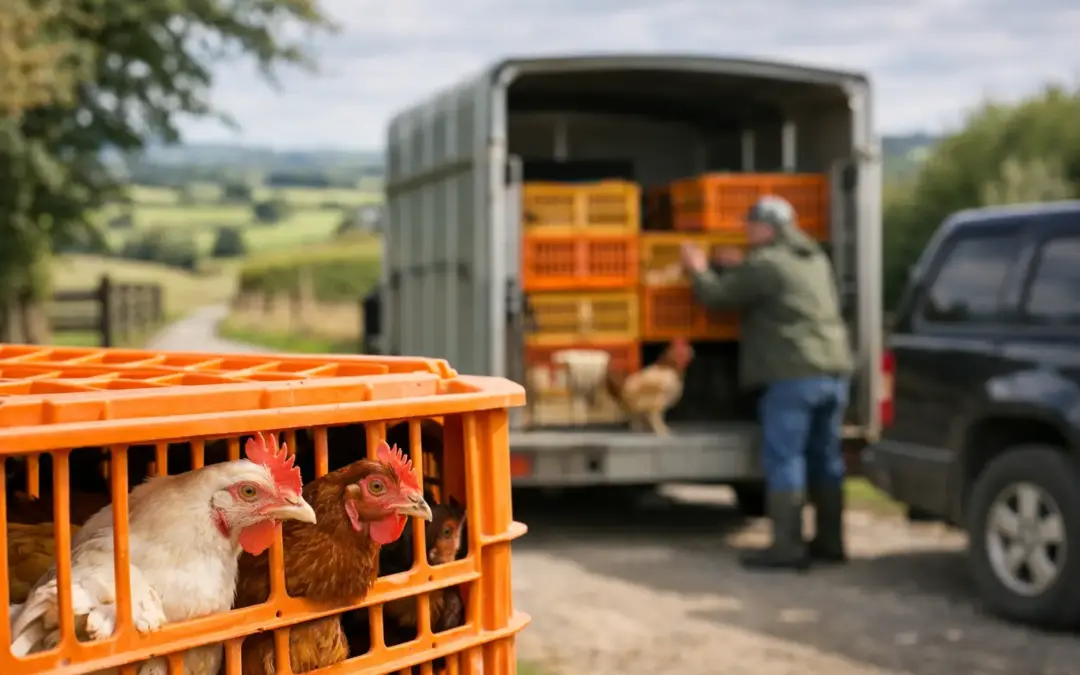
A good bird can arrive at its new home looking settled and alert, or arrive stressed, overheated and at real risk of injury. The difference is rarely luck. Knowing how to transport chickens safely comes down to a sound crate, calm handling, sensible stocking density and a journey planned around the birds rather than your errands.
Whether you are collecting a trio of bantams, taking breeding stock to a new keeper or moving birds between holdings, treat the journey as part of responsible poultry keeping. Quality stock deserves better than a loose box in the back of a car.
Start with a proper poultry crate
The transport container is the first welfare decision you make. Use a purpose-built poultry crate, a clean pet carrier designed for birds, or a sturdy, well-ventilated wooden transport box. It must be strong enough that a bird cannot force a door open, with no sharp edges, broken slats or gaps that could trap a wing, head or toe.
Ventilation matters, but so does protection from draughts and rain. A crate with ventilation on the sides, rather than a fully exposed wire cage, gives birds fresh air while reducing wind chill. In colder weather, cover part of the crate with a breathable sheet or blanket after loading, leaving plenty of airflow. Never seal a crate with plastic or place it where exhaust fumes can enter.
Line the base with a non-slip, absorbent material such as clean straw, hemp bedding or a thick layer of dust-extracted shavings. Newspaper becomes slippery when damp and offers little cushioning. Avoid loose objects inside the crate. Perches, feed pots and water containers can become hazards once the vehicle is moving.
Size is a balance. Birds need room to sit naturally, turn and maintain their balance, but too much empty space allows them to be thrown about on corners. Large fowl need more floor area than bantams, and heavily feathered breeds can overheat quickly. If you are unsure, use two crates rather than cramming birds into one.
Plan the journey before you catch a bird
The best journeys are direct, quiet and completed in the coolest part of the day. In summer, travel early in the morning or later in the evening. A parked car can become dangerously hot in minutes, even when the outside temperature feels manageable. In winter, the risk shifts to cold draughts and damp conditions.
Prepare the vehicle first. The crate should sit level on a flat surface and be secured so it cannot slide, tip or fall during braking. The boot of a hatchback may be suitable if it has dependable airflow and is not sealed off from the cabin, but it is not automatically the best option. For many vehicles, the rear footwell or a flat rear seat, with the crate restrained, provides a steadier and better-ventilated position.
Keep birds out of direct sunlight and away from heater vents, air-conditioning blasts and loud speakers. Do not transport them in the same enclosed space as fuel cans, strong-smelling chemicals, dogs that will bark at the crate, or unsecured equipment. A familiar, calm driver helps too. Harsh braking and hurried driving are felt by every bird inside.
For a local collection, avoid turning a 30-minute run into an afternoon of shopping. Agree a collection time, load the birds last and travel straight home. If a longer journey cannot be avoided, plan fuel and comfort stops before collecting the birds so there is no unnecessary waiting around.
Catch and load birds calmly
Stress often starts before the crate door closes. Catch chickens in low light where possible, ideally at dusk or from their perch after dark, when they are naturally calmer. During the day, use a small pen or a sectioned-off area rather than chasing birds around a large run.
Handle each bird firmly but gently, supporting its body and holding the wings against its sides. Never pick up a chicken by one wing, one leg or the neck. For a cockerel, keep a secure hold of both legs while supporting the breast and body, particularly with larger, strong breeds.
Load birds one at a time and close the door properly after each group. This is especially important with quick, flighty bantams. Before lifting the crate into the vehicle, check the latch again. A loose crate door at a petrol station or on a driveway is a problem no breeder or buyer needs.
It is usually kinder to transport familiar companions together, provided the crate has adequate space and there is no bullying. Established pairs, trios or a settled breeding group often travel quietly together. Do not put unrelated adult cockerels in the same crate, and separate any bird that is aggressive, injured or showing signs of illness.
How to transport chickens safely on longer trips
For short, direct journeys, healthy adult chickens normally do not need food or water inside the crate. Spilled water wets bedding, chills birds and makes footing unstable. For longer travel, welfare needs depend on the journey length, weather, bird age and the conditions at either end.
Chicks and young birds are less tolerant of temperature swings, while older or heavier birds may struggle more in heat. If the journey will take several hours, make a clear plan for suitable rest, access to water where appropriate and a safe, shaded environment. Do not open a crate casually at the roadside. Escaped poultry are difficult to recover and can quickly come to harm.
Check the birds discreetly during planned stops. Signs of heat stress include open-mouth breathing, wings held away from the body, lethargy and distress. If this happens, move the vehicle to shade immediately, improve airflow and reduce the temperature gradually. Do not spray birds with cold water or place them in a strong blast of air. Rapid chilling can create a second problem.
In cold conditions, birds sitting tightly together and shivering need protection from draughts, not a sealed container. Keep the vehicle comfortably temperate and drive on. The aim is stable conditions, not a hot crate.
Keep biosecurity part of the handover
Transport can carry more than birds from one holding to another. Use freshly cleaned and disinfected crates, and do not reuse bedding between collections. If you have visited another keeper’s premises, clean footwear and avoid walking straight into your own poultry area in the same boots.
When bringing new birds home, do not simply open the crate into the main run. Set up a separate quarantine area beforehand, with its own feed and water equipment where practical. A period of separation gives you time to observe appetite, droppings, breathing, mobility and general condition before introducing birds to your established flock.
This protects your existing birds and gives newcomers a quieter start. A responsible seller will be happy to answer straightforward questions about age, breed, feeding routine, vaccination history where relevant, recent health concerns and how the birds have been kept. Clear communication is part of a proper transaction, not an inconvenience.
Movement, identification and disease-control requirements can change, particularly during periods of heightened avian influenza controls. Before travelling, check the current requirements that apply to your holding, the type and number of birds being moved, and the area you are travelling from or into. Keep any required movement records accurate and up to date.
At the destination, give them time to settle
Carry the crate into the prepared housing before opening it. Make sure the coop or quarantine pen is secure, dry and stocked with familiar, appropriate feed and clean water. If possible, arrange collection so birds arrive with time to find their bearings before nightfall.
Open the crate gently and allow birds to step out in their own time. Do not tip them out. Watch for a few minutes to ensure each bird is standing well and has access to water. It is normal for birds to be quieter after travelling, but persistent panting, weakness, a dropped wing, limping or failure to drink warrants close attention.
A clean crate, a direct route and a calm handover are not glamorous details, but they are the marks of people who take their birds seriously. Get those right, and the birds you have carefully bred, bought or rehomed begin their next chapter in the best possible shape.