
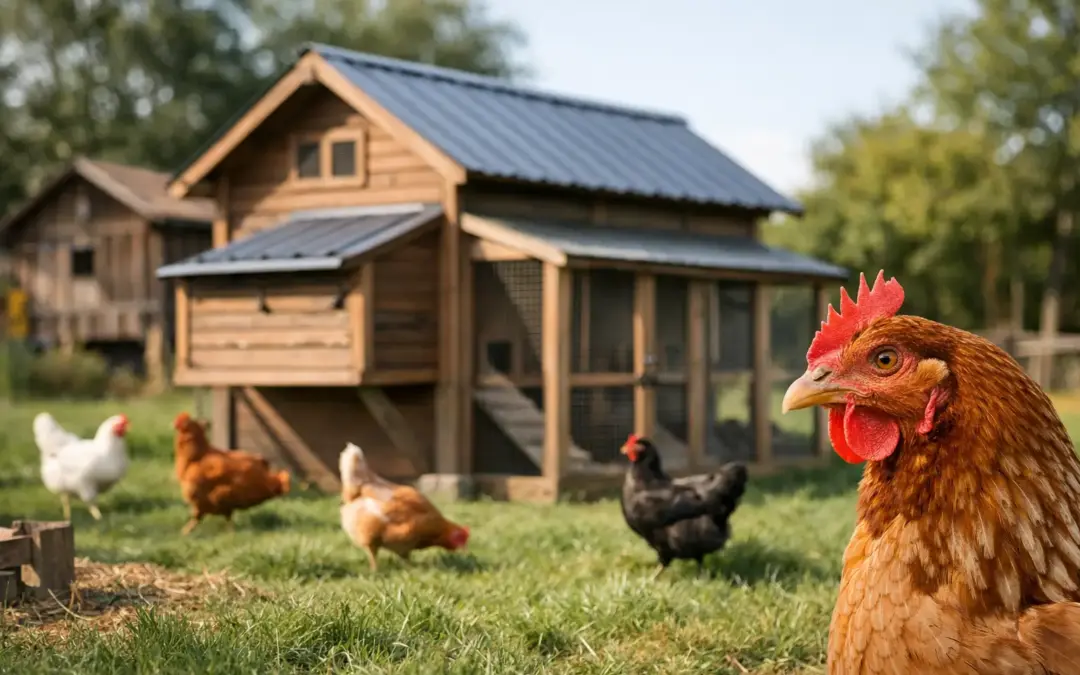
A cheap coop can become an expensive nuisance remarkably quickly. Wet bedding, awkward cleaning doors, flimsy catches and a roof that gives up after one winter are not small inconveniences when you are responsible for a flock. This guide to choosing chicken coops starts where it should: with the birds you keep, the ground you have and the standard of housing you are prepared to maintain.
For established keepers, the right coop is not the prettiest one in a photograph. It is the one that stays dry, shuts securely, cleans out without a struggle and gives every bird a sensible place to roost. For a first flock, buying proper housing from the outset avoids the familiar cycle of replacing an undersized starter coop six months later.
Start with the flock, not the catalogue
A coop must suit the number, size and type of birds you actually intend to keep. A compact house advertised for six chickens may be adequate only for a small group of light bantams that spend most of the day in a generous covered run. Put six large Orpingtons or other heavy fowl into the same footprint and it soon becomes crowded, humid and difficult to keep clean.
Allow enough internal floor area for birds to settle without being pressed together at night, then leave room for future plans. Many keepers begin with three hens and later add a cockerel, retain promising pullets or bring in another breed. Buying one size up is often cheaper and kinder than trying to stretch a coop beyond its sensible capacity.
Perch space matters as much as floor space. Hens want to roost, and large birds need a broad, smooth perch that does not put pressure on their feet. Aim to give each bird roughly 20 to 25 cm of perch room, more for particularly large breeds, and position perches higher than the nest boxes where practical. If the nest box is the highest, most sheltered place in the coop, expect birds to sleep in it and foul the bedding.
Nest boxes should be dark, dry and easy to reach from outside the house. One box for every three or four hens is generally ample, although hens will often all favour the same one. The point is not to provide a box for every bird, but to make egg collection straightforward without entering the run in rain or mud.
Do not treat the coop as the whole living space. Your birds need a properly sized run or access to suitable range, ideally with a sheltered area for poor weather. A roomy coop cannot compensate for a bare, cramped run, just as a large run does not excuse a damp or overcrowded sleeping house.
Guide to choosing chicken coops by construction
Timber remains popular for good reason. A well-made wooden coop is insulating, repairable and can suit a traditional garden, smallholding or breeding pen. Look for solid framing, exterior-grade timber, a properly finished roof and panels that do not flex when the house is moved. Thin decorative cladding, staple-fixed felt and lightweight hinges are warning signs, however smart the product photos look.
Plastic coops are quick to wash, do not rot and can offer fewer hiding places for red mite if their moulding is well designed. They are especially attractive where regular deep cleaning is a priority. Their trade-off is that cheaper versions may have limited headroom, less natural insulation and parts that are harder to replace. Check that ventilation is adequate and that the structure will not become unpleasantly warm in an exposed sunny position.
Metal housing can be durable, but it needs careful thought around condensation, insulation and summer heat. It is more commonly suited to a larger, well-planned poultry set-up than a few garden hens. Whatever material you choose, concentrate on the details that determine service life: roof overhang, sealed joints, corrosion-resistant fittings, sturdy legs and a base that will not sit in standing water.
A raised coop helps keep the floor dry and gives birds a shaded place beneath it, but only if the ladder is stable and manageable for the breed. Heavy fowl, older birds and birds with feathered feet may struggle with steep, narrow ramps. A low walk-in house can be a better choice for a mixed or ageing flock, particularly when it allows you to stand inside for cleaning and health checks.
Ventilation without a draught
A poultry house needs a steady exchange of air, even in winter. Moisture from breath and droppings builds up overnight, and stale, humid air is hard on respiratory health and bedding. Ventilation openings high in the coop, above roosting height, are usually far more useful than a hole at bird level.
The aim is fresh air without a cold line of wind blowing directly over sleeping hens. Adjustable vents are useful, but they should not be relied on as a substitute for good design. Inspect where openings sit in relation to the perches, and be wary of a house that is almost airtight simply because it looks warm.
Cleaning access is a buying decision
If a coop is awkward to clean, it will not be cleaned as thoroughly or as often as it should be. This is where many compact designs fall short. You need clear access to the floor, perches, nest boxes and corners, not just a small hatch through which to scrape bedding.
Removable perches, a droppings tray and a large side door can save real time, especially during the wetter months when bedding needs changing more frequently. Check whether you can reach every internal surface to inspect for red mite. Crevices around perch ends, roof joins and overlapping timber are common hiding places, so choose a design that lets you inspect and treat those areas properly.
Security begins with the siting
Even a strong coop is only as secure as the way it is placed and closed. Choose level ground with drainage, rather than the lowest point in the garden where water collects. A little shelter from prevailing weather is useful, but avoid tucking the house so tightly beneath dense shrubs that the area never dries or you cannot inspect around it.
Fox-proofing is not one product feature. It is a system of reliable catches, solid mesh, sound panels and a routine that closes the flock in before dusk. Simple turn buttons and lightweight slide bolts can be defeated or worked loose. Use secure fastenings that cannot be easily lifted, and inspect them regularly rather than assuming last year’s hardware is still sound.
The run deserves the same scrutiny as the house. Welded mesh is generally more dependable than light chicken wire for keeping predators out, while a skirt or buried barrier can help deter digging. A covered section is valuable in the British climate: it keeps feed dry, gives birds somewhere to stand during prolonged rain and reduces the churned mud that carries straight into the coop.
If you are housing birds for breeding, think beyond predator security. Separate, well-managed pens make it easier to maintain breeding groups, prevent unplanned pairings and observe individual birds. A coop that opens directly into one small fixed run may suit a few laying hens, but can be limiting once you are managing more than one line or breed.
Match the house to your keeping routine
There is no single best chicken coop because keepers work differently. Someone with a small urban garden may value compact dimensions, easy wash-down surfaces and a covered run. A smallholder with a larger flock may be better served by a walk-in timber house with room for feed storage, deeper litter management and simple maintenance.
Think honestly about how often you are on site. An automatic pop-hole door can be useful for people with early starts or variable hours, but it does not replace a daily welfare check. Birds still need fresh water, a look over for injury or illness, and a check that the door, run and electric components are working as they should.
Consider moving the coop before you buy it. If you rotate birds across pasture, a house that requires four people to lift will stay in one place. If the coop is intended to be permanent, plan a firm, dry base and access for bringing in bedding or taking out soiled litter. A heavy, well-built coop is usually a good thing, unless it makes the management system you had in mind impossible.
Second-hand housing can offer excellent value, particularly when a seller can explain its age, construction and previous use. Inspect it in person where possible. Look beneath the roof, around perch brackets and under the floor, where damp, rot and red mite can be missed. Clean and disinfect used housing before introducing it to your birds, and allow it to dry fully before bedding it down.
When comparing coops through a specialist marketplace such as Hatch & Hive, ask the seller direct questions rather than relying on capacity claims. Confirm external and internal measurements, material thickness, roof condition, access points, whether fittings are included and why the coop is being sold. Good sellers understand that serious keepers need practical answers.
A coop earns its place by making good husbandry easier on an ordinary wet Tuesday, not by looking impressive on delivery day. Choose the house you can secure, clean and inspect properly, then give it the space and routine your flock deserves.