
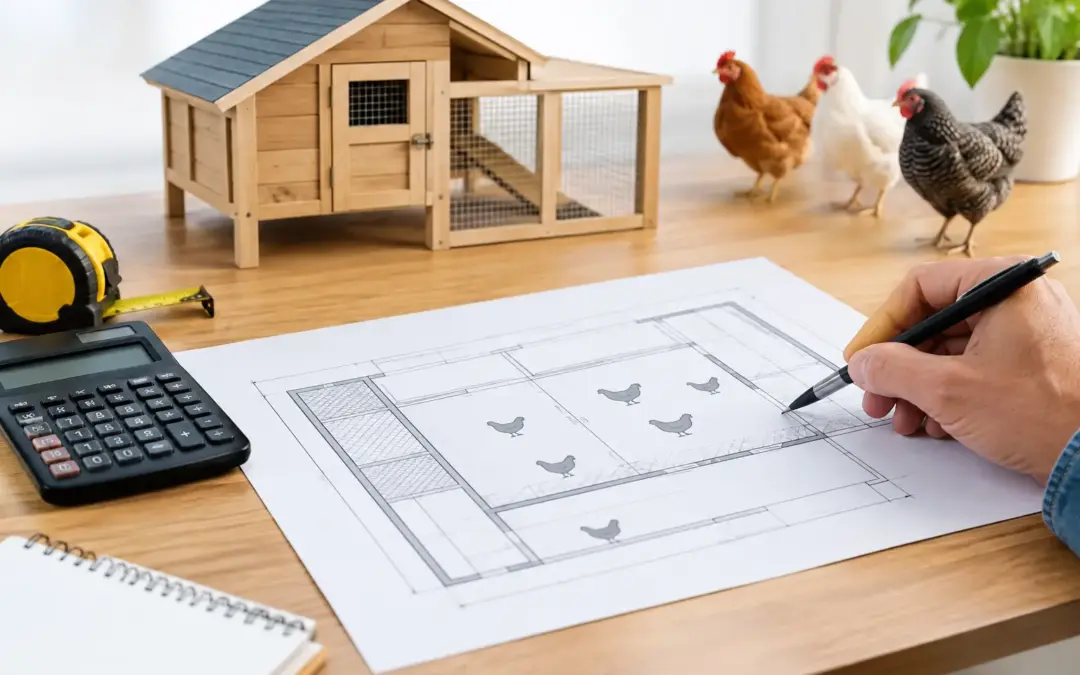
A coop can look generous when it is empty and feel very different once a wet flock has spent three days indoors. To calculate coop space requirements properly, start with the birds you keep, not the dimensions printed on the housing listing. Breed size, temperament, access to a run and your plans for the flock all change what “enough room” really means.
For serious keepers, space is not just a welfare figure. It affects feather condition, pecking order, egg cleanliness, damp bedding, parasite pressure and how easy the birds are to handle. A well-planned house gives a flock room to settle. A cramped one creates problems that no amount of fresh straw will solve.
Calculate Coop Space Requirements From Usable Floor Area
Measure usable floor area, rather than the largest outside measurement of the coop. The footprint can include thick walls, an external nest-box section, a covered porch or storage space that birds cannot actually stand in. Measure the internal length and width in metres, then multiply them.
For example, a coop with an internal floor measuring 1.8 metres by 1.2 metres has 2.16 square metres of usable floor space. Divide that figure by the number of birds you intend to house. If you plan to keep six standard hens, each bird has 0.36 square metres.
That may work for a calm flock with reliable daytime run access, but it is not a generous allowance. UK weather matters. During persistent rain, hard frost, avian influenza housing measures or a muddy winter run, birds may spend far more time inside than the plan suggests. Build around the conditions your birds will actually face, not the best week in July.
A sensible starting allowance per bird
As a practical baseline for domestic poultry housing, allow around 0.3 square metres of indoor floor area per bantam, 0.4 to 0.5 square metres per average-sized laying hen, and 0.6 square metres or more for heavy breeds such as Orpingtons, Brahmas and large fowl Sussex.
These are starting points, not a licence to fill every available inch. A compact, active bantam flock may cope well at the lower end when it has a dry, interesting run. Big, placid birds take up more physical room on the floor and perch, while flightier birds often need extra space to avoid being cornered by dominant hens.
Cockerels deserve special thought. A bird that is sound with his hens in an open run may become fractious in a tight house, particularly during the breeding season. If you keep a cockerel, allow more room than a hens-only calculation suggests and make sure timid hens have space to move away from him.
Do not count the nest boxes as living space
External nest boxes, feed storage and inaccessible corners do not increase your housing capacity. Neither does a raised perch alone. Perches are essential overnight, but they are not a substitute for sufficient clear floor space where birds can land, turn, feed and move around one another.
A low coop may technically offer the right square metreage but still feel crowded if hens cannot stand comfortably beneath the perch or avoid a bird that blocks the pop-hole. Headroom and layout matter as much as the raw number.
The Coop Calculation Needs a Run Calculation Too
Indoor space and outdoor space work together. A roomy coop attached to a cramped, bare run still concentrates birds in the same patch of ground. That brings mud, worms, worn feathers and boredom. On the other hand, an excellent free-ranging area does not make an undersized house acceptable when birds must roost or be temporarily confined.
For a secure run, aim for at least 1 to 2 square metres per standard hen where possible, with more being better. Bantams can manage with less, but they still benefit from room to scratch, dust-bathe and keep clear of each other. Large fowl, active Mediterranean breeds and mixed-age groups generally need the upper end of that range or beyond.
The quality of the run changes the calculation. A covered section with dry footing, shade, logs, dust-bath areas and several feeding points is more useful than a larger empty rectangle that turns to slurry in winter. Rotate ground where you can, and avoid placing all feed and water directly outside the pop-hole, where the whole flock naturally bunches.
If your birds range freely for part of the day, treat that as a welfare bonus rather than an excuse to reduce the permanent run to the absolute minimum. Not every day is suitable for ranging, and not every keeper can supervise it.
Plan for Perches, Nesting and Flock Dynamics
Once the floor calculation works, check the rest of the house. Most hens need around 20 to 25 centimetres of perch length each. Heavier breeds often appreciate more, especially if they dislike pressing shoulder to shoulder. Use rounded timber with enough width for their feet, place it higher than nest boxes, and leave sufficient space from walls so tails are not constantly rubbing.
Provide roughly one nest box for every three to four hens. More matters when you have several birds laying at once, a broody-prone breed or a flock that insists on using the same favourite box. Nest boxes should feel private but remain easy for you to collect eggs and clean.
Layout prevents avoidable conflict. The pop-hole should not open directly beneath a perch where droppings collect. Feeders and drinkers need enough room around them for lower-ranking birds to use them. In a narrow house, a dominant hen can guard the only route from perch to door, making a technically adequate coop stressful in practice.
Leave Space for the Flock You Will Have, Not Only the Flock You Have Now
Most coops become crowded through good intentions. You may start with four pullets, then retain a favourite hen, hatch a small group of chicks, take on a pair from a trusted breeder or keep a young cockerel while you assess his temperament. Suddenly the original calculation no longer fits.
When choosing housing, calculate for your likely maximum flock and keep a margin. A coop intended for six average hens is far more useful for four or five, particularly through winter. It also gives you flexibility to separate a bird briefly, introduce new stock gradually or hold back a promising youngster without forcing the whole flock into a squeeze.
Quarantine and isolation space are separate needs. Do not assume the main coop can safely serve as both everyday housing and a place for new or unwell birds. If you buy stock, especially from different sources, a simple spare ark or divided pen can save a great deal of trouble later.
Check the Practical Details Before You Buy or Build
A spacious coop that cannot be cleaned properly will not stay healthy for long. Look beyond capacity claims and assess access. Can you reach every corner? Can bedding be removed without crawling through a tiny door? Is the roof weatherproof, ventilation positioned above roost level, and timber protected from persistent damp?
Ventilation is frequently misunderstood. A coop needs fresh air without a cold draught blowing across roosting birds. Moist air from droppings and breathing has to escape, particularly in a full house during winter. Condensation on the roof or walls is a warning that airflow, bedding management or stocking level needs attention.
If you are comparing second-hand housing or a newly listed coop, ask for internal measurements, perch length, pop-hole size and clear photographs of the floor and roofline. “Suitable for ten chickens” means very little without knowing whether those chickens are tiny bantams, commercial hybrids or full-grown large fowl.
A good coop should make daily keeping easier, not merely contain birds. Give your flock dry footing, room to roost without squabbling and enough space to behave like poultry. When the housing suits the birds, you will see it in quieter evenings, cleaner plumage and a flock that is easier to manage.