
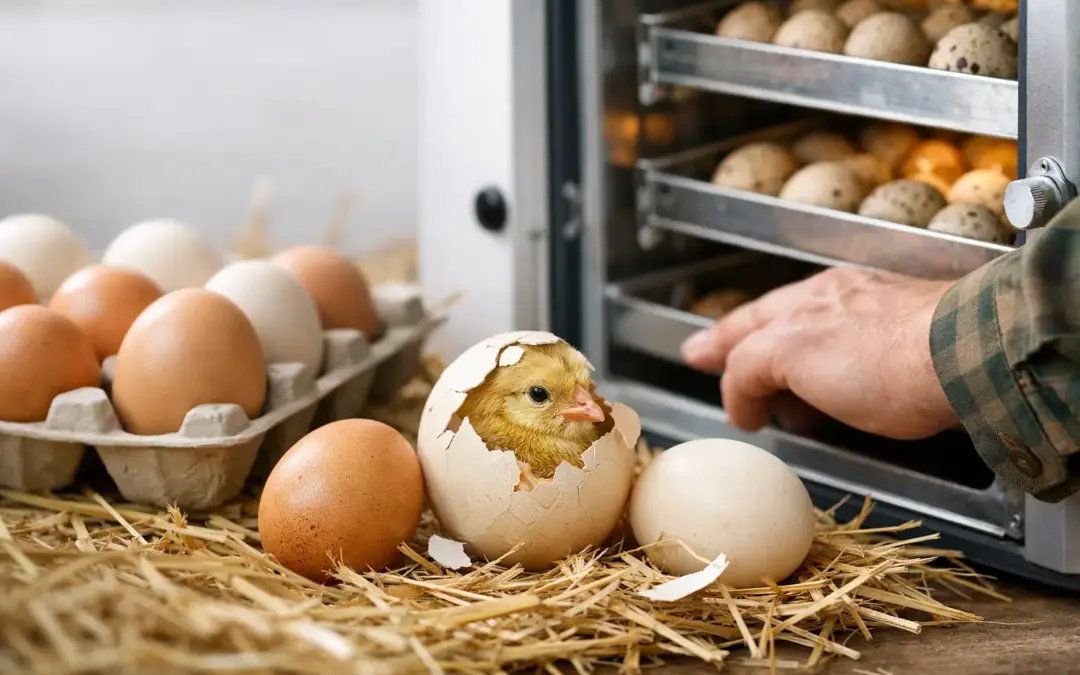
A tray of hatching eggs can represent months, sometimes years, of careful breeding work. The right eggs give you a genuine chance to build a flock with the type, temperament and production qualities you want. The wrong ones can leave you with a poor hatch, disappointing birds and no clear answer as to where things went wrong.
That is why serious keepers look beyond a handsome photograph or a low price per egg. Buying fertile eggs is not like picking up a dozen for breakfast. Breed quality, flock management, egg handling and the honesty of the breeder all matter before the incubator has even warmed up.
What Makes Hatching Eggs Worth Buying?
A good breeder can tell you more than the name of the breed. They should know the age and make-up of the breeding pen, whether birds are kept to a recognised standard, and what traits they are selecting for. For some buyers, that means exhibition type and correct feathering. For others, it may mean strong utility birds, good laying ability, hardiness or a calm nature around children.
Ask what you actually need from the birds before you buy. A rare colour can be tempting, but it may not be the best starting point if your priority is productive hens or a straightforward first hatch. Equally, a breeder working with a heritage line may be exactly the right choice when you are improving an established flock and want to preserve proper breed character.
Eggs should be clean, normally shaped and of a sensible size for the breed. Very small pullet eggs, oversized eggs, cracked shells and heavily soiled eggs are poor candidates. A breeder who refuses to send questionable eggs is doing the right thing, even if it means your order takes longer to fulfil.
Fertility is also more than a headline percentage. It changes with the season, the age and condition of the birds, flock ratio, weather, housing and individual cockerel performance. No responsible breeder can promise that every egg will develop or every developing chick will hatch. They can, however, explain how their birds are managed and be clear about what they have seen in recent sets.
Questions to Ask Before You Buy Hatching Eggs
Direct contact with the breeder is one of the strongest advantages of buying through a specialist marketplace. A few sensible questions can tell you far more than a listing title ever will.
Start by asking when the eggs will be laid and dispatched, how they are packed, and whether the breeder has recently checked fertility from that pen. If you are buying a breed with known genetic considerations, such as a crested, rumpless or heavily feathered variety, ask how the breeding birds are paired and what the breeder is selecting against.
It is also reasonable to ask for current photographs of the parent stock, particularly when breed markings, leg colour or body shape matter to you. Photos are not a substitute for knowledge, but they help you judge whether the seller’s birds are in line with the stock you want to keep.
The best conversations are specific. Rather than asking, “Are they good?”, ask whether the hens are first-year layers, whether the cockerel is running with them full time, and whether the line has been selected for laying, showing or dual-purpose use. A knowledgeable breeder will not be offended by sensible questions. This is livestock breeding, not an impulse purchase.
Freshness, Storage and Dispatch Matter
Fresh eggs generally give you the best starting point. Ideally, eggs are set within seven days of laying, although capable breeders can still achieve worthwhile results beyond that window when eggs have been stored correctly. Every extra day can reduce the odds a little, so timing matters when ordering by post.
Before dispatch, eggs should be stored with the pointed end down in a cool, stable place, away from direct sun and sharp temperature swings. They should be turned or gently tilted during storage so the yolk does not settle. Refrigeration is not suitable for eggs intended for incubation.
Posted eggs are convenient, especially when you are sourcing a breed that is difficult to find locally, but transit adds risk. Rough handling, delays and temperature changes can affect hatchability even when the box arrives looking intact. This is a trade-off worth accepting for access to well-bred stock, provided you buy with realistic expectations.
When eggs arrive, inspect the parcel carefully. Photograph any obvious damage before opening or disposing of packaging. Remove the eggs gently and check for cracks, leaks or broken air cells visible when candled. Let posted eggs rest pointed end down for at least 12 to 24 hours before setting them. If air cells are badly detached, a longer rest and more careful early incubation may be sensible.
Set Them Up for a Fair Hatch
Even excellent eggs cannot compensate for a poorly prepared incubator. Switch it on at least a day before setting so you can confirm that temperature and humidity are stable. Check it with a reliable thermometer rather than assuming the built-in display is exact.
For most chicken eggs in a forced-air incubator, the target temperature is around 37.5°C. Still-air machines usually require a slightly higher reading at the top of the eggs, so follow the manufacturer’s guidance carefully. Humidity needs vary with the incubator, local conditions and egg size, which is why tracking air-cell development by candling can be more useful than chasing one fixed number.
Turn eggs regularly until lockdown, usually from day 18 for chicken eggs. Automatic turners make this easier, but manual turning works well when done consistently. Marking opposite sides lightly with a pencil helps prevent missed turns. Avoid repeatedly opening the incubator simply to check progress: stable conditions are usually more valuable than curiosity.
Candle around day 7 to look for development, then again later if needed. Clear eggs and early losses are part of incubation, even in a strong batch. Remove any eggs that show signs of leaking or spoilage, but do not rush to discard an egg simply because development is not immediately obvious. Dark-shelled eggs can be harder to read, and uncertainty is sometimes better resolved with a second check a few days later.
Keep Records, Not Just Memories
If you plan to hatch more than once, write down the breeder, breed, lay date where known, arrival condition, date set, incubator settings, candling results and hatch outcome. This turns one hatch into useful information rather than a story you half remember next season.
Records help separate problems caused by transport from those caused by storage or incubation. They also show which breeders and bloodlines have worked well in your set-up. A 50 per cent hatch from a posted batch may be a very different result from a 50 per cent hatch from eggs collected locally and set the same day.
Do not judge a breeder solely on chick numbers either. Look at the quality and vigour of the chicks, whether they match the breed you expected, and how clearly the seller communicated throughout. Serious breeders care about where their lines go and are usually willing to offer practical guidance when something does not look right.
Buy From People Who Know Their Stock
Generic classifieds often make it hard to tell whether eggs come from an established breeding pen or simply from whatever birds happen to share a run. For anyone seeking rare breeds, heritage lines or birds with a defined purpose, that lack of detail wastes time and weakens trust.
A specialist setting such as Hatch & Hive gives buyers a clearer place to compare listings, speak directly with breeders and find stock from people who understand the difference between a bird that looks the part and one bred with intent. It also gives sellers the chance to present their flock properly, rather than reducing careful work to a vague advert and a single photograph.
Good hatching eggs are not guaranteed chicks in a shell. They are a well-managed start, backed by honest information and your own careful incubation. Choose the breeder with the clearest answers, give the eggs a settled journey into the incubator, and let your records guide the next hatch.