
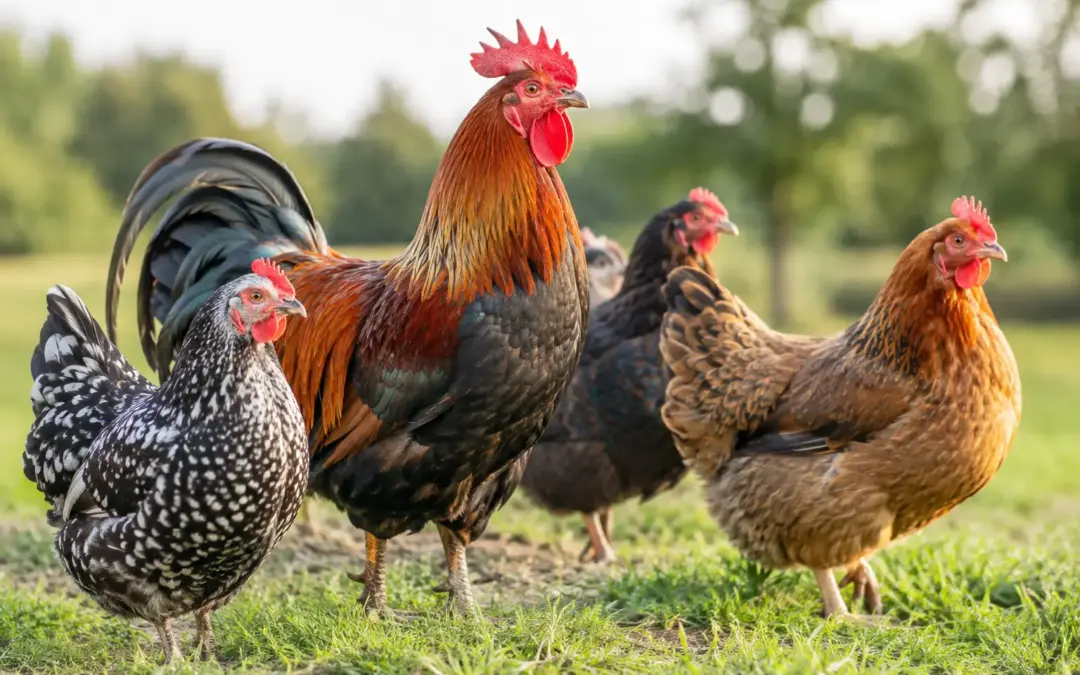
A proper heritage bird should make you look twice, not because it is fashionable, but because it carries generations of careful selection in its frame, feathering and character. The best heritage breeds are living working records: birds bred for utility, hardiness, type and temperament long before poultry became a quick-scroll purchase.
For keepers and breeders, that matters. A heritage flock can give you dependable eggs, excellent table qualities where that is your aim, birds suited to ranging, and the satisfaction of preserving something that cannot be replaced once careless breeding has diluted it. But the label is used loosely. Knowing what you are buying – and what you intend to breed – is where the serious work begins.
What makes a poultry breed heritage?
There is no single rule that settles the question for every breed and species. In practical terms, heritage breeds are established traditional breeds with a recognised history, distinct physical characteristics and a breeding population maintained to preserve those characteristics. Many have deep roots in British agricultural and backyard keeping culture, while others arrived from Europe or further afield and have become long-standing fixtures in UK flocks.
A heritage breed is not simply an old-looking bird, a rare colour, or anything sold as “traditional”. Breed identity rests on consistency. A Barnevelder should look, lay and behave within the broad expectations of a Barnevelder. A Light Sussex should carry its familiar colour pattern and useful, steady nature. A proper breed is more than a name attached to a listing.
This is why provenance matters. A breeder may not have formal paperwork for every generation, particularly in small private flocks, but they should be able to speak plainly about their birds: where the line came from, what they select for, how long they have kept it, and any known strengths or weaknesses. Evasion is a warning sign. So is a dramatic claim with no useful detail behind it.
Heritage does not automatically mean rare
Some traditional breeds are widely kept and readily available. Others have genuinely small breeding populations, few active lines, or only a handful of breeders producing quality stock in a given season. Both can be heritage breeds.
Rarity is not a shortcut to quality. A common breed from a breeder who selects carefully for health, sound type and productive ability is usually a better foundation than a scarce breed reproduced without enough attention to vigour or faults. The aim is not to collect labels. It is to keep good birds and, where breeding, leave the breed stronger than you found it.
Why heritage breeds are worth the effort
Modern hybrid hens have their place. For someone wanting a predictable number of eggs with little interest in breeding, they can be a sensible choice. Heritage birds ask for a different kind of commitment. Their laying rate may be lower, their growth slower, and their individual personalities more pronounced. In return, they offer traits that are often overlooked until they are needed.
Many traditional breeds are valued for resilience in varied British weather, a willingness to forage, broodiness where natural hatching is wanted, or a calmer disposition around a mixed smallholding. Some are particularly useful dual-purpose birds. Others are kept for exceptional eggs, distinctive plumage, or because they are one of the few remaining threads of a regional farming history.
That does not mean every heritage bird will suit every keeper. A flighty Mediterranean type can be a poor fit for a tight suburban garden. A heavily feathered breed may need dry footing and more attention through a wet winter. A large, slower-maturing bird needs room, sound housing and sensible feed management. Choose for your set-up first, then fall in love with the breed.
Choosing heritage breeds for your flock
Start with the conditions you can actually provide. Think about available space, predator pressure, neighbours, housing, the number of eggs you want, whether you need a broody hen, and whether you are prepared to keep a cockerel. Those answers narrow the field quickly.
A keeper wanting a friendly family flock may prioritise temperament and manageable size. A smallholder wanting birds that earn their keep may look for useful layers that range well. A breeder may place type, feather quality, fertility and line history above all else. None of these priorities is wrong, but mixing them up leads to disappointment.
When looking at live birds, do not let a single smart photograph make the decision. Assess the whole bird. It should be active, bright-eyed and well feathered, with clean nostrils, a sound stance and no obvious breathing noise. Look at legs and feet, especially in feather-legged breeds, and ask about age, recent moult, worming approach, vaccination where relevant, diet and whether the bird has been exposed to other stock recently.
For hatching eggs, ask how the breeding pen is set up. A responsible seller should know the parent birds, the ratio of males to females, the age of the flock and the usual fertility they see. Nobody can guarantee a hatch from eggs once they have travelled and been handled by a buyer, but a candid breeder will set realistic expectations rather than promise impossible results.
Questions that separate breeding stock from birds of a type
If your aim is to breed, ask whether the birds are from exhibition, utility or mixed lines, and what the breeder is actively trying to improve. Ask about faults that have appeared in the line, whether unrelated stock has been introduced, and how closely birds are related. These are not awkward questions in a specialist community. They are the right questions.
You should also ask what “pure” means in that particular flock. It should mean the birds have been bred within the recognised breed, not simply that they resemble it. A cross can be a perfectly good backyard bird, and honest sellers should describe crosses clearly. The problem is not crossbreeding. The problem is passing a cross off as something it is not.
Breeding with purpose, not just producing chicks
Every breeding season is a choice about what continues. That is why heritage poultry deserves more than pairing the prettiest cockerel with the nearest hens. Start with healthy, vigorous adults that meet the breed’s key characteristics. Keep notes on hatchability, chick strength, growth, laying performance, broodiness, temperament and visible faults. Memory is unreliable once a flock grows.
Selection should be firm but sensible. Removing every bird that is not show quality can narrow a line too quickly, particularly in less common breeds. Equally, breeding repeatedly from birds with clear defects because they are friendly or unusually coloured does no favour to the breed. Good breeding balances type with utility, fertility and genetic breadth.
Avoid breeding too closely generation after generation unless you understand exactly why you are doing it and have a plan for the risks. Tight line breeding can fix desirable traits, but it can also expose weaknesses and reduce vigour. Many small breeders benefit from building relationships with others keeping the same breed, exchanging knowledge and, when needed, bringing in well-chosen unrelated stock.
Cockerel choice deserves particular care. One male can influence a large part of a flock, so he should be selected for far more than his looks. Watch his movement, health, temperament and how he treats hens. A handsome bird that is hard on females, unreliable in temperament or weak in type is not a good breeding decision.
The value of honest selling
Heritage breeding only works when sellers describe stock accurately and buyers are prepared to ask proper questions. A pullet should be listed as a pullet, not a guaranteed laying machine. A young cockerel should be described with his age and breeding background. If a line has a known fault or a bird has a minor blemish, say so.
That level of honesty protects buyers, but it also protects the reputation of the breed and the breeder. Serious keepers come back to sellers who communicate well, pack hatching eggs carefully, keep clean stock, and deal fairly when a genuine problem arises. They remember sellers who hide behind vague descriptions too.
A specialist marketplace such as Hatch & Hive gives that conversation a proper home. It is easier to find people who understand the difference between a novelty bird and carefully bred stock, and easier to build the connections that keep good lines moving between responsible homes.
Keep the standard, keep the bird
There is no need to turn every flock into a show team. Plenty of heritage birds live useful, well-cared-for lives in garden runs and smallholdings without ever seeing a show pen. Yet the breed standard remains valuable because it gives breeders a shared reference point. Without it, a breed slowly becomes a name with no dependable meaning.
Keep birds that suit your ground and your purpose. Buy from people who can answer for their stock. Record what works, be honest about what does not, and make each breeding decision with the next generation in mind. That is how heritage breeds remain more than a fond memory – and how the right birds stay in good hands.