
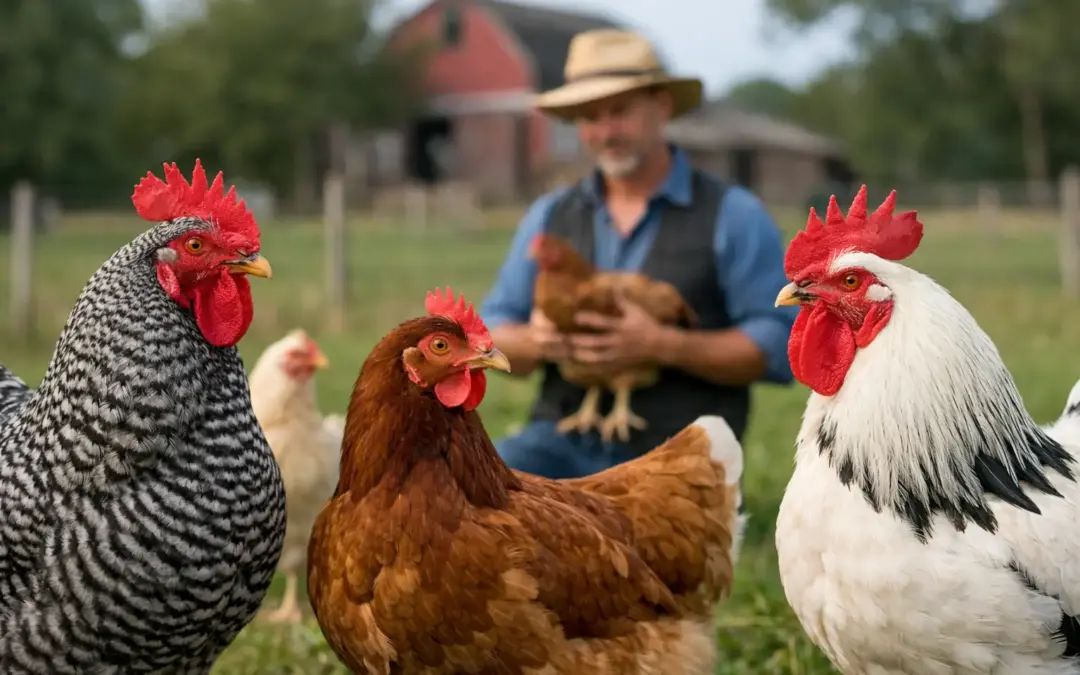
A handsome bird with an old-fashioned name is not automatically heritage poultry. The term should mean something more: stock bred with respect for a recognised breed, its historic type, useful qualities and long-term genetic future. For keepers, that means looking beyond novelty colouring, a tidy advert or a cheap tray of hatching eggs.
Good heritage breeding is patient work. It asks a breeder to know what their birds should be, select honestly, keep sound records and make decisions that protect the line rather than merely producing chicks to sell. That is precisely why serious buyers value knowledgeable sellers and direct, sensible conversation before they commit.
What makes poultry a heritage breed?
In practical terms, heritage breeds are established traditional breeds with a documented history and a recognisable breed standard. Many have been kept in Britain for generations, whether as productive farmyard birds, table fowl, exhibition stock or all three. They are part of living agricultural history, not ornaments disconnected from purpose.
A proper heritage bird should still carry the characteristics that made the breed worth keeping. Depending on the breed, that may mean dependable laying through a British winter, a broad carcass, hardiness on rough ground, broodiness, an active foraging nature, or a particular shape, carriage and plumage pattern. The standard matters because it gives breeders a shared reference point. Without it, a breed can quickly become little more than a name attached to mixed stock.
That does not mean every bird has to be a show winner. A useful backyard flock can include birds with minor faults, provided the keeper understands those faults and does not breed them on indiscriminately. The difference is honesty. A serious breeder can explain where a line is strong, where it needs work and how the mating has been planned.
Breed type is more than feather colour
Colour is often the first thing buyers notice, particularly with rare varieties. It is rarely the whole story. A correctly coloured bird with poor body shape, weak legs, a badly carried tail or an unsuitable comb is not a strong representative of its breed.
Breed type is the overall picture: size, weight, frame, head points, feather quality, carriage and temperament. In large fowl, it may include the depth of body and strength of leg needed for a practical dual-purpose bird. In bantams, balance and scale matter just as much. A bird can be beautifully marked yet still be too narrow, too upright or too fine-boned for the standard.
Temperament deserves its place in the conversation too. Heritage poultry has traditionally lived close to people, children, other livestock and changing weather. Nervous, aggressive or persistently difficult birds are not a minor inconvenience in a breeding pen. They can be a reason to rethink a mating, especially when the behaviour is repeated across related stock.
The difference between heritage, rare and simply unusual
These terms are often used together, but they are not interchangeable. A heritage breed may be widely kept and still deserve careful breeding. A rare breed may have very few active breeders and therefore need even more thoughtful management. An unusual cross, hybrid or newly created colour may be interesting, but it is not necessarily heritage stock.
This distinction matters when buying. If you want birds for a recognised breeding project, ask for the actual breed and variety, not just a broad description such as “rare hens” or “traditional type”. Ask whether the birds are pure bred, whether they have been selected to the standard, and whether unrelated bloodlines are available.
There is nothing wrong with keeping crossbred birds for eggs, pets or a hardy garden flock. Many make excellent keepers’ birds. Problems start when crossbred stock is presented as pure heritage breeding material, or when buyers are left to discover the difference after the birds arrive.
Choosing heritage poultry from a breeder
Buying well begins before you arrange collection. Good breeders expect questions because they ask them too. They will want to know about your housing, experience, intended numbers and whether you are looking for eggs, birds for the garden, exhibition prospects or a long-term breeding group.
When considering live birds, look for bright eyes, clean nostrils, good feather condition, sound feet and legs, and birds that move freely. A bird standing hunched, wheezing, limping or showing obvious external parasites should not be dismissed as a small issue. Transport and a new environment are stressful enough without adding avoidable health concerns.
For hatching eggs, the conversation changes slightly. Ask how old the breeding flock is, how many hens run with each male, when the eggs were laid and how they will be packed. Fertility and hatch rate are influenced by season, weather, flock condition, egg handling and courier treatment, so no responsible seller can promise a perfect hatch. What they can offer is clear information, fresh eggs, sensible packing and a breeding pen that has been managed properly.
It is also worth asking what the breeder is selecting for. “Good layers” may matter most to one keeper. Another may be building towards the exhibition standard. A smallholder might prioritise birds that forage well and cope with exposed ground. There is no single right aim, but there should be a clear aim.
Breeding with a plan, not just a cockerel
The quickest way to weaken a heritage line is to breed every available bird simply because it is there. A breeding pen should be assembled around complementary strengths. If a hen has excellent body but a weak comb, pair her with a male that is strong in head points without introducing a new structural fault. If a line has lost size, choose birds that can restore it rather than repeatedly selecting only for colour.
Keep records from the start. Record parentage, hatch dates, fertility, health issues, temperament, weights where relevant and the qualities you want to retain or improve. A notebook is enough if it is used consistently. Once several related pens are running, records stop being optional – they are what prevent accidental close matings and vague claims about bloodlines.
Inbreeding is not automatically reckless. Line breeding has been used carefully by skilled breeders to fix desirable traits. But it needs a clear purpose, close observation and a plan for bringing in compatible, unrelated stock when vigour or fertility begins to slip. Repeated close matings without records are not a breeding strategy.
Culling is another difficult but necessary part of maintaining standards. This does not mean treating birds carelessly. It means deciding which birds should not contribute to the next generation and finding appropriate homes for sound birds that are unsuitable for breeding. Welfare, space and practical flock management must come before sentiment.
Health, housing and biosecurity protect the line
A valuable line is only as secure as the flock around it. Quarantine incoming birds away from your established poultry for a sensible period, use separate equipment where possible and avoid moving between pens without basic hygiene. Visitors, shared crates, auctions and shows all create routes for disease to travel.
Housing should suit the breed. Heavy fowl need low, sturdy perches and easy access to the pop-hole. Feather-legged breeds need dry ground and clean litter if their foot feathering is to remain healthy. Active, lighter breeds benefit from room to range or a spacious run where they can scratch and forage. Overcrowding leads quickly to damaged plumage, stress, pecking and compromised condition.
Do not overlook the male-to-female ratio. Too few hens with an enthusiastic cockerel can leave hens with damaged backs and poor feathering. Too many hens may reduce fertility. The right balance depends on breed, age, temperament and available space, which is another reason experienced breeders speak in specifics rather than offering one fixed rule.
Why buying from informed sellers matters
Heritage breeds survive because people breed them deliberately, share knowledge and place good stock with keepers who understand what they have bought. The best transactions are not anonymous. They involve questions about parentage, breeding aims, housing and collection, with both sides clear about what is being sold.
A specialist marketplace such as Hatch & Hive gives that exchange a proper home. Buyers can seek out the breeds and lines they are genuinely interested in, while breeders can present their stock with the detail it deserves rather than competing with vague, general listings.
The strongest heritage flock is rarely built overnight. Start with the best stock your budget and setup can support, learn the standard, make notes, and give each breeding decision time to prove itself. That is how a few birds in a garden, smallholding or breeding shed become part of keeping a worthwhile line alive.