
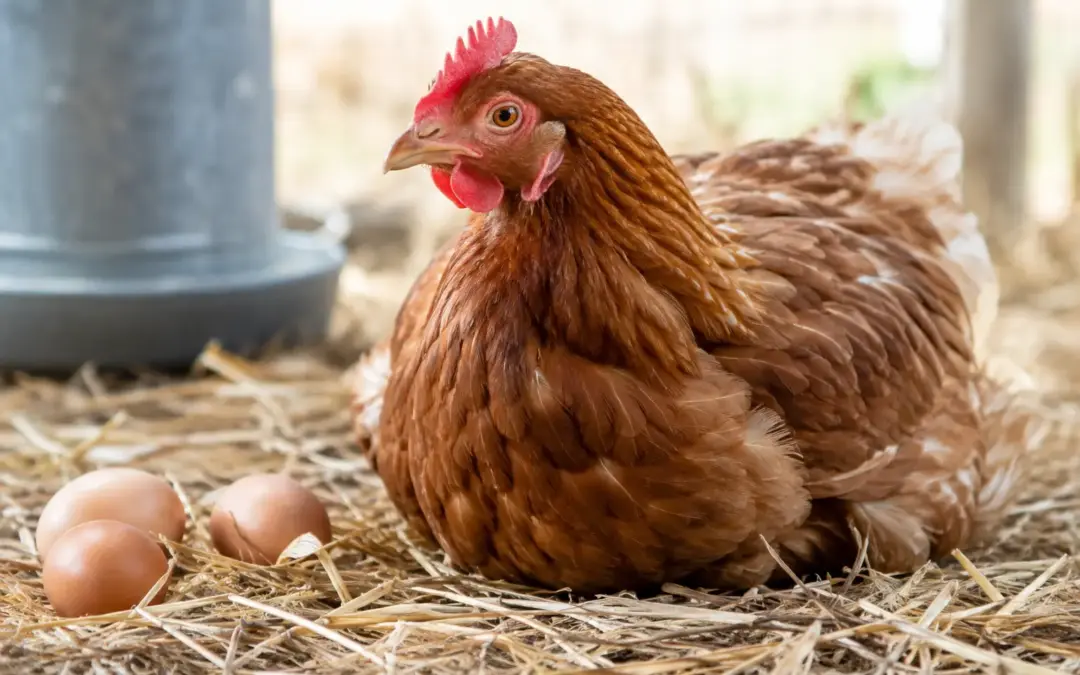
A hen standing hunched in the nest box, repeatedly straining but producing nothing, needs attention – not a wait-and-see approach. Egg bound chickens can deteriorate quickly, particularly smaller bantams, young pullets laying their first eggs, and older hens whose laying systems are under strain. Knowing what you are seeing, and when to call a poultry-aware vet, can make the difference.
What does egg bound mean in chickens?
A hen is egg bound when an egg is delayed or stuck in the oviduct, usually near the vent. It is not simply a late egg. The bird may be unable to pass it because the egg is unusually large, misshapen, soft-shelled, or because the muscles and tissues involved in laying are not working effectively.
It is a genuine welfare issue. Pressure from a retained egg can affect circulation, digestion and breathing, while prolonged straining leaves a hen exhausted. There is also a risk of prolapse, infection or internal damage. A bird that looks merely off-colour in the morning can be seriously unwell by evening.
Do not assume every hen sitting quietly is egg bound. Broody hens, birds with crop problems, constipation, reproductive disease or an early-stage illness can show some similar signs. The difference is usually in the posture, repeated effort to lay, and how rapidly the hen changes.
Signs of egg bound chickens to take seriously
Watch the bird rather than relying on one symptom. A hen with a retained egg may spend an unusually long time in the nest box, repeatedly stand and squat, or walk with a wide, uncomfortable stance. She may strain visibly, pump her tail, or pass only watery droppings because the egg is pressing on the bowel.
Other common signs include a swollen-looking abdomen, a dirty vent, reduced appetite, weakness and a tucked-up posture. Some hens become noticeably quiet and separate themselves from the flock. In more severe cases, they may pant, appear unable to perch, or sit low with their feathers fluffed.
A quick, calm check can help. If the hen is settled, look at the vent for swelling, redness, discharge or tissue protruding. You may be able to feel an egg low in the abdomen or just inside the vent, but do not probe deeply or force anything. An egg can break, and rough handling can tear delicate tissue.
If there is a prolapse, bleeding, marked swelling, collapse, laboured breathing, a foul-smelling discharge, or the hen has been straining for hours, contact a vet promptly. These are not conditions to manage through online guesswork.
What to do when you suspect a retained egg
First, bring the hen somewhere warm, quiet and dim. A hospital crate indoors or a secure, draft-free pen gives her a chance to rest away from flock pressure. Provide fresh water within easy reach and keep handling to a minimum. Stress and chilling make an already difficult situation worse.
A warm bath can sometimes relax the muscles around the vent. Use shallow, comfortably warm water and support the hen throughout, keeping her head and chest well clear. Ten to 15 minutes is plenty. Afterwards, dry her thoroughly with towels and keep her warm. A cold, damp hen is a new problem, not a solution.
You can apply a small amount of water-based lubricant around the outside of the vent if it looks dry or tight. Do not attempt to pull an egg out. Do not squeeze the abdomen. Do not break an egg inside the hen. Those actions can cause injury, leave shell fragments behind, or turn a treatable blockage into an emergency.
If the bird does not lay soon after supportive care, remains distressed, or seems weak at any point, seek veterinary help the same day. A vet can assess whether an egg is present, provide appropriate pain relief and calcium where indicated, and deal safely with a difficult lay or a different underlying condition. In practical poultry keeping, knowing when to stop intervening is as valuable as knowing the first-aid basics.
Keep the rest of the flock out of the equation
A poorly hen is vulnerable to pecking, especially around a swollen or protruding vent. Separate her where she can still hear the flock if possible, but do not return her until she is bright, eating, passing normal droppings and the vent looks healthy. If she has had a prolapse, returning too early can invite further damage.
Why hens become egg bound
There is rarely one single cause. Young pullets can struggle as their bodies adjust to laying, especially if they come into production before they have properly matured. At the other end of the scale, older hens are more prone to reproductive disorders and reduced muscle tone.
Egg size matters. A very large double-yolker can be difficult to pass, while a soft-shelled or shell-less egg may not move normally through the oviduct. Poor calcium balance can contribute, but throwing supplements at every laying issue is not sensible either. Too much calcium is not harmless, and the right approach depends on the bird’s diet, age and condition.
Obesity is another regular factor. Overfed hens, particularly pet bantams with limited exercise, may carry excess abdominal fat that affects laying. Equally, a hen that is underweight, worm-burdened or recovering from illness may lack the strength to lay normally.
Genetics and breeding choices deserve an honest mention. Repeatedly selecting for exceptional egg size, very high production, or exaggerated body type can bring consequences. Good breeders look beyond the number of eggs in a season. Vigour, sound frame, fertility, hatchability and the ability to live a healthy working life all matter. Rare and heritage stock is worth preserving properly, not simply producing in quantity.
Reducing the risk in a laying flock
Prevention starts with ordinary, consistent husbandry. Feed a complete layers’ ration as the main diet for birds in lay, with clean water available at all times. Mixed corn, scraps and treats should remain just that – extras. If they are filling up on scratch feed, they may be missing the balanced nutrition that supports shell quality and laying.
Offer a separate source of oyster shell or another suitable poultry calcium supplement free-choice, rather than dosing every hen indiscriminately. Insoluble grit should also be available for birds eating anything beyond pellets or mash. Keep birds active with enough usable space, dry footing, perches and opportunities to forage.
Routine observation catches problems early. You do not need to inspect every vent every day, but you should know who is laying, who is eating, and which bird has suddenly become quiet. Check nest boxes for unusual eggs: very large eggs, thin shells, wrinkled shells and repeated soft-shelled eggs are worth recording against the hen if you can identify her.
For breeding pens, do not rush immature pullets into a high-energy laying diet or breed from birds with recurring reproductive trouble without advice. A single awkward egg can happen to any hen. A pattern is different. Keep clear breeding records, be candid with buyers where health history is relevant, and favour stock that performs well without being pushed beyond its limits.
When it may not be a stuck egg
Not every bird that strains has a normally formed egg lodged near the vent. Internal laying, salpingitis, peritonitis, tumours, constipation and digestive blockages can all cause abdominal swelling and discomfort. These conditions may look like egg binding at first but will not be fixed by a warm bath.
That is why a hen that repeatedly appears egg bound, produces no egg after initial support, or never quite returns to herself needs veterinary assessment. Repeated episodes are a warning that there may be more going on than one difficult lay.
A well-run flock is built on close observation, sound feeding and breeders who put bird quality ahead of quick output. Act early when a hen is straining, handle her gently, and get proper help before a difficult egg becomes a much bigger problem.