
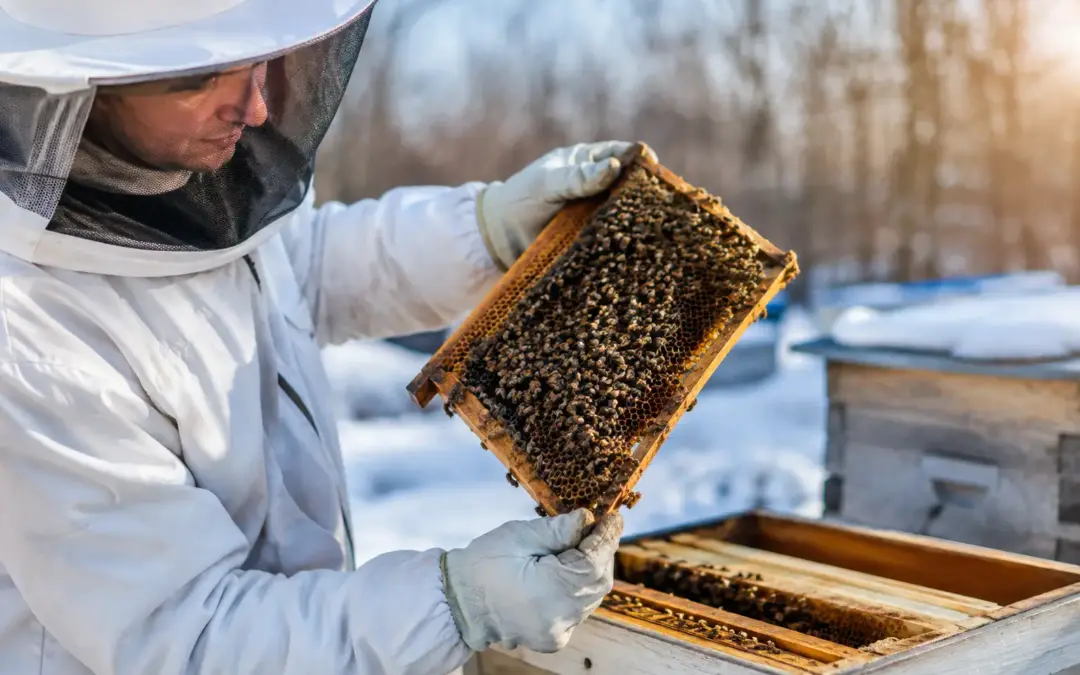
A cheap nuc that fails in April is not a bargain. When you are buying over wintered nucs of bees, you are paying for more than five or six frames, a queen and a box. You are buying proof that a colony has come through the hardest part of the beekeeping year and is ready to build when forage starts moving.
For a new beekeeper, that can mean a calmer, stronger start than a summer split. For an experienced keeper, it can be the quickest way to replace winter losses or add productive colonies without waiting for your own increase. But overwintered does not automatically mean excellent. The quality of the queen, the condition of the brood, the stores, the frame format and the breeder behind the colony still matter.
What buying over wintered nucs of bees should get you
An overwintered nuc is usually offered in spring after the colony has survived winter as a small, managed unit. By then, the breeder should have a clear view of how the colony has wintered, whether the queen is laying properly and whether it has enough momentum to develop.
A sound overwintered nuc should contain a marked or identifiable laying queen, a sensible balance of brood and bees, and enough food to cover a cold or wet spell. It should be established on the number of frames advertised, rather than being made up at the last minute to look full on collection day.
The real advantage is timing. A properly wintered nuc can expand with spring forage, draw comb, fill a brood box and potentially make a honey crop in its first season. That last point is never guaranteed. Weather, forage, management and swarm control all have their say. Still, you begin with a colony that has already demonstrated basic resilience.
This is also why a good overwintered nuc generally costs more than a newly made spring nuc. It has needed autumn feeding, varroa management, housing, inspections and the risk carried by the breeder through winter. Price should reflect genuine husbandry, not clever wording in an advert.
Look past the word “overwintered”
Ask how the nuc was wintered and when it was first assessed in spring. A colony that survived on its own bees in a nuc box is different from one that has been heavily supported, united, or recently boosted with frames from stronger colonies. Support is not necessarily a problem – sensible beekeepers intervene when colonies need it – but you deserve a straight answer about what you are collecting.
The number of frames needs context too. Five crowded National brood frames covered in bees are more useful than six frames with patchy brood and a thin covering of workers. Ask whether the stated frame count includes all brood, food and drawn comb, and whether the nuc will be supplied in a travelling box, cardboard nuc, poly nuc or your own box.
Frame compatibility is not a small detail. If your apiary runs National equipment, buying a nuc on National brood frames keeps the transfer simple. A colony on 14 x 12, Commercial, Langstroth or another format may be excellent, but it brings an equipment decision with it. Do not assume frames will fit because the box looks familiar in a photograph.
What good brood looks like
You do not need every frame to be packed from bar to bar in early spring. Brood naturally varies with weather and colony size. What you want to see is a queen with a reasonably even laying pattern, eggs or young larvae showing she is present and laying, and brood at different stages.
A few empty cells are normal. Large irregular gaps, scattered brood across many frames, sunken or perforated cappings, unpleasant odours, or an obvious shortage of bees deserve a proper conversation. Do not be embarrassed to ask the seller to show you the brood frames at collection. Serious breeders expect informed questions.
If the queen is not marked, ask her age and whether the breeder has actually seen her recently. A marked queen is convenient, not a mark of quality by itself. A well-bred, well-mated queen with a steady brood pattern matters far more than a bright paint dot.
Questions worth asking before you commit
A good seller should be able to answer directly, without dressing every reply up as a sales pitch. Ask when the queen was raised, whether she is home-bred or bought in, and what traits the breeder selects for. Temperament, spring build-up, low swarming tendency, hygienic behaviour and honey production can all be relevant, but no line produces identical colonies in every apiary.
Ask about varroa treatment and monitoring. You are not looking for a magic treatment programme. You are looking for evidence that the colony has been managed deliberately, rather than ignored until it was time to sell. Find out what was used, when it was applied and whether mite levels were checked.
It is also sensible to ask about the apiary’s health history, any recent inspections, and whether the seller has seen anything that raises concern. Be alert to sellers who promise a colony is completely disease-free in absolute terms. Better breeders explain their checks, keep clean equipment practices and take bee health seriously.
Three further practical questions often prevent trouble: Is the nuc ready for immediate transfer? What food is currently on the colony? And what happens if poor weather delays collection? The answers tell you a great deal about how the seller manages stock and buyers.
Collection day is part of the purchase
Have your stand, hive, roof, feeder and food ready before you leave. A nuc should not sit in a hot car while you assemble a hive, hunt for a hive tool or discover that your brood box is the wrong size.
Confirm collection arrangements with the breeder. Colonies are commonly closed up early in the morning or late in the evening, when most foragers are home. The entrance needs to be secure but ventilated, and the nuc must be strapped so it cannot shift in transit. Keep it level, out of direct sun and in the cool, ventilated part of the vehicle. Never leave bees shut in a parked vehicle while you stop for errands.
On arrival, place the nuc exactly where you want the colony to live. If it has travelled any meaningful distance, you can normally open it at the new site once it is settled and calm. If you are moving it a short distance within the same local area, speak to the seller first. Bees remember their forage routes, and moving a colony only a little can lead returning workers back to the old position.
Give the colony time to orientate. There is no prize for transferring every frame into a full hive on the first evening. If the nuc box is suitable and weather is unsettled, leaving it for a few days can be the quieter option. Transfer on a warm, calm day when you can work carefully and keep the frames in their original order.
The first month tells you what you bought
An overwintered nuc needs management, not admiration from a distance. Check it after it has settled, then inspect according to the weather and its rate of expansion. Ensure it has space before it becomes congested, but do not swamp a small colony in too much empty box too soon.
Spring can turn sharply cold, particularly in exposed parts of the UK. A colony full of brood consumes stores quickly when flying days disappear. Heft the hive and feed if necessary, following the seller’s advice and the conditions in front of you. Do not assume blossom visible from the gate means the colony has enough accessible food.
Watch for swarm preparation as the colony strengthens. This is one of the trade-offs of buying a strong spring nuc: it can develop quickly, and a productive queen may need room and timely inspections. Strong stock is only an advantage when your management keeps pace.
Keep notes from the beginning – queen age, treatment history, temperament, brood pattern and how the colony responds to forage. Those records make you a better buyer next season and help you decide which bees are worth breeding from, requeening or simply enjoying.
Buy the breeder as carefully as the bees
Photographs of busy frames are useful, but they are not the whole story. The best purchase is usually from a breeder who can describe the colony plainly, sets realistic collection dates and remains available for sensible questions after you get home. That is the standard specialist marketplaces such as Hatch & Hive are built to support: direct contact, informed sellers and stock chosen by people who know what they are looking at.
Do not chase the earliest available nuc just because spring has arrived. A later colony with a proven queen, balanced brood and an honest breeder is often the better start. Take the time to inspect, ask proper questions and prepare your site. Good bees reward good beekeeping, and the relationship begins long before the nuc reaches your apiary.