
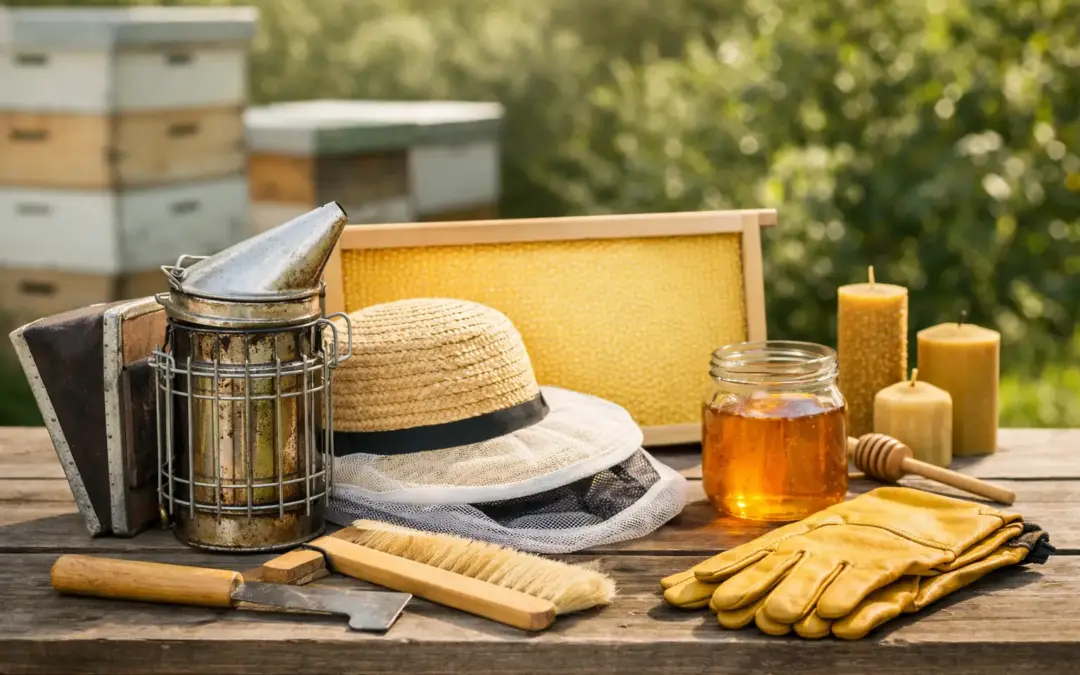
A first colony does not need a shed full of gadgets. It needs sound housing, calm handling and a keeper who can inspect it safely. The best bee supplies for beginners are therefore the items that make routine work straightforward, protect both keeper and bees, and fit the hive system being used.
Buying cheaply without checking compatibility is a familiar false economy. A bargain box of frames is no bargain if they do not fit your brood box; an unsuitable veil can turn a simple inspection into a nerve-racking job. Start with a proven, standard set-up and put your money into the essentials.
Best bee supplies for beginners: the core kit
A standard hive with enough boxes
For most new beekeepers, a National hive is the sensible starting point in the UK. It is widely used, replacement parts are easy to source, and experienced local beekeepers will know it well. That support matters when you are trying to understand why a colony is building brace comb or whether a frame will fit.
A complete hive should include a floor, brood box, crownboard, roof, stand and frames. You will also need at least one honey super, usually with a queen excluder. In practice, buying two supers is wiser. A strong colony can fill space quicker than a beginner expects during a decent flow, and running out of room can encourage swarming.
Choose either flat-packed equipment you are prepared to assemble carefully or properly made second-hand gear from a trusted source. Used wooden hives can be excellent value, but inspect them closely. Avoid equipment with severe rot, warped boxes, excessive old comb or uncertain disease history. Frames and comb are not where to take risks – new frames and foundation give you a known, clean starting point.
Poly hives are another worthwhile option. They are light, insulating and often helpful in exposed sites, though they need careful handling and paint protection where required. Wooden hives are durable, familiar and easy to repair. Neither is automatically better; consistency and good management count more than the material.
Protective clothing you will actually wear
A full bee suit with an integrated or securely attached veil is the safest choice for a new keeper. Choose a well-made suit with elasticated cuffs and ankles, strong zips and enough room to move without the fabric sitting tight against your skin. Loose clothing beneath it adds another useful layer.
Gloves are a personal choice. Thick leather or gauntlet-style gloves offer confidence early on, but they can make delicate frame handling clumsy. Many keepers move to thinner nitrile gloves once their handling improves, as they are easier to clean and less likely to spread propolis between colonies. Whatever you choose, make sure sleeves and gloves overlap properly.
Stout boots are essential. Bees have an annoying habit of finding the gap above a trainer or around a loose trouser cuff. Tuck trouser legs into boots or secure them over the top before opening a colony.
Smoker, fuel and hive tool
The smoker and hive tool are modest purchases, but they are used at almost every inspection. Buy a stainless steel smoker with a heat guard and a bellows that works smoothly. You do not need the biggest model on the shelf, but you do need one that stays lit long enough to finish calmly.
Natural, untreated fuel is the right choice. Hessian, dry pine needles, wood shavings or purpose-made smoker fuel can all work well. The aim is cool, clean smoke, not clouds of hot, acrid fumes. Practise lighting the smoker before your first inspection so you are not trying to manage it with bees already in the air.
A standard J-style hive tool is an excellent first tool because it scrapes, pries and lifts frames. A second, smaller tool is useful as a spare. Hive parts are glued together with propolis, and a kitchen knife or screwdriver is not a substitute.
Frames, foundation and feeders
Your colony needs enough frames to fill every box from day one. Buy the correct frame size for your chosen hive and decide whether you are using wired wax foundation or foundationless frames. Wired foundation is generally the easier route for beginners because it offers the bees a clear starting point and holds up better during handling and extraction.
A feeder is essential, even if you hope never to use it. A rapid feeder is practical for autumn feeding and for supporting a newly installed colony when appropriate. A contact feeder can also be useful, though it may require more frequent refilling. Feed only when there is a clear reason, such as helping a new nucleus establish, supporting a colony with inadequate stores, or providing autumn feed after honey removal. Syrup is not a substitute for reading the colony’s needs.
You will also need a way to make and store syrup safely, plus clean water nearby. Keepers should avoid leaving exposed feed where it can trigger robbing or attract wasps.
What can wait until you know your bees
Beginners are often sold equipment designed for every possible situation. Some of it becomes useful later. Much of it can wait.
Honey extraction equipment is the clearest example. An extractor, uncapping tray, settling tank and bottling kit are expensive, bulky purchases. A first-year colony may produce little or no surplus honey, particularly if it is a nucleus building itself up. When the time comes, borrowing, hiring or sharing equipment through a local association is often more sensible than buying everything upfront.
You can also hold off on specialist queen-rearing kit, multiple spare brood boxes, bee escapes, pollen traps and elaborate monitoring devices. Learn to read brood pattern, stores, temperament and space first. Good observation beats a cupboard full of accessories.
That said, a simple record book or inspection app should not be treated as optional. Write down the date, weather, queen status, brood pattern, stores, temperament, disease signs, action taken and any feeding. Clear records make it easier to spot changes and ask useful questions when you need advice.
Buy with the colony plan in mind
The hive is only one part of the purchase. Before ordering supplies, decide where your bees will come from and when they will arrive. A nucleus colony will need a properly prepared brood box with the right frames ready to receive it. A package or swarm may require a slightly different approach. Ask the breeder or seller exactly what hive format and frame size their bees are supplied on.
This is where specialist sourcing makes a real difference. You want a seller who can tell you about the colony’s temperament, queen age, health checks, treatment history and the equipment it occupies. Good breeders welcome sensible questions because a well-matched buyer gives their bees the best chance. Hatch & Hive is built around that direct connection between serious keepers and informed sellers, rather than leaving beginners to guess from a vague listing.
Do not buy bees before your site, equipment and support are in place. The practical order is simple: join or speak to a local beekeeping group, prepare a suitable apiary, assemble and paint the hive if needed, obtain your protective kit, then arrange collection or delivery at the right time. Check that neighbours, livestock and public paths have been considered. Bees are usually good neighbours when sited thoughtfully, but they still deserve responsible management.
The supplies that support good husbandry
A basic first-aid approach for the beekeeper is sensible: keep a sting card or antihistamine where appropriate for your own needs, have a charged mobile phone nearby, and tell someone when you are working bees if you are on an isolated holding. This is not about expecting trouble. It is about treating livestock work with the respect it deserves.
For the bees, keep a clean spare brood box or nuc box available if your budget allows. It can be invaluable when you need to collect a swarm, make a controlled split under guidance, or move frames during an inspection. Also keep a small stock of spare frames and foundation. You will use them sooner than you think.
Varroa monitoring and treatment supplies should be selected with advice from an experienced local beekeeper or bee inspector guidance. Treatments depend on season, colony condition and whether honey supers are on the hive. Never buy a product simply because another keeper uses it at a different time of year.
The best first purchase is not the flashiest one. It is dependable kit that fits together, a healthy colony from a knowledgeable source, and enough support to make your first season a learning process rather than a rescue job. Set the hive up properly, keep your notes, ask direct questions, and give the bees the steady, observant care they need.