
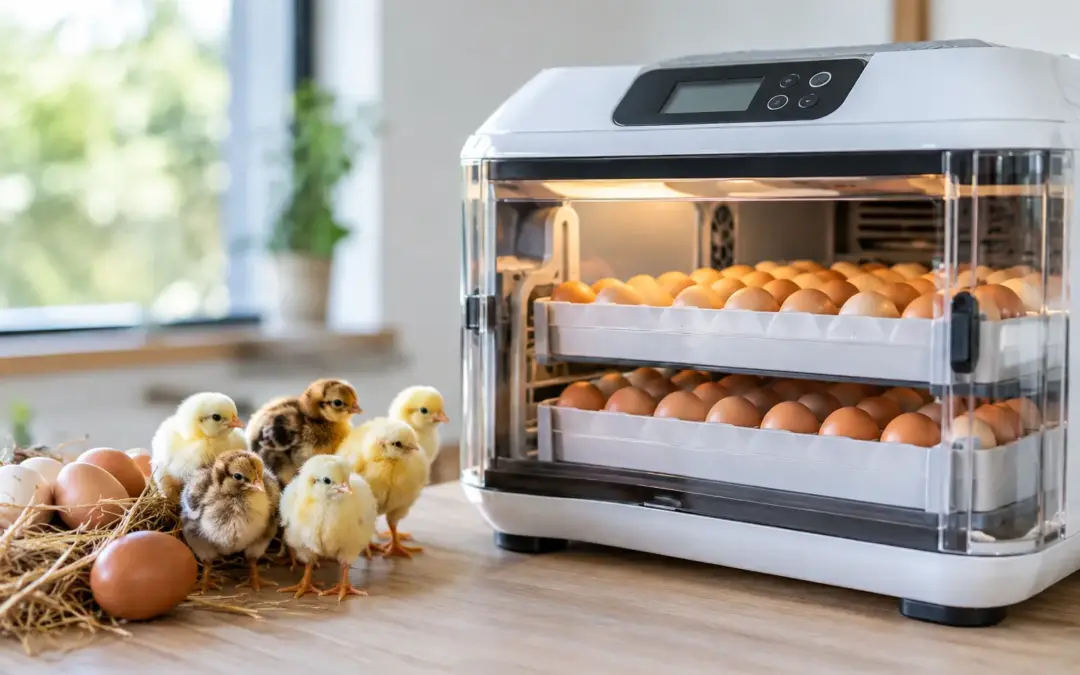
A cheap incubator can look convincing until day 19, when the temperature drifts, the humidity is hard to read and every decision becomes a gamble. The best UK incubators are not necessarily the biggest or most expensive machines. They are the ones that hold a steady environment, suit the eggs you actually hatch and can be cleaned properly between batches.
For a keeper hatching a few carefully selected bantam eggs, a compact automatic unit can be exactly right. For a breeder working with several pens, rare-breed lines or regular orders, small domestic machines quickly become a bottleneck. Capacity matters, but reliability, airflow and sensible hatch-day management matter more.
What makes an incubator worth buying?
An incubator is only as good as its consistency. Temperature fluctuations can slow development, reduce hatch rates or produce weak chicks. Poor ventilation can be just as troublesome, particularly in a packed machine. Before comparing features, look for a proven design, clear instructions and parts that are readily available in the UK.
Automatic turning is a practical starting point for most breeders. It removes the risk of missed turns and gives eggs a regular movement throughout incubation. It does not remove the need to check fertility, monitor development and prepare for lockdown, but it makes routine management far more dependable.
Humidity control is where the cheaper end of the market often shows its limits. A water channel and a basic display may be enough for a small, straightforward hatch in a stable room. If you hatch through winter, keep the machine in a shed or utility space, or work with breeds that require closer control, a unit with clearer humidity management is worth paying for.
Do not overlook cleaning. Down, dust, shell bloom and the occasional messy hatch get into every corner. Removable trays, washable liners and access to the fan area are not glamorous selling points, but they make a real difference to hygiene between batches.
Best UK incubators by breeding setup
There is no single machine that suits every poultry keeper. The right choice depends on whether you are hatching six eggs for your own flock or producing a steady run of chicks from planned pairings.
Best for small home hatches: Brinsea Mini II Advance
For small-scale keepers, the Brinsea Mini II Advance is a sensible first serious incubator. It is compact, automatically turns eggs and is designed for a modest hatch, making it useful for testing a pairing or bringing in a handful of replacement birds.
Its strength is simplicity. You can keep it in a suitable indoor room, learn the rhythm of candling and lockdown, and avoid filling a large cabinet with eggs from too many different laying dates. The trade-off is obvious: capacity is limited, and mixed egg sizes can reduce the number you can set. It is best for focused, small batches rather than a breeding programme that runs all season.
Best all-rounder: Brinsea Ovation 28 EX
The Brinsea Ovation 28 EX sits in the useful middle ground. It offers enough room for a planned run of standard hen eggs without becoming difficult to manage, and its automatic turning and humidity support make it a strong option for regular backyard breeders.
A machine in this class suits someone keeping several breeding pens, particularly where eggs can be collected over a short, controlled setting window. You still need to account for egg size – a tray advertised for a certain number of standard eggs will hold fewer large fowl eggs and may need different inserts for bantams, ducks or other species.
The limitation is that a combined incubator and hatcher can become inconvenient once your hatch numbers grow. During lockdown, you should not be opening the lid to turn or candle another batch. If you intend to set eggs every week, consider a dedicated hatcher alongside it rather than forcing overlapping batches into one unit.
Best for compact digital control: Rcom King Suro 20
The Rcom King Suro 20 has long appealed to keepers who want a neat, digital tabletop incubator with a manageable capacity. It is often a good fit for smaller breeding operations where ease of use and a clear interface matter as much as sheer egg numbers.
It is not a substitute for good stock management. Even the cleverest controls cannot correct eggs stored too long, poor fertility, dirty shells or parents with weak breeding performance. What a quality digital machine does give you is a stable, repeatable environment, so you can judge your breeding results on firmer ground.
Best for frequent hatches: Brinsea OvaEasy 100 Advance EX
Once you are regularly filling tabletop units, a cabinet incubator becomes the practical move. The Brinsea OvaEasy 100 Advance EX is aimed at breeders who need greater capacity, powered turning and easier day-to-day access. It is the sort of machine that earns its space when a serious breeding plan is underway.
A cabinet is not only about setting more eggs. It allows better organisation. You can label trays by pen and date, keep a closer record of fertility by mating and avoid the muddle that comes from squeezing unrelated eggs into any spare gap. For breeders protecting a heritage line, that discipline is valuable.
The trade-off is cost, space and cleaning time. A larger machine needs a stable location, room for ventilation and a proper cleaning routine. It also creates a bigger consequence if conditions are wrong, so do not set a full cabinet for your first trial. Run it empty first, check readings with an independent thermometer and hygrometer, then build confidence with a smaller batch.
Best for straightforward tray hatching: Borotto Real 24
The Borotto Real 24 is worth considering for keepers who prefer a practical, tray-based format and hatch moderate numbers. It can suit a mixed smallholding where eggs are set in deliberate batches rather than continuously.
As with any incubator, check exactly which egg types and turning arrangements are supported before buying. Ducks, geese, quail and large fowl do not all sit or turn in the same way as standard chicken eggs. A machine can be excellent for one job and awkward for another.
Capacity figures are not the whole story
Manufacturers normally quote capacity for standard chicken eggs. That figure is a guide, not a promise. Large fowl eggs take more room, heavily feathered breeds may lay less uniform eggs, and duck eggs often require a different approach to humidity and cooling. If you breed bantams, check whether a specific small-egg tray is available rather than assuming you can simply fit more eggs into the standard holder.
Avoid setting eggs from widely different collection dates merely to fill the machine. A tidy, well-recorded batch is usually more useful than a full incubator with an uneven hatch. You want chicks emerging within a narrow window, not a machine that must be opened repeatedly while later eggs are still trying to hatch.
Before you buy, check these practical details
The best purchase is one that works in your actual setup. Think about where it will live, how often you will hatch and whether you can source spare parts without fuss. Before committing, check these five points:
- the stated capacity for the species and egg size you keep;
- whether turning is automatic and whether the mechanism suits your eggs;
- how humidity is measured, adjusted and verified;
- whether the incubator can be stripped down and disinfected properly; and
- whether a separate hatcher will make more sense as your programme grows.
It is also worth budgeting for more than the incubator itself. A reliable independent thermometer and hygrometer, a candling lamp, disinfectant suitable for poultry equipment and a prepared brooder are all part of a responsible hatch. There is little point achieving a strong hatch rate if the chicks arrive before the brooder is stable and warm.
A good incubator supports better breeding decisions
An incubator should not encourage quantity for its own sake. For serious keepers, it is a tool for producing sound, well-started youngstock from birds worth breeding. Record the setting date, parent pen, fertility result, hatch rate and any problems with each batch. Those notes will tell you more about your birds and your setup than a product description ever can.
When you are ready to source eggs or place youngstock, use the same standard: clear breeding information, honest communication and stock that has been raised with care. The right machine gives your work consistency. Good breeders give it purpose.