
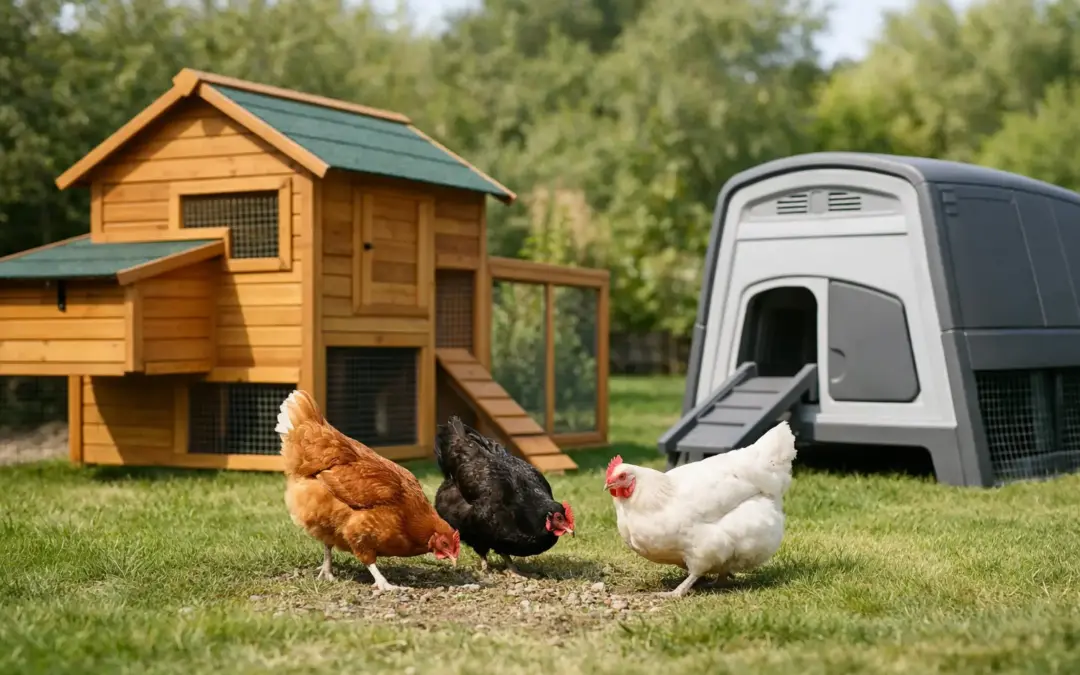
A coop can look smart in the garden and still be the wrong place for a flock to live. The real wooden coop vs plastic coop question is not which material looks best on delivery day. It is which one stays dry, secure, easy to manage and fit for purpose after a wet January, a red mite scare and a few years of daily use.
For a pair of bantams, a small moulded plastic coop may be exactly right. For a growing flock of large fowl, a breeding pen or a smallholding setup, timber often gives you more usable space and more control. Neither material wins every time. Good housing comes down to flock size, site, management routine and the quality of the coop itself.
Wooden coop vs plastic coop: the practical difference
Wooden coops are generally roomier, easier to alter and available in far more layouts. Plastic coops are usually quicker to wash, lighter to move and less welcoming to red mite when properly maintained. That is the short version, but the details matter.
A well-built wooden house should have sound framing, exterior-grade panels, a raised floor, secure pop-hole and enough roof overhang to keep driving rain away from the walls. A cheap timber coop made from thin, untreated board is not a fair comparison with a purpose-built poultry house. It may warp, leak at the roofline and offer very little protection from foxes.
The same applies to plastic. A thick, UV-stable moulded coop from a reputable maker is a different proposition from a lightweight plastic shelter with flimsy clips and poor ventilation. Plastic does not automatically mean predator-proof, warm or maintenance-free.
Warmth, ventilation and British weather
Wood has a natural advantage in cold conditions because it does not conduct heat as readily as plastic. A decent timber coop, kept dry and out of the worst wind, creates a more stable internal environment overnight. This is useful for young growers, older birds and breeds with large combs that are more prone to frost damage.
That said, chickens do not need a sealed, centrally heated bedroom. They need dry bedding, sensible stocking levels and ventilation above perch height. Stale, damp air causes more trouble than a cool night. In either type of coop, check that warm air and moisture can escape without creating a draught directly across roosting birds.
Plastic can feel cold to the touch in winter and may warm quickly in direct sunshine. Positioning is therefore crucial. Place it in shade during the hottest part of the day where possible, but not in a permanently damp corner of the run. A solid base, good drainage and a sheltered aspect will do more for bird comfort than simply choosing one material over another.
Cleaning and red mite control
This is where plastic coops make their strongest case. Smooth moulded surfaces have fewer joints, cracks and absorbent areas for dirt and parasites to settle into. Many designs come apart in sections, allowing you to remove bedding, scrub the shell and rinse it clean. For keepers with a compact flock and limited time, that simplicity is worth paying for.
Red mite can still live around fittings, perches, clips and crevices in plastic housing, so do not assume the material makes a coop mite-proof. It simply reduces the number of hiding places and makes routine inspection easier. Remove perch supports, examine the underside of roofs and check around nest-box joins, especially in warm weather.
Wooden coops demand a more disciplined cleaning routine. Mite can disappear into felt edges, tongue-and-groove gaps, perch sockets and any rough internal timber. A removable droppings tray, lift-out perches and an opening roof make a serious difference. If cleaning requires crawling through a narrow hatch with a torch, it will be put off – and that is when small problems become established.
Avoid felt roofs where practical. They are a familiar harbour for red mite and can be difficult to treat thoroughly. A solid, weatherproof roof covering and accessible interior are better long-term choices for anyone breeding or keeping birds in numbers.
Space matters more than the material
Many plastic coops are designed for small flocks. Manufacturer capacity figures can be optimistic, particularly where large fowl are concerned. A house advertised for four to six hens may be comfortable for four standard hens at most, or a handful of smaller bantams. Once birds are cramped at roosting time, feather pecking, dirty nest boxes and respiratory issues become more likely.
Wooden housing is easier to find in larger formats, with separate nest boxes, full-height doors and enough perch length for a proper flock. It also gives breeders more options. You can partition a house, add a covered section, fit additional ventilation or make a practical grow-out pen without forcing stock into unsuitable accommodation.
Measure your birds, not just the coop footprint. Large, heavy breeds need generous perch spacing and enough headroom to hop up and down safely. If you keep a cockerel, factor in his size and the flock dynamics too. A coop that just fits the hens today can quickly become inadequate after a successful hatch.
Durability, repairs and lifespan
A quality plastic coop will not rot, and that is a genuine benefit on wet ground. It can be washed repeatedly and moved without worrying about damp creeping into a wooden floor. For a modest back garden group, it may provide years of straightforward service.
Its weakness is repairability. If a moulded panel cracks, a door catch breaks or a proprietary fitting goes missing, you may need a specific replacement part. Some designs are also light enough to shift in severe weather unless they are properly anchored or positioned inside a secure run.
Wood requires treatment and occasional upkeep, but it is generally easier to repair. A damaged panel, roof edge, perch or pop-hole door can usually be replaced without writing off the whole structure. Well-maintained timber housing can last for many years, particularly when it sits off the ground and has a properly waterproofed roof.
Look closely at the floor. This is often the first part of a neglected wooden coop to fail. A raised, strong floor with treated bearers underneath is far preferable to a thin board resting close to wet soil. Check roof fixings, hinges and door bolts with the same care. A fox only needs one weak point.
Security and siting
No coop material can compensate for poor security. A plastic house inside a well-built, fox-resistant run is safer than a grand wooden coop with a loose latch. Use solid catches rather than simple turn buttons, and make sure pop-hole doors close securely at night.
Wooden coops are heavier and often feel more substantial, which can be reassuring in exposed gardens. Plastic coops are easier to relocate to fresh ground or move under cover during prolonged bad weather. Both can work well if raised from mud, kept level and placed where you can reach them easily every day.
Think about your own routine. If you need to carry water and feed through a narrow side gate, a lightweight coop may be useful. If you want a fixed breeding setup with covered runs, storage and room to inspect birds properly, timber is usually the more flexible foundation.
Which coop should you choose?
Choose a plastic coop if you keep a small flock, prioritise rapid cleaning and want a portable house with minimal timber maintenance. It is particularly practical for a couple of hens or bantams, provided the stated capacity is realistic and the coop is securely sited.
Choose a wooden coop if you need more room, keep large fowl, expect your flock to grow or want the freedom to adapt the setup. It is normally the stronger choice for breeding groups and smallholding flocks, as long as you buy construction quality rather than a bargain price tag.
For serious keepers, the best purchase is often the coop that makes good husbandry easiest. At Hatch & Hive, housing listings are worth assessing with the same eye you would use for stock: ask direct questions, check dimensions and inspect the details that affect welfare, not just the sales photograph.
A coop should give you confidence when you close it at night. Buy for the birds you intend to keep, allow room for proper care, and choose the house you will still be willing to clean thoroughly in the middle of winter.