
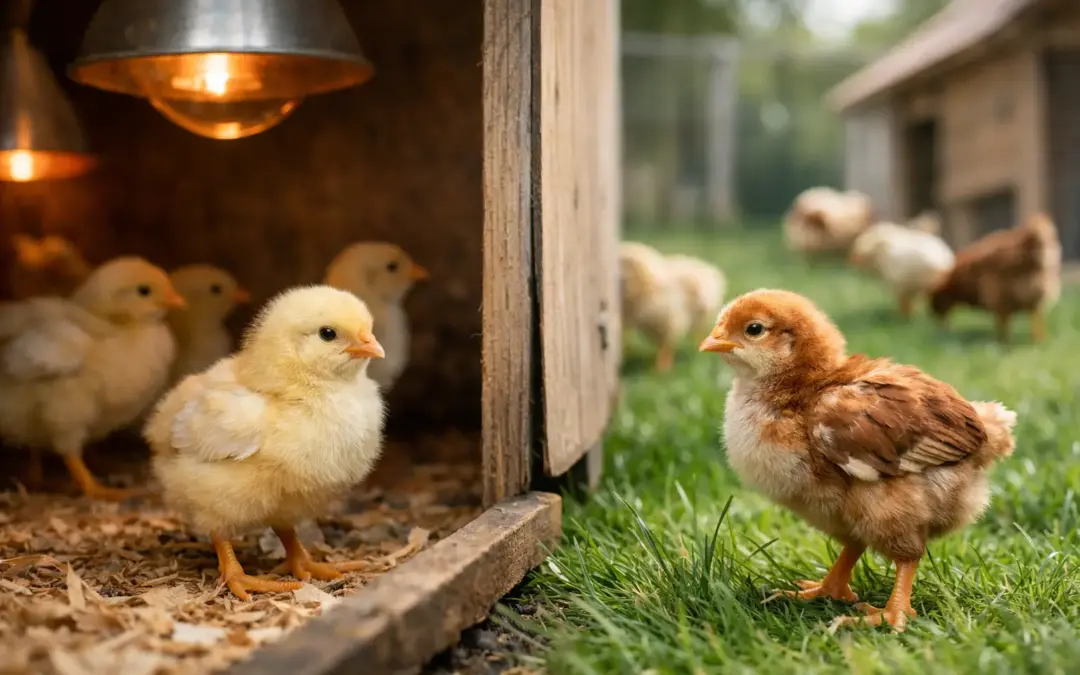
A calendar date is a poor reason to move chicks outdoors. A fully feathered, lively six-week-old can be ready before a lightly feathered eight-week-old, while a cold wet spell can make either move a bad one. When people ask, “when should chicks leave brooder”, the honest answer is: when the birds, the weather and the housing are all ready at the same time.
For most healthy chicks raised with appropriate heat, that point falls somewhere between six and eight weeks. But age is only the starting point. Good keepers look at feather coverage, overnight temperatures, the security of the coop and how the youngsters will cope with the existing flock before making the move.
When should chicks leave brooder housing?
Chicks are usually ready to leave brooder housing once they are properly feathered, no longer dependent on supplementary heat, and have a dry, draught-free place to sleep. In mild weather, sturdy breeds may manage this at around five or six weeks. Smaller bantams, slow-feathering birds, or chicks facing a chilly British spring may need longer.
The key is not whether they look large enough. A big young bird with patchy feathering can still lose heat rapidly overnight. Conversely, a smaller bantam that is fully feathered and acclimatised may be perfectly comfortable in suitable housing.
By the time chicks are ready to move, the brooder temperature should already have been stepped down gradually. If they are still huddling under the heat source when it is cool, they are not ready for an unheated coop. If they spend their time well away from it, panting or spreading their wings, they may be too warm and need a more measured reduction in heat before the transition.
Check the feathers, not just the birthday
A chick ready for outdoor life has a proper cover of juvenile feathers across its body, including the back, breast and wings. A little remaining fluff around the head is common and not always a problem, but bare patches or thinly covered shoulders are a reason to wait.
Look at the group rather than the strongest bird. One slower chick can struggle badly if moved with its more developed hatchmates. It is often safer to keep a small group back together for another week than to split up established companions too early.
Breed makes a difference. Fast-feathering utility types may be ready sooner than some heritage large fowl, while Silkies and other birds with less weatherproof plumage deserve extra caution. Chicks from a mixed hatch should be judged individually, not moved solely because the first few appear ready.
British weather changes the timetable
A secure coop cannot compensate for driving rain, cold damp air and an exposed run. In much of the UK, the deciding factor is often the overnight forecast rather than the chicks’ age. A settled spell with mild nights offers a sensible window. A sudden cold snap does not.
As a practical rule, be cautious when night temperatures are regularly dropping below about 10°C, particularly for young birds moving from a warm indoor brooder. Fully feathered, well-grown chicks can cope with cooler conditions, but they need to be acclimatised and dry. Damp is the real troublemaker. It strips warmth from young birds quickly and turns a reasonable temperature into an uncomfortable one.
If the coop is unheated, inspect it after dark. Get down at chick height and check for draughts through pop-hole gaps, warped boards or poorly fitted vents. Ventilation must remain open above roosting height to clear moisture, but a direct blast of air across sleeping birds is not good housing.
Make the first outdoor housing genuinely chick-safe
Moving chicks out of the brooder is not simply a case of placing them in the main hen house. Young birds are smaller, less streetwise and easier for predators to reach. They can also become trapped behind equipment or fail to find their way back into shelter at dusk.
The coop and run should be dry, predator-proof and easy to close securely every evening. Check mesh size, particularly if rats, stoats or other small predators are a concern. A wide-mesh run may hold adult hens safely enough while still leaving young chicks vulnerable. Make sure there is no gap under doors, around panels or at the edges of the run.
Roosts can be another overlooked issue. Very young birds may not yet be confident perching, and high perches create a risk of falls. Low perches or a deep, clean bedding area give them a safer start. Waterers should be shallow and stable, while feeders need enough room that timid chicks are not pushed away by their bolder pen mates.
A sheltered covered section in the run matters too. It gives chicks the choice to explore fresh air and daylight without standing in rain or strong wind. Choice is useful when birds are learning outdoor conditions for the first time.
Acclimatise rather than making one big jump
Where practical, offer short daytime sessions in a secure outdoor run before the first full night outside. Start during the warmest, driest part of the day and supervise closely. This lets chicks experience natural light, breeze, grass and the sounds of the holding without the stress of an abrupt overnight move.
Bring them back in before temperatures fall, then extend the sessions over several days. This approach is particularly useful for chicks reared very warm or indoors for longer than intended. It also reveals problems with the run: a gap they can squeeze through, a waterer they cannot use, or a corner where they pile up when startled.
Do not expect them to understand a pop-hole immediately. On their first few evenings, gently place them inside the coop before dusk if needed. Most learn the routine quickly once they associate the house with feed, water and a safe place to settle.
Leaving the brooder is not the same as joining adult hens
Chicks can leave brooder housing before they are ready to be integrated with an established adult flock. These are separate decisions, and confusing them is how youngsters get bullied, excluded from feed or injured.
Adult birds defend space, feed and favourite perches. Even a normally calm flock may peck hard at unfamiliar youngsters. Size matters as much as temperament. A group of six-week-old chicks is rarely equipped to stand up to full-grown hens, particularly in a tight run.
A gradual introduction through wire is the sounder route. Keep the groups where they can see and hear one another without physical contact for at least several days, longer if the adult birds are agitated. Feed and water both groups separately, with multiple stations once contact begins, so lower-ranking birds have somewhere to go.
Some keepers use a separate grow-out coop and run until the youngsters are closer in size to the adults. It takes more space, but it is often the cleanest solution. If a second housing unit is not possible, a sturdy partition within the main run can provide the same breathing room.
Watch the flock during the first nights
The move is not finished when the brooder is switched off. Check the chicks at dusk for the first few evenings, then again early in the morning. They should be settled, dry and spread naturally rather than piled tightly in a distressed heap.
A little huddling at first is normal, especially in a new house. Persistent piling, loud distress calls, lethargy or birds standing fluffed up and apart are signs that they are cold, unwell or unsettled. In that case, bring them back to safe warmth if necessary and reassess the housing rather than hoping they will toughen up.
Keep an eye on feed intake, droppings and posture over the following week. A move is stressful even when done properly. Chicks that stop eating, become quiet, or spend long periods sheltering may need a quieter transition and closer observation.
A sensible rule for breeders and keepers
Good decisions are based on what is in front of you, not a date written on the brooder lid. Fully feathered chicks, gradually reduced heat, dry secure housing and a reasonable forecast are the standard to work to. Add a careful separation plan if adult birds are nearby, and the move becomes far less risky.
Quality poultry keeping is built on these small judgement calls. Give youngsters the extra week when they need it, make their first coop secure and dry, and they will have the right start to become strong, settled birds.