
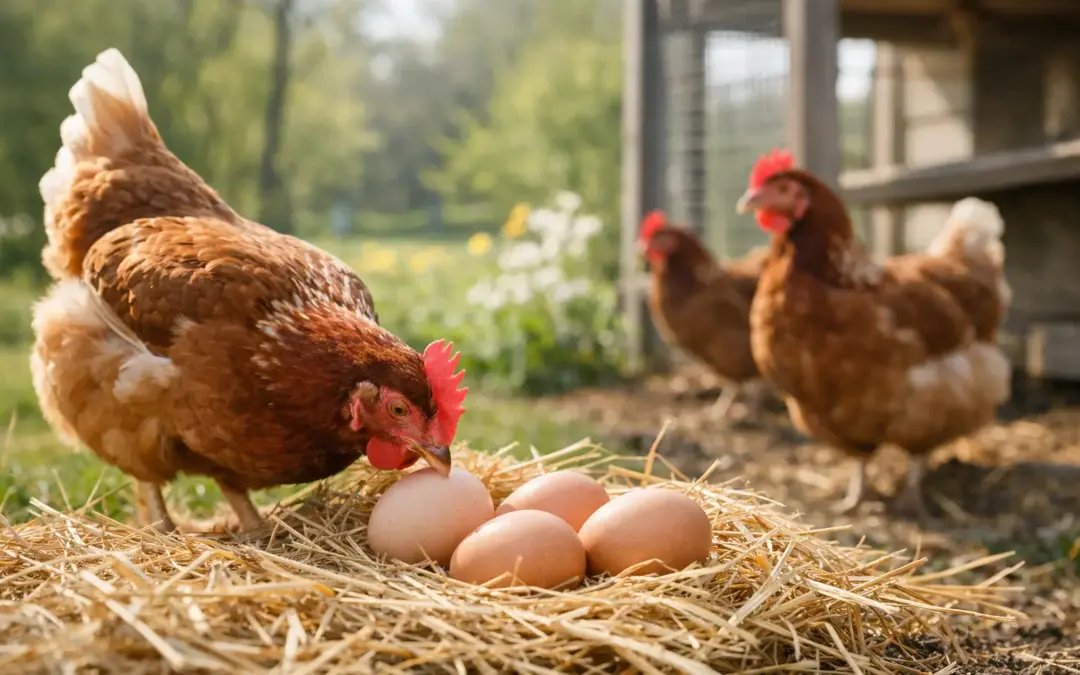
A lengthening day can make a flock look as though it has suddenly found its purpose again. Combs redden, cockerels become louder and the first warm egg of the year appears in the nest box. But strong Spring layers are not created by daylight alone. The hens that lay well through spring are the ones that came through winter in sound condition, have the right feed in front of them and are not carrying problems you have missed under a thick feather coat.
For backyard keepers and breeders alike, spring is the point where good management becomes visible. It is also when poor housing, tired stock, hidden parasites and rushed breeding decisions tend to show themselves. There is no shortcut worth taking. Get the fundamentals right and your flock has every chance of a productive, healthy season.
Why hens begin laying in spring
Increasing daylight is the main seasonal trigger. As days lengthen, a hen’s reproductive system becomes more active, which is why many traditional and heritage breeds begin to lay more reliably from late winter into spring. The response varies widely, though. A commercial hybrid may lay through much of winter, while a true seasonal breed may wait for more daylight and better weather before coming properly into lay.
Age matters just as much. Pullets commonly start laying when they are mature enough for their breed and body size, often between 18 and 30 weeks. Do not expect a slow-maturing large fowl breed to perform on the timetable of a hybrid. Equally, an older hen may lay fewer eggs, take longer to restart or lay mainly in the warmer months. That is not automatically a fault. It is part of knowing the stock in front of you.
Weather has an effect too. A sudden cold snap, storm damage to housing or a run that remains wet underfoot can check laying. Hens spend energy keeping warm and coping with stress before they put it into eggs. The answer is not to force production. It is to give them dry shelter, steady care and time.
Prepare spring layers before the first egg arrives
The best time to prepare for spring laying is before the flock is fully in lay. Begin with the coop. It should be dry, ventilated without being draughty and large enough for birds to roost without crowding. Damp bedding and stale air are a poor combination at any time of year, but spring’s mild temperatures can allow red mite and other unwanted guests to build quickly.
Strip out old litter where required, inspect perch ends, nest-box joins and crevices, then clean and allow the house to dry properly. Check the roof, pop-hole and floor for leaks or predator access. A fox does not need much of an opportunity, particularly when the evenings are drawing out and routines start to change.
Give nest boxes proper attention. Hens prefer a dim, sheltered place with clean, dry bedding. One nest box for every three or four hens is a sensible working guide, though a flock will often insist on using the same favourite box regardless. If eggs are being laid on the floor, look first at the basics: enough boxes, suitable bedding, early access to the run and no birds being bullied away from the nests.
Keep a close eye on body condition. A bird that feels sharp along the breastbone may need more support before she can lay consistently. A hen carrying too much weight can have laying problems of a different kind. Handle your birds regularly, especially breeding hens, rather than judging condition from feathers alone.
Feed for eggs, not just for full crops
Once birds are at point of lay, or already laying, a good complete layers’ pellet or mash should form the foundation of the ration. It is formulated to provide the energy, protein, vitamins and minerals needed for egg production. Mixed corn is not a complete feed. It has a place as a small late-afternoon treat or for scatter feeding, but it should not replace the feed that makes the eggs possible.
Calcium is particularly important as shell formation places a real demand on the hen. Offer a separate source of oyster shell or a suitable poultry grit, and ensure birds can access it freely. Insoluble grit is also needed for digestion where hens eat whole grains, forage or treats. These are simple provisions, but shell quality often tells you quickly whether something is missing from the system.
Fresh water is non-negotiable. Hens drinking less because drinkers are dirty, algae-covered or positioned awkwardly will not perform as they should. In warmer spells, clean and refill drinkers more often than feels necessary. A flock can empty a surprising amount of water when laying gets underway.
Be restrained with extras. Kitchen scraps, handfuls of corn and well-meant treats can dilute a carefully balanced diet, particularly in a small flock where every bird matters. Green forage is useful, and supervised ranging gives birds exercise and interest, but feed the flock first and treat afterwards.
Health checks that protect your laying season
A reduced egg count is often the first sign that something is off. Before blaming the breed or the weather, look at the birds. Check comb colour, droppings, weight, feet, eyes and feather condition. Look around the vent for soiling, lice eggs or signs of irritation. Examine the coop after dark for red mite, especially around perches and felt roofing.
Worm burden, external parasites, respiratory illness and nutritional shortfalls can all affect laying. So can social stress. Introducing new birds just as your established flock is coming into lay may create weeks of pecking-order disruption. If new stock is needed, quarantine it properly and introduce with care. A bargain bird is no bargain if it brings disease into a settled breeding pen.
Watch for eggs with persistently thin shells, rough shells, odd shapes or no shell at all. An occasional unusual egg can happen, especially from young pullets finding their rhythm. Repeated issues deserve investigation. Review feed, calcium access, water, stress, age and any signs of illness. If a hen is straining, lethargic, walking oddly or has a swollen abdomen, seek advice from an avian-aware vet promptly. Egg-binding and reproductive problems are not jobs for guesswork.
Spring layers and breeding decisions
For breeders, spring eggs are more than breakfast. They are the start of the next generation, so selection matters. Do not set every egg simply because the incubator has space. Choose eggs from birds that represent the qualities you are trying to preserve: sound type, vitality, fertility, temperament and breed character.
A clean, well-managed breeding pen gives you more confidence in parentage and hatchability. Keep records of pairings, laying dates, fertility and hatch results. Even a notebook kept in the feed room is better than relying on memory once several pens are producing. Marking eggs with the pen and date, using pencil rather than anything that may damage the shell, keeps the process clear.
Store hatching eggs carefully before setting. Collect them regularly, keep them clean rather than washing soiled shells, and avoid extremes of temperature. Very dirty eggs usually point back to muddy runs, poor nest-box bedding or hens sleeping in the boxes. Fix the cause rather than accepting it as part of spring.
Do not confuse prolific laying with breeding quality. Some hens lay heavily but may not suit a particular breeding programme; others lay fewer eggs yet are valuable for heritage traits, hardiness or type. A serious flock plan accounts for both production and preservation.
Buying birds or hatching eggs this spring
Spring is a busy time to source fresh bloodlines, started pullets, breeding trios and hatching eggs. Ask direct questions before committing: what is the age of the stock, what are they fed, how are they housed, what is the fertility record and what health issues have occurred in the flock? A knowledgeable seller should be able to answer plainly.
Photos are useful, but they do not replace a proper conversation about condition, temperament, parentage and collection arrangements. For rare breeds and heritage lines, ask what the breeder is selecting for and whether birds are from an established line. Traceability is not fussiness. It is how you avoid disappointment and make better breeding decisions.
A specialist marketplace such as Hatch & Hive gives buyers and sellers a clearer place to have those conversations, without the noise of general classifieds. Good stock deserves a setting where the right questions are normal.
Keep notes while the season is moving
Spring can move fast. One week you are waiting for the first eggs; the next you are sorting incubation dates, managing broodies and wondering why the feed bin is empty again. Keep simple flock records on egg numbers, shell quality, moult, treatments, fertility and any birds that repeatedly go broody or fall away in condition.
Those notes will tell you far more than a single good week of laying. They show which hens genuinely earn a place in next year’s breeding plans, which housing changes worked and when your flock needs support. Good spring layers are not an accident. They are the result of sound birds, sensible management and the sort of close observation that serious keepers do as standard.