
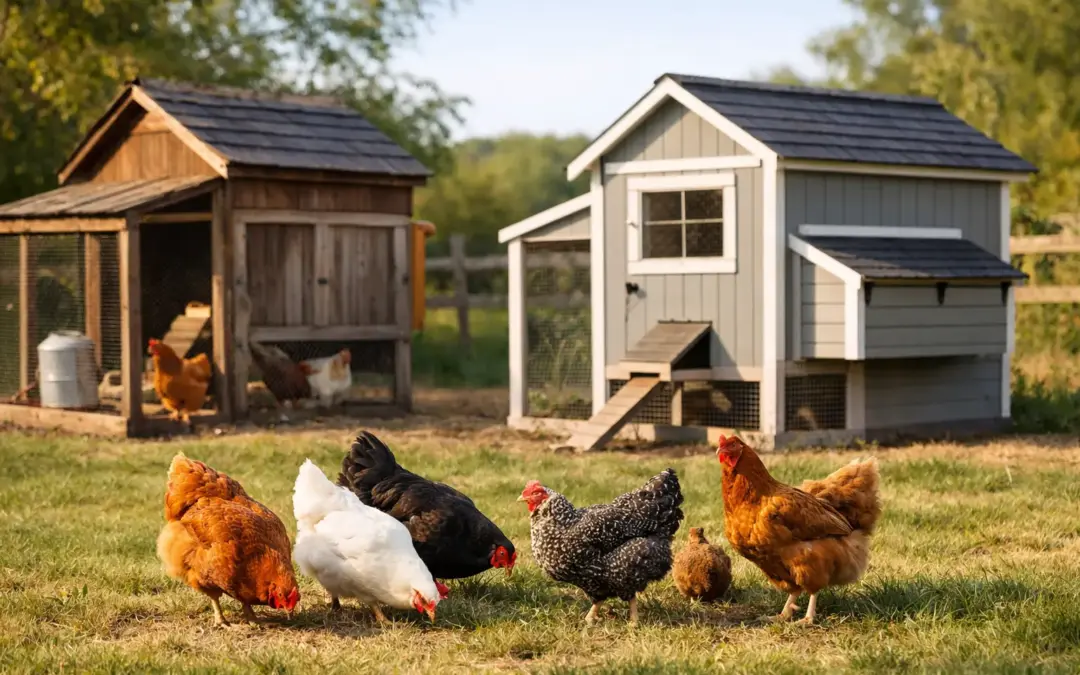
A coop that looks neat beside the shed can become a miserable place fast if four hens cannot roost without jostling, the litter stays damp, or a fox finds one weak catch. Poultry coops for small flocks need to do more than hold birds overnight. They must give a handful of hens, bantams or breeding birds dry shelter, secure rest, clean nesting space and enough room to behave normally.
For a small keeper, the right housing is rarely the biggest or most expensive option. It is the one that suits the birds you keep, the ground you have and the amount of cleaning you can realistically stay on top of. Get those fundamentals right and a modest flock becomes a pleasure to manage rather than another weekend job that never quite ends.
Start with the flock, not the coop listing
A coop advertised for six hens may be suitable for six small, placid bantams with a generous attached run. It may feel cramped for four large fowl, especially heavier breeds with broad bodies and feathered legs. Manufacturer capacity figures are a starting point, not a rule to buy by.
Think about the birds at their adult size and their normal routine. Large fowl need more perch room and more turning space than a compact hybrid. A breeding group needs enough room to avoid constant pressure from an active cockerel. Birds kept in for part of the day during bad weather need a more forgiving internal layout than birds that range freely from dawn until dusk.
For a typical small back garden flock of three to five standard hens, aim for a coop with enough clear floor space for them to settle without standing on one another, plus perches that allow each bird a comfortable place to roost. It is usually wiser to buy slightly larger than the bare claim on the label. Extra room makes heat, mud, pecking disputes and temporary confinement easier to manage.
Bantams can live in a smaller footprint, but do not assume small birds need a token coop. They still need dry bedding, a draft-free perch and access to nest boxes without being bullied out of the way. If you keep a mixed flock, size the housing for the larger birds.
What good poultry coops for small flocks should include
The basic construction matters more than decorative detail. A solid coop should keep rain out, allow stale air to leave, and be straightforward to inspect in every corner. If you cannot reach beneath the perches or behind the nest boxes, red mite and old bedding will eventually make use of the space before you do.
Ventilation without a cold draught
A sealed coop creates condensation. In a British autumn and winter, that moisture can leave bedding clammy and make the birds less comfortable overnight. Look for high-level ventilation that lets warm, damp air escape without blowing directly across roosting birds.
Ventilation is not the same as gaps in the timber. Poorly fitted doors, cracked panels and holes around a roof line create draughts and give pests an entry point. Purposeful vents, protected from driving rain, are what you want.
Perches that suit real birds
Hens sleep on perches, not in nest boxes. Give them a stable, rounded or softened-edged perch with enough length that they can settle without being packed shoulder to shoulder. Place it higher than the nest boxes where possible, but leave enough headroom for birds to jump up and down safely.
Avoid narrow, sharp strips of timber. A perch should support the foot comfortably, particularly for heavier breeds. Removable perches are a practical advantage because they can be cleaned and checked for mite activity properly.
Nest boxes that do not become sleeping quarters
One well-positioned nest box can often serve several laying hens, though having two avoids a queue when your flock lays at the same time each morning. Boxes should be darker and quieter than the main coop, with dry nesting material and easy access for collecting eggs.
If the nest boxes sit above perch height, birds may choose to sleep in them. That means soiled eggs and more cleaning. A sensible internal layout prevents this without needing complicated fittings.
Access for cleaning, not just for collecting eggs
Small flocks still produce a surprising amount of mess. A large rear door, removable droppings tray or lift-off roof can make the difference between a quick weekly clean and a job that gets postponed. The more awkward the coop is to clean, the more likely bedding builds up and parasites gain a foothold.
Plastic coops have a strong case here. They are quick to hose down, have fewer cracks for red mite to hide in, and do not rot. Timber coops can look more traditional and often offer better insulation when well made, but they need regular treatment and careful inspection of joints, felt edges and floor corners. Neither material is automatically better. Choose the one you will maintain properly.
Security is part of the design
A small flock is no less valuable because it is small. Foxes, rats and other predators do not care whether the coop holds four birds or forty. A secure pop-hole door, strong catches and sound mesh around the run are essentials rather than upgrades.
Check the whole setup at ground level. Can an animal dig beneath the run edge? Is the mesh thin enough to be bent or torn? Does the roof have a weak corner? Is the coop raised just enough to create a sheltered hiding place for rodents without giving you access to clean below it? These are the details that matter after dark.
Automatic pop-hole doors can be useful for keepers with fixed work hours, particularly in winter when daylight is short. They are not a replacement for routine checks. Batteries fail, mechanisms jam, and birds can linger outside after the door begins to close. Test any system regularly and keep a manual way to secure the flock.
The run often matters more than the house
A well-built coop cannot compensate for a cramped, muddy run. Small flocks are often kept in limited gardens, so the run needs active management. A covered section keeps feed and a dust-bathing area dry. A roof or weatherproof cover also reduces the amount of wet ground being carried into the coop.
Where space allows, moving a lightweight coop and run across fresh ground can help protect the turf and reduce mud. On a permanent site, use a deep, free-draining surface and give birds things to do: a sheltered dust bath, sturdy branches, a raised platform, or scattered forage. Bored birds are more likely to feather peck, even in a flock that started out calm.
Do not rely on free-ranging to solve an undersized run if your birds are only let out occasionally. Plan for the days when weather, holidays, predators or biosecurity concerns mean they must stay enclosed. The enclosed space should still be workable and humane on those days.
Match the coop to your keeping goals
A family flock of laying hybrids needs practical, easy-clean housing. A pen of rare-breed birds may need a more considered setup, particularly if you are protecting a breeding line or keeping birds separate for planned matings. Quarantine space is worth thinking about before you bring in new stock, not after.
If you intend to add birds later, avoid buying a coop that is already at its claimed limit. Expanding housing is often more awkward than expected because runs, feed stations and flock hierarchies all need to be reconsidered. A little spare capacity gives you breathing room when a bird is unwell, a youngster is growing on, or a new group needs settling in.
For keepers sourcing housing or stock through a specialist community such as Hatch & Hive, ask direct questions before committing. What breed and number of birds has the coop actually housed? How old is it? Has it had red mite? Is the floor sound? Can the seller show the access doors, catches and ventilation points? Straight answers are usually more useful than polished photographs.
Set it up before the birds arrive
Choose a site with drainage, some shelter from prevailing weather and enough access for you to carry bedding, feed and water without a daily obstacle course. Keep the coop level so doors close properly and rain does not pool around the base. Put feed in the covered run rather than inside the sleeping area, and make sure clean water is always easy to reach.
Then establish a simple routine: quick daily checks for water, feed, eggs and any bird acting out of character; a regular bedding refresh; and a deeper inspection of perches, corners and roof seams. Good housing supports good keeping, but it does not replace observation.
The best small-flock coop is not the one with the most elaborate finish. It is the one your birds use confidently, you can clean without a battle, and you trust when the rain starts and night falls.