
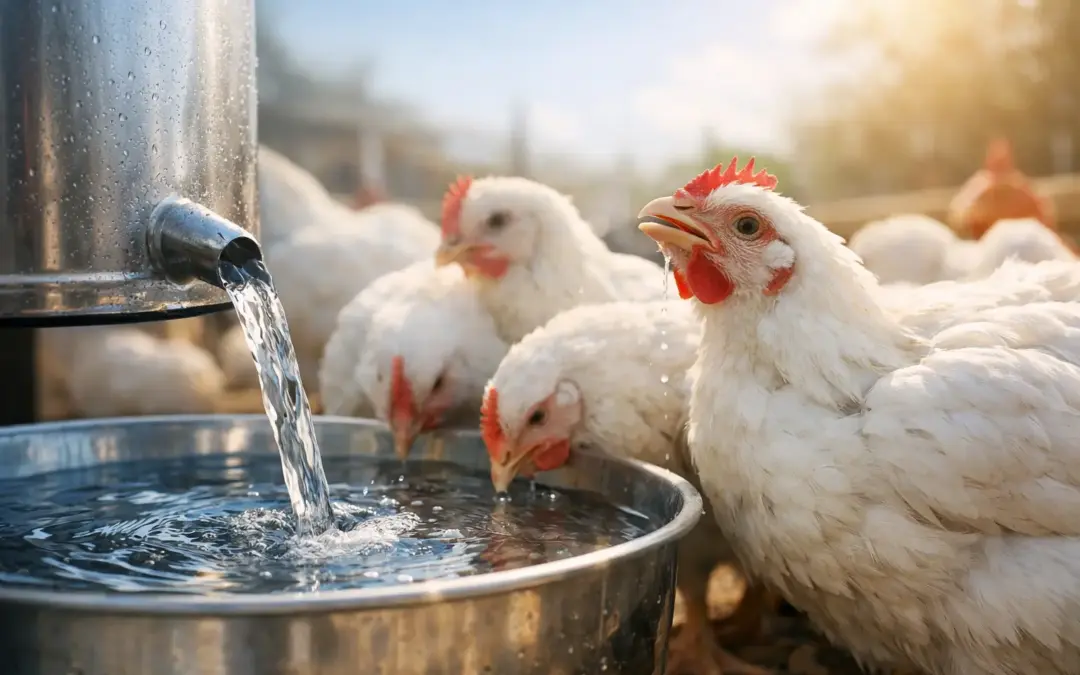
A bird can cope with more cold than many new keepers expect. Heat is the real problem. Heat stress on poultry and the need for fresh cool water becomes obvious the moment birds start panting, standing with wings held away from the body, or losing interest in feed. Once that starts, you are not dealing with a minor comfort issue. You are dealing with a welfare risk that can escalate quickly.
Poultry are poor at shedding excess body heat. They do not sweat, and once air temperature climbs, especially in still, humid conditions, they rely heavily on panting and access to water to regulate themselves. That is why a full drinker is not enough in hot weather. Water needs to be clean, fresh, and genuinely cool, with enough space for every bird to drink without being pushed off.
Why heat stress on poultry happens so quickly
The trouble with summer heat is that birds often look fine until they are not. Heavy breeds, older hens, meat birds, heavily feathered varieties, and birds in crowded runs are at greater risk. So are broody hens, cockerels in small pens, and any bird being transported or recently moved.
Heat load builds from more than just sunshine. Poor airflow in a coop, stale bedding, metal roofing, dark surfaces, and runs with no proper shade all make things worse. A keeper may think the day is warm rather than extreme, but inside a closed house or sheltered corner, conditions can turn sharply.
Once a bird is heat stressed, feed intake often drops. Egg production can fall, shells may thin, fertility may dip, and birds can become lethargic or irritable. In breeding pens, that matters. In growing stock, it can check development. In any flock, it can lead to losses if the warning signs are missed.
The signs keepers should not ignore
The early signs are usually easy to spot if you know your birds. Panting is the classic one, but not the only one. You may also see wings held out, birds standing rather than settling, pale combs, loose droppings, or a group gathering around the drinkers and refusing to move far.
At the more serious end, birds may stagger, collapse, or become unresponsive. At that point, cooling them down safely is urgent. Move the bird somewhere shaded and airy, offer cool water, and reduce body temperature gradually. Ice-cold shock is not the goal. Steady cooling is.
If one bird is struggling, assume the environment is wrong for the rest as well. Heat stress is usually a flock management problem before it becomes an individual casualty.
Fresh cool water is not optional
Fresh cool water is the first line of defence. In hot weather, birds drink far more than usual, and they are quick to reject water that is warm, dirty, or fouled with bedding and droppings. A single drinker in a busy pen is rarely enough.
Place multiple drinkers in shaded positions so timid birds and lower-ranking hens can get access. Refill little and often rather than topping up stale water all day. In very hot spells, many experienced keepers change water several times a day because a sun-warmed drinker does very little to help a panting bird.
Drinker type matters too. Open containers may heat up fast and collect dirt, while some nipple systems can reduce contamination but still need checking for flow and temperature. There is no perfect setup for every holding. The right answer is the one that gives your birds constant, easy access to clean, cool water without competition.
Practical ways to reduce heat load
Shade and airflow matter almost as much as water. Trees, shade cloth, open-fronted shelters, and well-ventilated housing all help reduce the background heat birds are carrying. Coops should allow hot air to move out without creating a draught at roost level overnight.
It also helps to think about timing. Offer feed early in the morning or later in the evening when birds are more comfortable eating. Wet mash can spoil quickly in heat, so be careful with anything that turns sour in the trough. Keeping housing dry and clean is also part of the job, because humid, stale conditions make it harder for birds to cope.
For breeders and smallholders managing valuable stock, this is not an area to cut corners. Rare breeds, imported lines, exhibition birds, and birds rearing chicks all need careful observation through hot spells. Good breeding starts with good husbandry, and summer water management is part of that.
Heat stress on poultry and the need for fresh cool water in small flocks
Back garden flocks are not protected simply because they are small. In fact, they can be more vulnerable if they are kept in compact housing, decorative runs with little shade, or urban gardens where heat bounces off fencing, paving, and brick walls.
The simple checks are often the ones that matter most. Is the water still cool by midday? Can every bird drink without a scuffle? Is there proper shade at the hottest point of the day, not just first thing in the morning? If the answer is no, fix that before reaching for any more complicated solution.
Serious keepers know that small details decide whether birds merely get through a hot day or stay in proper condition. When temperatures climb, fresh cool water is not a finishing touch. It is basic flock management, and the birds will tell you quickly if you have got it right.