
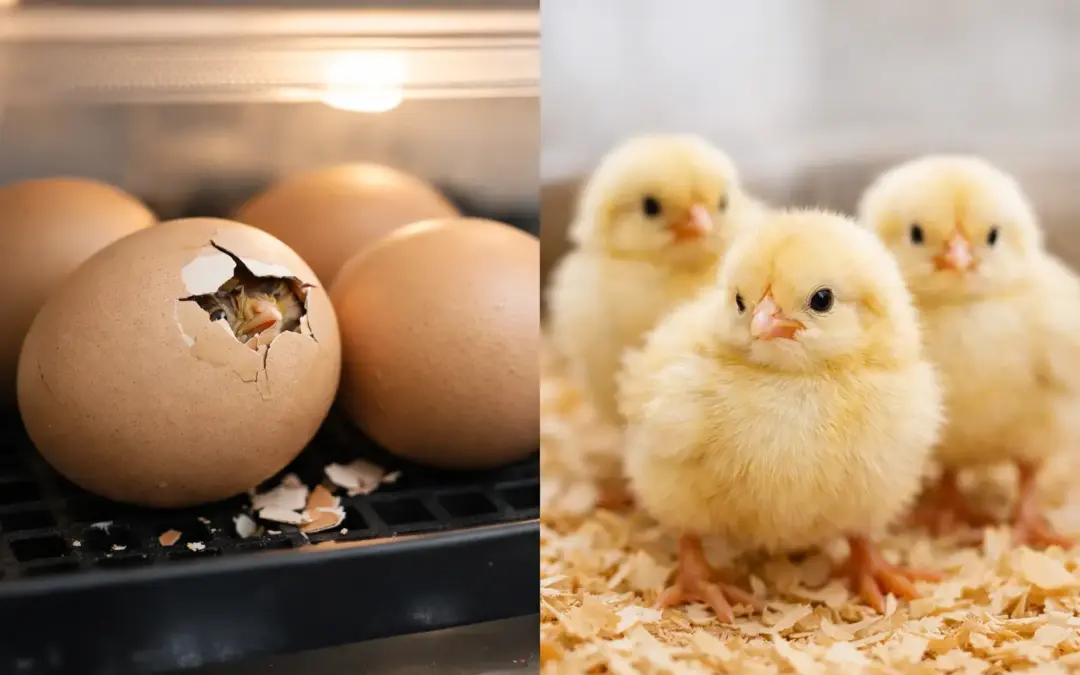
A box of carefully packed eggs and a heated brooder full of peeping chicks can both be the start of the same flock. But hatching eggs vs day old chicks is not simply a question of price. It is a choice between taking on the incubation process yourself or paying for a breeder’s work and starting with live, growing birds.
For some keepers, setting eggs is one of the best parts of poultry keeping. For others, the uncertainty, equipment and early losses make day old chicks the more sensible route. The right answer depends on your experience, facilities, timescale and what you expect from the birds once they are grown.
Hatching eggs vs day old chicks at a glance
Hatching eggs usually cost less per potential bird and can offer access to a broader range of breeds, colours and bloodlines. They also let you hatch several eggs at once, often from a breeder whose stock you have chosen for a particular trait. The trade-off is that an egg is not a guaranteed chick. Fertility, handling, postage, incubation accuracy and hatchability all affect the final result.
Day old chicks cost more upfront, but you can see that the eggs have already hatched and that the chicks are active before they come home. You still need proper heat, feed, bedding and close observation, but you skip the 21-day incubation period and its variables.
Neither route is automatically better. A keeper with a reliable incubator, a separate hatching area and a clear plan for surplus males may be well placed to buy eggs. A first-time keeper who wants a small group of birds with the least avoidable uncertainty may be better served by locally collected chicks from a knowledgeable breeder.
The real cost is more than the purchase price
It is easy to compare a listing price for six eggs with the price of six chicks and assume eggs are the bargain. That only works if you already own the right equipment and achieve a reasonable hatch.
To hatch eggs properly, you need an incubator capable of holding steady temperature and humidity, a way to monitor both independently, a candler, and a suitable hatcher or clean space for the final days. You will also need a brooder ready before the first chick pips. A power cut, faulty thermostat or poor ventilation can turn a promising set into a disappointing hatch very quickly.
With day old chicks, the incubator cost disappears, but brooding costs remain. Chicks need a reliably heated, draught-free brooder, absorbent bedding, chick crumb, clean water in a safe drinker and enough space as they grow. Heat is not optional, and chicks cannot simply be put into a coop with adult birds because the weather looks mild.
The useful calculation is cost per healthy bird reared to a secure age, not cost per egg or chick at collection. If a rare breed is your aim, paying more for strong, well-started chicks can represent better value than setting eggs repeatedly with uncertain results. Equally, if you are hatching larger numbers and your set-up is proven, eggs can be an efficient way to build a flock.
Risk, hatch rates and what a seller can control
A reputable breeder can control breeding pen management, egg collection, storage, turning and packing. They cannot control everything once an egg leaves their hands. Hatching eggs are living, delicate goods, and their hatch rate can be affected by age, rough handling, temperature swings in transit and the buyer’s incubation method.
That is especially relevant when eggs are posted. A seller may dispatch fresh, well-packed eggs from a fertile pen, yet air cells can still be disturbed in transit. Letting posted eggs rest upright before setting can help them settle, but it cannot remove every risk. Expectations need to be realistic: a hatch rate is never a guarantee, even when both breeder and buyer have done their job well.
Day old chicks reduce that uncertainty because the hatch has already happened. However, they are not risk-free. A chick can be lively at collection and still struggle if it becomes chilled, dehydrated or stressed during transport. Collection from the breeder is generally the cleanest option because you can assess the chicks, ask questions and get them straight into a prepared brooder.
When choosing either option, clear communication matters. Ask the breeder when eggs were laid, how they were stored, whether the breeding group has been tested over recent hatches, and what sexing method is being used if chicks are sold as sexed. For rare, heritage or exhibition lines, also ask about parent stock, leg rings where relevant, known faults and whether the line suits your intended purpose.
Breed choice and the question of sex
Hatching eggs can be the best route into uncommon breeds, unusual colour projects and carefully maintained heritage lines. Serious breeders may only release eggs from certain pens at particular points in the season, so patience is often part of getting the stock you actually want.
The limitation is sex. Unless a breed has a reliable auto-sexing trait or you are hatching sex-linked crosses, you should assume a mixed hatch. Cockerels are not an accidental inconvenience. They need housing, suitable homes or a responsible management plan well before eggs are set. Some areas have restrictions or neighbours for whom a crowing bird will become a serious issue.
Day old chicks can give you more control, particularly where a breeder offers professionally sexed females. Sexing is still not infallible, and buyers should understand the stated accuracy rather than treating a pullet as an absolute promise. For a household flock where egg production is the goal and cockerels are not practical, sexed chicks may be worth the extra cost.
There is also a middle ground. Unsexed chicks can suit keepers who want birds without incubation but are equipped to handle males. Started growers can offer even more certainty, though they cost more and availability is often limited.
Equipment and timing: be honest about your set-up
Eggs need consistency before they need enthusiasm. A stable room, an incubator tested in advance and a brooder running before hatch day will do more for results than any expensive gadget bought in a rush. The final three days of incubation are particularly demanding: eggs should no longer be turned, humidity must be managed properly and the incubator should not be repeatedly opened to inspect every pip.
Chicks need attention from the moment they arrive. Their behaviour tells you whether the brooder is right. Chicks huddled tightly under the heat source are cold; chicks pushed around the outer edge may be too hot; active chicks spread comfortably through the brooder are usually where they should be. Check them frequently, but avoid constant disturbance.
Before buying, make sure you can provide four basics: secure heat, a clean and predator-proof brooder, a plan for adult accommodation, and a workable answer for any cockerels. If one of those is not ready, wait. Good stock deserves a proper start.
Welfare starts with choosing the right source
Whether you buy hatching eggs or day old chicks, source quality is the point that should not be compromised. Cheap stock with no information behind it can be costly in every sense. Poor fertility, weak chicks, muddled breed identity and avoidable health problems are rarely a bargain.
Look for breeders who know their birds, can talk plainly about their breeding groups and welcome sensible questions. Healthy parent stock, clean housing, thoughtful selection and careful handling all matter. So does honesty. A breeder who explains that a line may produce variation, that posted eggs carry risk, or that a sexing method has limits is giving you useful information, not talking themselves out of a sale.
A specialist marketplace such as Hatch & Hive makes it easier to find breeders who are working within the poultry community rather than listing stock as an afterthought. Take the time to compare what is being offered, speak directly with the seller and choose the person whose standards match your own.
Which should you choose?
Choose hatching eggs if you want the full breeding experience, have dependable equipment, can accept that not every egg will hatch, and have a responsible plan for every bird produced. They are particularly rewarding when you are seeking a specific breed or building knowledge through your own hatch records.
Choose day old chicks if you want to reduce the unknowns, need birds on a clearer timetable, or would rather focus your effort on brooding and rearing than incubation. They are often the practical choice for new keepers and for anyone whose priority is a small, manageable flock.
The best purchase is the one that fits your set-up before it fits your wish list. Get the brooder or incubator ready first, choose stock from a breeder you can speak to with confidence, and give every bird a start worthy of the line it came from.