
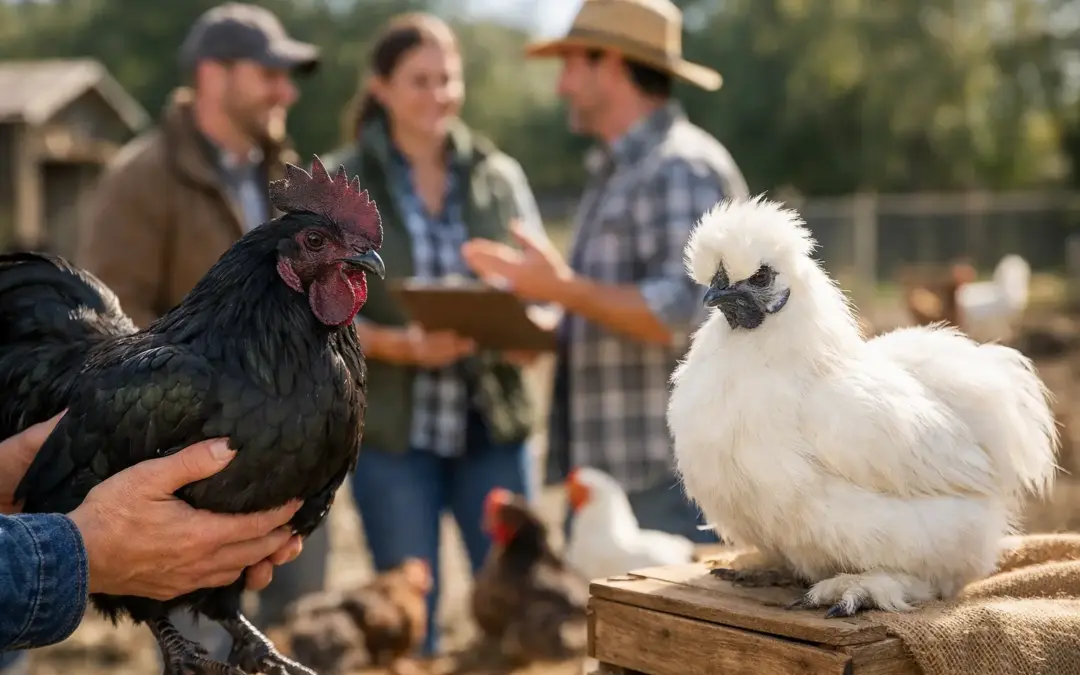
A striking bird may stop someone scrolling, but it will not necessarily make the right buyer commit. Finding buyers for rare poultry is about showing that your stock has substance behind the appearance: sound breeding, clear provenance, good husbandry and realistic expectations. Serious keepers are not simply looking for an unusual colour or a hard-to-find breed. They want birds they can trust to take home, breed from and enjoy for years.
For a rare or heritage line, the buyer pool is naturally smaller than it is for common utility birds. That is not a weakness. It means your listing, communication and reputation need to speak directly to people who understand what they are looking at.
Start with stock worth seeking out
The strongest marketing cannot compensate for poor breeding decisions. Before advertising, assess the birds honestly. Are they healthy, active and in good feather? Do they show the key breed characteristics you are trying to preserve? Are they from a line with known strengths and known limitations?
Rare poultry buyers are often experienced enough to ask awkward but fair questions. They may want to know the age of the birds, parentage, hatch date, temperament, fertility history or whether a colour has been bred true over several generations. Be ready to answer plainly. If a bird has a fault that matters to a breeder, say so rather than hoping it will go unnoticed.
That honesty protects your name. It also helps place birds appropriately. A bird that is not suitable for a serious breeding pen may still be an excellent garden companion or a useful addition for someone who values personality over exhibition detail. The right sale is not always the highest-priced sale.
Keep records before you need them
Good records make a rare line easier to sell and easier to value. Keep notes on pairings, hatch dates, parent birds, health treatments, leg ring details where used, fertility and hatch results. Photographs taken as birds mature can also help you show development and confirm lineage.
You do not need to turn every sale into a pedigree dossier. But when someone is investing in scarce stock, a clear account of where the birds came from is reassuring. It separates carefully managed breeding from birds that have simply changed hands several times.
Write listings for informed buyers
Generic adverts create generic enquiries. A specialist listing should answer the questions a good keeper would ask before arranging collection. Start with the breed, variety, sex, age and number available. Then explain what makes the stock worth considering.
Avoid empty claims such as “top quality” unless you can show what you mean. Better details include the source of the line, how long you have kept it, the traits you select for, whether the birds are handled regularly and any relevant points about laying, hardiness or behaviour. If you are selling young stock, make the sexing method and confidence level clear.
Photographs do real work here. Use recent, well-lit images of the actual birds for sale, ideally standing naturally on dry ground. Include side views that show type and feathering, plus a wider image of their living conditions. Blurry pictures taken through wire may be enough for a quick clearance advert, but they do little for rare stock priced on quality.
Price with purpose as well. Very low prices can attract impulse buyers who have not prepared suitable housing or done their homework. A fair price, backed by proper information, filters for people who value the birds. Equally, be realistic about local demand, age, condition and whether a bird is breeding quality, pet quality or somewhere between the two.
Put your birds where serious keepers are looking
Rare breeds get lost in broad classifieds, where livestock sits beside furniture, tools and unrelated household items. The audience may be large, but it is rarely focused. A dedicated poultry marketplace puts your birds in front of people already looking for stock, hatching eggs, housing and breeding connections.
That context matters. On Hatch & Hive, a buyer arriving to browse poultry is more likely to understand collection arrangements, quarantine considerations and the difference between a rare breed and a novelty purchase. It creates a more useful starting point than chasing attention across scattered social posts.
Locality still affects a sale. Many buyers will travel for the right birds, especially for a difficult-to-source breed, but transport distance can reduce enquiries. State your collection area clearly and say whether you will consider meeting at an agreed location. Do not promise transport arrangements you cannot make safely or legally. Welfare comes before convenience.
Let availability build momentum
Do not wait until every grower pen is full before you mention your breeding plans. If you expect surplus cockerels, point-of-lay pullets or breeding trios later in the season, let interested keepers know early. A simple note about expected availability can prompt useful conversations before the birds are ready to leave.
This is especially valuable with uncommon varieties. Buyers may be willing to wait for the right line, and early contact gives both sides time to discuss what is wanted. It also reduces the pressure to sell quickly to the first person who asks.
Turn enquiries into better matches
A serious buyer will usually ask questions. Welcome that. Ask a few of your own, too: what poultry do they keep already, what accommodation have they prepared, are they looking to breed, and do they understand the breed’s needs? This is not gatekeeping for its own sake. It is sensible stockmanship.
Keep replies prompt and straightforward. Confirm what is included, whether the price is per bird or per group, the collection window and any conditions of sale. If you cannot guarantee a trait, do not imply that you can. For example, young birds may change in appearance as they mature, and living creatures cannot be treated as identical products.
Be particularly clear where sex, fertility or future exhibition potential is uncertain. Buyers who know poultry will respect a careful answer. Problems begin when a seller makes promises that biology cannot support.
Protect welfare and your reputation at collection
Collection day is part of the sale, not an afterthought. Have birds safely caught, checked and ready at the agreed time. Ask buyers to bring suitable, ventilated carriers rather than trying to improvise with a box or bag. If the weather is severe, it may be kinder to rearrange than to rush a journey.
Give the buyer a brief handover: current feed, routine, age, any relevant health history and a reminder to quarantine new arrivals away from their existing flock. Make sure your own practices meet the current requirements that apply to keeping, moving and selling poultry in your area. Rules can change, particularly during periods of heightened disease control, so check them before arranging movement.
A good handover encourages repeat custom. It also leads to the recommendation that matters most in specialist circles: one keeper telling another that your birds arrived as described, were well cared for and were worth the journey.
Build demand beyond one advert
The best rare poultry sellers do not rely on a single listing. They build a recognisable breeding identity over time. That might mean focusing on a handful of varieties, sharing consistent photographs each season and being known for straight answers rather than exaggerated claims.
Keep a record of previous buyers and the lines they have taken, where appropriate. If you have future birds that may suit their plans, a courteous message can be more effective than starting from scratch. Do not pressure people, and do not treat their details casually. The aim is a community of capable keepers, not a mailing list of strangers.
It also pays to accept that not every enquiry deserves a sale. Someone wanting a rare trio immediately, with no carrier, no housing and no answers to basic welfare questions, is telling you something. Passing on a poor match may feel costly in the moment, but it is cheaper than seeing good stock mishandled or your name attached to a bad outcome.
Rare poultry remains rare because good breeders make deliberate choices. Present your birds clearly, deal fairly, and give thoughtful buyers the confidence to ask questions. The right people will recognise the difference – and they are the people who keep a line going.