
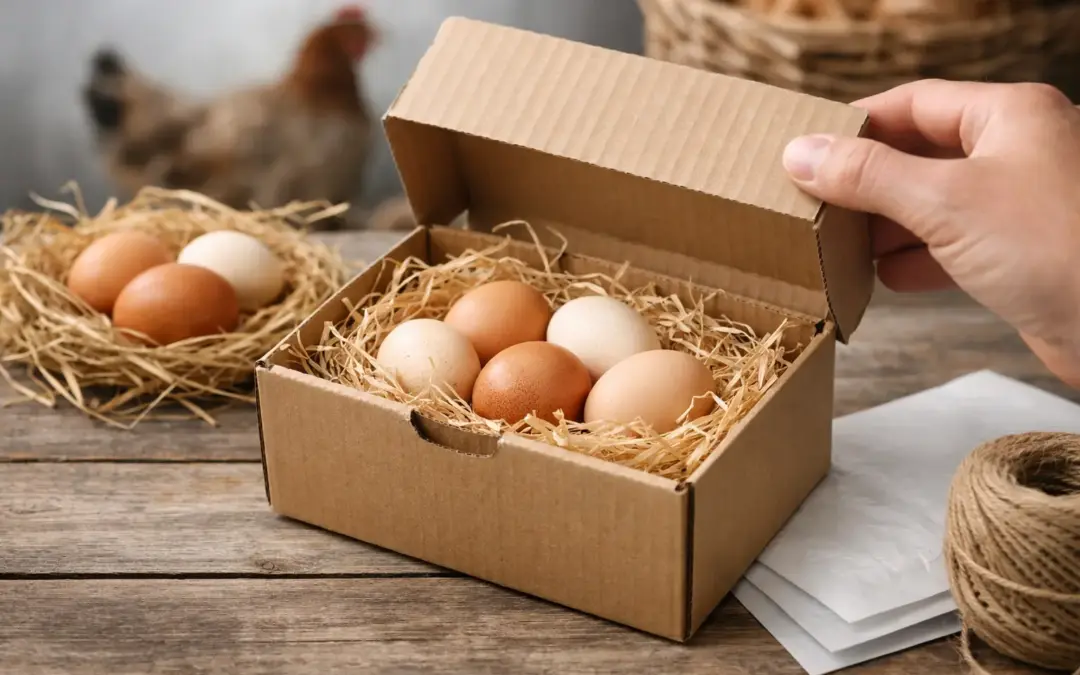
A carefully packed box of hatching eggs can travel from a breeder’s shed to an incubator hundreds of miles away. So, can fertile eggs be posted? Yes, in practice they are routinely sent around the UK, but posting introduces risk that neither breeder nor buyer can fully remove. The quality of the eggs, the packing, the service chosen and the handling after arrival all affect the result.
For keepers seeking a rare colour, a proven utility line or a breed that is not available locally, posted eggs make the search far more practical. They also let good breeders reach the right homes without compromising on who they breed for. But they should be bought and sold with clear expectations: a fertile egg is a living, delicate product, not a standard parcel.
Can fertile eggs be posted safely?
They can be posted safely enough to be a well-established part of the poultry world, provided the seller uses an appropriate service, strong packaging and fresh eggs. “Safely” does not mean risk-free, however. Parcels can be dropped, delayed, chilled, overheated or left in an unsuitable place. Even eggs that arrive without a visible crack may have suffered internal damage that affects development.
That is why reputable breeders tend to talk about careful dispatch and realistic hatch-rate expectations rather than promising a particular number of chicks. Fertility is only one part of the equation. Hatchability can be affected by flock management, egg age, the journey, storage at the buyer’s end and incubation technique.
Before listing or buying, check the current terms of the chosen postal or courier service. Carrier policies can change, and the sender remains responsible for using a service that accepts the parcel and for packaging it properly. Avoid assuming that compensation will cover a poor hatch. Standard parcel cover is generally concerned with loss or obvious damage, not the viability of an embryo.
Why posted eggs sometimes hatch poorly
The most common cause of disappointment is not necessarily infertile stock. A breeder may candle their own sample eggs successfully, yet a posted batch can still perform less well after transit. Repeated jolts can damage the yolk membrane or disturb the air cell. Temperature swings and extended delays add further pressure.
Freshness matters too. Eggs intended for hatching are best sent promptly, rather than being held until a convenient posting day. As eggs age, hatchability naturally falls. A seller dispatching at the start of the week gives the parcel a better chance of arriving before the weekend, when delays can leave it sitting in a depot or sorting office.
Breed and season also matter. Some breeds are naturally less prolific, and fertility can dip during very cold weather, prolonged heat, moult or after a recent change in breeding groups. A straight conversation about the parent stock is more useful than a vague claim that eggs are “guaranteed fertile”. Serious buyers want to know the breed, age and condition of the birds, the ratio of males to females and when the eggs were collected.
Packing hatching eggs for the post
Good packing is not about making a box look impressive. It is about preventing movement and cushioning the egg against the ordinary knocks of a parcel network. Each egg should be individually supported, with the broad end positioned upwards where the packing method allows. The box should be firm, correctly sized and filled so there is no room for the contents to shift.
Purpose-made hatching egg trays can work well when they are held securely inside an outer box with generous cushioning. Other experienced breeders use individually wrapped eggs in a structured arrangement. The exact method varies, but the principle does not: eggs need protection on every side, not just a layer of paper around them.
A fragile label may encourage care, but it is not a substitute for proper packing. Pack every box on the basis that it may be turned, stacked and handled quickly. If a box would not protect the eggs after a short drop, it is not ready to send.
The outer packaging should be clean and dry, with no old labels or confusing markings. Include the seller’s contact details and a simple note for the buyer, especially if the eggs need settling before incubation. Clear communication is part of good breeding practice, not an optional extra.
Timing and dispatch make a real difference
Post early in the week and choose a service designed to move parcels quickly through the network. Dispatching late on a Friday creates an avoidable risk of a long weekend in transit. Bank holidays, severe weather and industrial disruption are all reasons to pause dispatch rather than send eggs into a backlog.
It is sensible for sellers to agree a dispatch date with the buyer. That gives the buyer time to ensure somebody can receive the parcel, particularly in winter when eggs left outside can get very cold, or in warm spells when a porch or delivery vehicle becomes too hot. Tracking is useful because it lets both parties see whether the parcel is moving as expected, although it cannot prevent rough handling.
The best sellers also avoid sending eggs during periods when their flock’s fertility is uncertain. A few extra days spent checking breeding pens, observing mating behaviour or collecting a fresh batch is better than sending eggs that do not represent the quality of the line.
What buyers should do when the parcel arrives
Open the parcel carefully and inspect each egg for cracks, leaks or serious shell damage. Take clear photographs straight away if there is an issue, then contact the seller politely and promptly. Most informed breeders want to know if a parcel arrived in poor condition, both to support the buyer and to improve their packing if needed.
If the eggs appear sound, resist the urge to put them straight into a warm incubator. Allow them to settle first in a cool, stable room, ideally with the broad end up. This gives disturbed air cells a chance to stabilise after travel. The exact settling time is debated among experienced keepers, but overnight is a common, sensible approach for posted eggs.
Once incubation begins, follow the requirements of the breed and incubator rather than trying to compensate for transit by making dramatic changes to temperature or humidity. Candle at an appropriate stage, keep notes and be honest about the outcome. A poor hatch is frustrating, but it is useful information when shared constructively with the breeder.
Setting fair expectations between breeder and buyer
Posted hatching eggs work best when both sides understand the trade-off. Buyers gain access to specialist stock that may never appear within collecting distance. Breeders can place eggs with knowledgeable keepers beyond their local area. In return, both accept that postal transit adds variables beyond anyone’s control.
A strong listing should state the number of eggs offered, the breed or cross, the planned dispatch day and any relevant information about the breeding pen. Sellers should avoid overstating expected hatch rates. Buyers should read the listing carefully, ask questions before paying and make sure their incubator is tested and ready before eggs are ordered.
The price should reflect more than the egg itself. Rare breeds, carefully selected parent stock, responsible flock management and secure packaging all have value. The cheapest listing is not always the best buy if there is little detail about the birds or no evidence that the seller understands how hatching eggs travel.
For particularly valuable, delicate or time-sensitive eggs, collection may still be the better choice. Collecting avoids the roughest part of the journey and gives the buyer a chance to meet the breeder, see the birds and discuss the line properly. Posting is a practical route, not automatically the right route for every batch.
Buy from breeders who know their stock
A specialist marketplace should make it easier to identify the difference between a casual listing and a breeder who genuinely knows their birds. Look for clear photographs, specific breed information, sensible descriptions of the parent flock and a willingness to answer practical questions. That level of openness helps protect breed integrity and gives buyers a much better starting point.
Hatch & Hive is built around that direct connection between people who take poultry seriously. Whether you are looking for heritage large fowl, well-bred bantams or an unusual colour project, the right conversation before dispatch can matter as much as the parcel itself.
Posted fertile eggs are never a certainty, but thoughtful breeding, fresh collection, disciplined packing and a prepared buyer give them the best possible chance. Choose stock you would be pleased to put in your own incubator, and deal with people who care what hatches from it.