
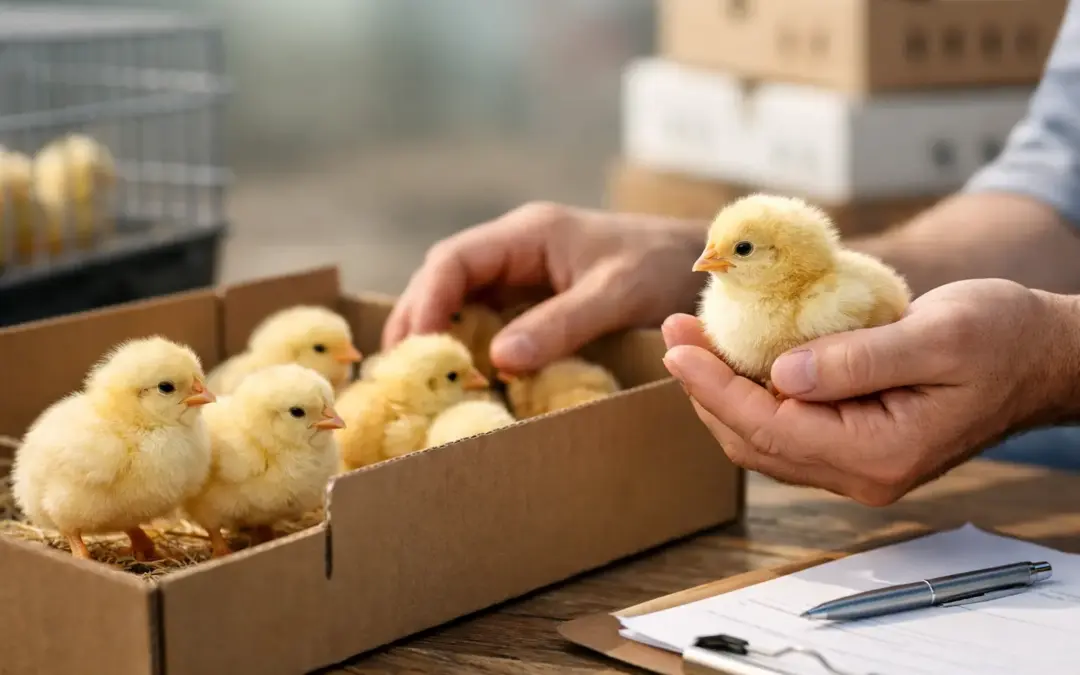
That first box of peeping chicks can turn a calm plan into a rushed decision. If you want to buy day old chicks, the quality of the breeder matters just as much as the breed itself. A smart buy starts well before collection day, with the right questions, realistic expectations, and a clear idea of what healthy, well-started stock actually looks like.
For experienced keepers, this is not about being overly cautious. It is about avoiding the usual problems – weak chicks, mixed-up breeds, poor communication, or birds that have had a rough start before they ever reach your brooder. For newer keepers, getting this stage right makes everything that follows far easier.
Buy day old chicks – what you are really buying
A day old chick is not a finished article. You are buying genetics, breeder standards, hatch quality, early handling, and the seller’s honesty, all in one small bird. That is why the cheapest listing is rarely the best value.
Good breeders know their lines, know their hatch rates, and can talk plainly about parent stock, fertility, expected feathering, colour outcomes, and likely temperament where relevant. If they cannot tell you much beyond the breed name and the price, that should give you pause.
This matters even more if you are buying rare breeds, heritage lines, or birds for future breeding rather than simply adding a few layers to the garden. In those cases, breed integrity is part of the purchase, not a nice extra.
Why source matters more than price
People often focus on the upfront cost per chick. Fair enough – if you are buying a group, the total adds up quickly. But weak stock is expensive in all the ways that matter. Heat, feed, time, losses, stress, and the disappointment of ending up with birds that do not match what was advertised all cost more than paying properly in the first place.
A specialist seller will usually be more transparent about hatch dates, vaccination status where relevant, strain, and whether the chicks are sexed, unsexed, or only tentatively identified. That level of detail is not just reassuring. It helps you make a decision based on fact rather than guesswork.
There is also a practical point here. Sellers who work inside a serious poultry community tend to value their reputation. That often leads to better listings, better answers, and better after-sale communication if something needs clarifying.
What to check before you commit
Before you agree to buy, look carefully at how the chicks are being presented. Clear photos, accurate breed naming, and a sensible description tell you a lot. So does the seller’s willingness to answer straightforward questions.
Ask when the chicks hatched, whether they are from closed breeding groups or mixed pens, what they have been fed, and whether they are vaccinated if that is relevant to the type of stock. If you are buying a breed with known colour variation or sexing uncertainty at hatch, expect a breeder to be open about that rather than overpromise.
It is also worth asking how the chicks have been brooded. Clean, warm, steady conditions in the first days matter. Chicks that have been chilled, overcrowded, or started badly may survive, but they are not off to the best start.
How healthy day old chicks should look
Healthy chicks are alert, upright, bright-eyed, and active without looking distressed. They should move freely, respond to sound and movement, and look dry and properly fluffed once settled after hatch. Their vents should be clean, their navels neat and closed, and their legs straight and strong enough to support them.
A quiet chick is not always a problem, especially if it has recently been handled or transported, but dullness, laboured breathing, pasted vents, splayed legs, sticky down, or obvious weakness are all red flags. So is a group of chicks huddled together in a way that suggests they have been cold.
No honest breeder can guarantee perfection in every hatch. Poultry breeding is live stock, not factory output. But they should be realistic about quality and selective about what they sell.
Choosing the right breed for your setup
Not every attractive chick turns into the right adult bird for your holding. This is where plenty of buyers get caught out. A breed that suits a breeder with acres, multiple pens, and years of selection may not suit a suburban back garden or a mixed flock.
Think about your real setup rather than your ideal one. Space, fencing, housing, local weather, noise tolerance, and whether you want eggs, table birds, future breeding stock, or simply a manageable small flock all matter. Bantams can be ideal for limited space, but some are flightier than newcomers expect. Large fowl may be calmer and easier to handle, but they need more room and feed.
If you are buying for eggs, ask what the line is actually like rather than relying on broad breed stereotypes. If you are buying for showing or breeding, ask sharper questions about type, parent birds, and line history. The right breeder will understand why you are asking.
Collection, transport, and timing
Buying good chicks is only half the job. Getting them home properly matters just as much. Day old chicks chill quickly, stress easily, and need a prepared brooder waiting for them. That means heat source tested, bedding down, feed and water ready, and temperature stable before collection.
Do not arrange collection and then start setting up. Have everything done in advance. If the journey is long, think about travel conditions, outside temperature, and how quickly the chicks can be settled on arrival. A short, direct trip is always better than combining collection with errands.
Timing also matters in a wider sense. If you buy very early in the season, availability may be better for sought-after breeds, but temperatures can be less forgiving. Later hatches may be easier to rear in milder weather, though choice can narrow. There is no perfect answer – it depends on your setup and how prepared you are.
Buy day old chicks from breeders who welcome questions
One of the clearest signs of a good seller is how they handle sensible questions. Serious breeders do not usually mind being asked about parent stock, hatch dates, feed, housing, or what to expect from the birds. In fact, they often prefer informed buyers because it reduces problems later.
Be wary of vague replies, pressure to pay quickly, or listings that dodge the basics. You should know what you are buying, whether the chicks are correctly described, and what the collection terms are. If something feels muddled at the enquiry stage, it rarely becomes clearer after payment.
This is where a specialist marketplace earns its keep. A focused platform such as Hatch & Hive brings breeders and keepers into the same serious environment, which makes it easier to compare stock, ask direct questions, and avoid the noise that tends to surround general selling spaces.
Common mistakes buyers make
The most common mistake is buying on impulse because a breed looks appealing. The second is assuming all chicks of the same breed are equal. They are not. Breeding decisions, parent quality, and early management make a real difference.
Another frequent error is buying too few. Chicks need company and settle better in a proper group. The exact number depends on your brooder space and longer-term plans, but a lone chick is rarely a good idea.
Buyers also sometimes overestimate how reliably chicks can be sexed, especially in breeds where sex-linked traits do not apply. If you need pullets only, make sure that expectation is realistic rather than assumed.
Finally, some people prepare the brooder as if it were a box-ticking exercise. In practice, small details matter – draughts, drinker depth, bedding choice, heat consistency, and whether the chicks can move away from the heat if they need to.
A better way to buy
If you take poultry seriously, even at small scale, the buying process should reflect that. Look for breeders who know their birds, describe them properly, and treat the sale as the start of a keeper-to-keeper exchange rather than a quick transaction. Good stock tends to come from people who care about where it goes.
That does not mean every purchase needs to be complicated. It means it should be clear. Clear breed information, clear communication, clear collection arrangements, and clear expectations about what a day old chick is and is not.
When you buy well, you give those chicks the best possible start and give yourself a much better chance of ending up with the flock you actually wanted. In poultry keeping, that first decision has a habit of showing up months later, so it is worth getting right.