
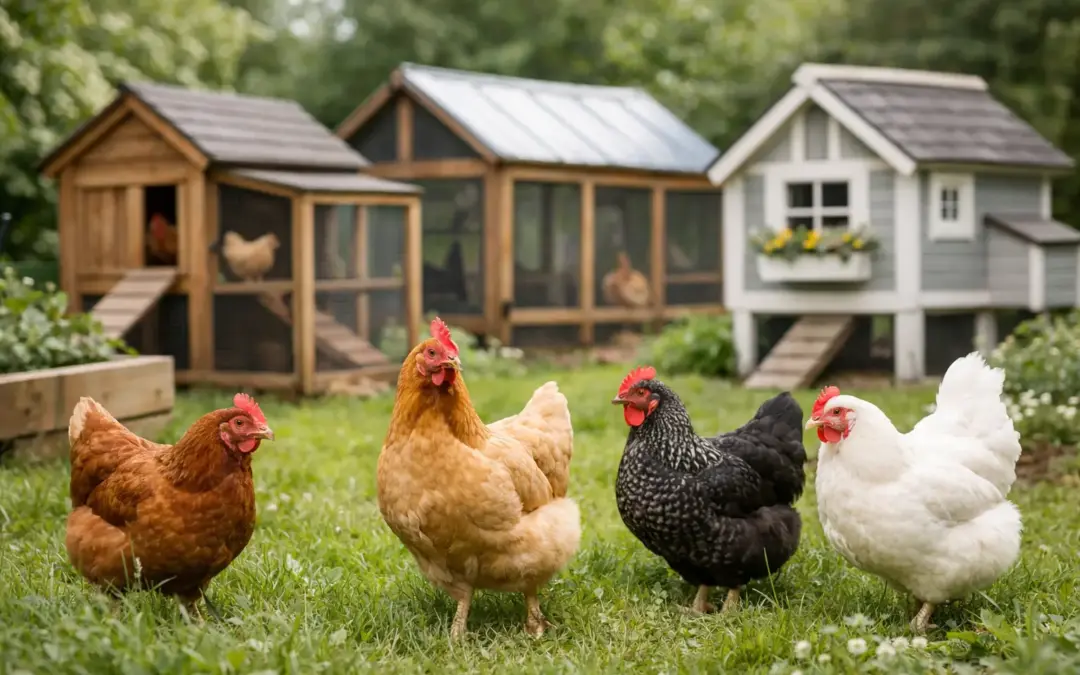
A chicken coop that works on a field can be a nuisance in a garden. Too big, and it dominates the space. Too small, and the birds pay for it in stress, mud and mess. If you are weighing up the best chicken coops for gardens, the right answer is usually less about looks and more about how the coop fits your ground, your flock and your routine.
Garden keepers tend to face the same pressures. Space is tighter, neighbours are closer, and a wet week can turn a smart patch of lawn into a churned run. That means the best setup is one that keeps birds dry, secure and easy to manage without making the garden feel like a farmyard.
What makes the best chicken coops for gardens?
A good garden coop earns its place every day. It should be easy to clean, simple to access, well ventilated and secure against foxes. That sounds obvious, but many coops sold as suitable for back gardens fall short where it matters. They look tidy in a product photo, then prove awkward once bedding, droppings and British weather get involved.
For most garden flocks, footprint matters as much as capacity. A coop with a compact house but a usable run often works better than a bulky ark that eats the whole border. You also want enough height to reach in properly. If you cannot clean corners without kneeling in wet grass and wrestling with a bolt, the job will soon be delayed.
Materials are another trade-off. Timber looks the part and suits many gardens, but cheaper softwood models can warp, swell and harbour red mite if they are poorly finished. Plastic is easier to scrub and often more hygienic, though not everyone wants the look. Metal runs are strong and practical, but on their own they do not provide the sheltered, insulated feel birds need for roosting.
10 best chicken coops for gardens by setup type
There is no single best coop for every keeper. A pair of bantams in a town garden need a different solution from a smallholder running a mixed laying flock near the veg beds. These are the main coop types worth considering, and where each one works best.
1. Compact raised timber coops
These suit small flocks of two to four hens and make sense where ground space is limited. The raised house gives birds somewhere dry to roost while leaving room underneath for shade or a small run area.
The upside is footprint. The downside is access. Some compact raised coops are fiddly to clean and have nest boxes that feel like an afterthought. If you go this route, check door openings, perch placement and whether droppings boards can be removed without a struggle.
2. Walk-in run with separate coop house
For many keepers, this is one of the best chicken coops for gardens because it gives proper working room. A walk-in run paired with a secure sleeping house is easier to maintain, easier to enrich, and far better in bad weather than a tiny all-in-one unit.
It takes more space, but it uses that space well. You can add feeders, dust baths and perches without crowding the birds. If your garden can take it, this setup often proves more practical than buying small and upgrading later.
3. Mobile arks for rotational grazing
If your birds are allowed onto grass in sections, a mobile ark can help spread wear and reduce poaching. This works especially well in larger gardens where hens can be moved between orchard, lawn edge or rougher patches.
The catch is that many arks are sold as mobile when they are only movable in theory. Once wet bedding and feeders are inside, they can be heavy and awkward. They also tend to offer limited headroom, so think carefully about cleaning access.
4. Plastic coops with attached runs
These are popular for good reason. They are straightforward to wash down, less attractive to red mite than rough timber, and they cope well with rain. For busy keepers who want a hygienic setup with less annual maintenance, plastic can be a strong choice.
The trade-off is price and appearance. Better plastic coops are rarely cheap, and some look more functional than traditional. Still, if ease of cleaning sits high on your list, they deserve serious consideration.
5. Eglu-style modular systems
Modular systems suit neat, managed gardens where keepers want expandability. You can often add extra run sections, wheels or covers as the flock changes.
They are especially useful for first-time keepers who want a contained setup from the start. That said, the standard run length on some systems is not enough if birds are confined for long periods, so do not rely on brochure capacity claims alone.
6. Heavy-duty timber houses inside a custom run
This is a strong option for established keepers who know what they need. A solid timber house, properly built and placed inside a predator-proof run, offers flexibility and often better long-term value than light flat-pack kits.
It does ask more of the buyer. You need to judge workmanship, timber thickness, ventilation and roof finish properly. But if you buy well, this kind of setup can outlast cheaper alternatives by years.
7. Pent-roof coops for fence lines and side returns
Awkward garden spaces are often wasted. A pent-roof coop can tuck neatly against a boundary or sit along the side of a shed where a taller apex model will not fit cleanly.
They are practical rather than charming, but that can be exactly the point. In a narrow urban garden, shape matters. A coop that fits the site properly is usually better than one that looks prettier and creates dead space.
8. Low-profile bantam coops
For keepers with smaller, lighter breeds, low-profile coops can work well. Bantams generally need less internal room than large fowl, and a smaller structure can be easier to place discreetly in a garden.
Just be honest about breed and bird numbers. A coop sold for four hens may be reasonable for four small bantams, but not for four Orpingtons or Sussex. Breed size changes everything.
9. Predator-resistant metal run systems with insulated coop pods
Where fox pressure is high, stronger run systems are often worth the spend. Metal framing, buried or skirted mesh, and a secure insulated pod or house give peace of mind that lighter garden coops cannot always match.
This approach suits keepers who are away during the day and need birds safe until they can shut up at dusk. It is less quaint, more practical, and many experienced keepers end up here after learning the hard way.
10. Bespoke garden coops
If your garden has a tricky slope, a listed wall, limited access or a very specific aesthetic, a bespoke coop may make more sense than trying to force a standard model to fit. This is particularly true for serious keepers who want proper ventilation, external nest access and easier deep cleaning built in from the start.
Custom does not always mean extravagant. Sometimes it simply means getting the dimensions, roof pitch and access points right for your site.
How to choose a garden coop without regretting it
Start with the flock you actually plan to keep, not the smallest number that helps justify a purchase. Hens have a habit of multiplying, and a coop that is just adequate on day one often feels cramped by the first winter.
Then look at your ground. Is it exposed, shaded, boggy, paved, sloped? A pretty timber coop on damp soil may never properly dry out. A run placed under trees may stay muddy for months. In many UK gardens, drainage and shelter matter more than style.
Access is the next test. Can you reach nest boxes easily? Can you remove bedding without contorting yourself? Can you stand inside the run? Keepers who stay with poultry long term usually favour setups that reduce daily friction. It is the boring details that make a coop liveable.
Security should be judged with healthy scepticism. Thin turn-buttons, weak staples and wide-gauge wire are not fox proof because a label says so. Look for proper mesh, strong fixings and no easy gaps around doors or roof joins.
Best chicken coops for gardens with neighbours in mind
Noise and smell usually come down to management, not the mere presence of hens. Still, your coop choice plays a part. Better ventilation reduces stale air and damp bedding. More internal room means less fouling around perch areas. A run that stays drier is less likely to smell after rain.
If neighbours are close, avoid siting the coop directly against a shared fence where possible. Give yourself room to clean around it and think about where morning light hits. A coop placed to catch early sun may encourage birds out and active sooner, which is useful for them but not always appreciated if you keep a cockerel. For most gardens, hens only is the simpler path.
A neat, well-kept setup also changes how poultry keeping is perceived. When the coop looks intentional and the run is clean, people tend to see it as part of a cared-for garden rather than an eyesore.
When cheap coops are a false economy
A low price can be tempting, especially for new keepers testing the waters. But very cheap coops often cost more in repairs, replacements and frustration. Thin felt roofs peel. lightweight frames rack out of square. Small doors become daily annoyances. Worse, poor design can affect bird welfare.
That does not mean the most expensive model is automatically the right one. It means value should be measured over seasons, not weekends. A coop that cleans quickly, stays sound and keeps hens secure is usually the better buy.
For serious keepers, specialist marketplaces such as Hatch & Hive also make it easier to compare setups sold by people who understand poultry rather than general sellers shifting garden products. That difference shows in the details.
The best garden coop is the one that keeps your birds settled and makes good husbandry easier, even in a wet February with muddy boots and five minutes before work. Buy for that day, not the showroom photo.