
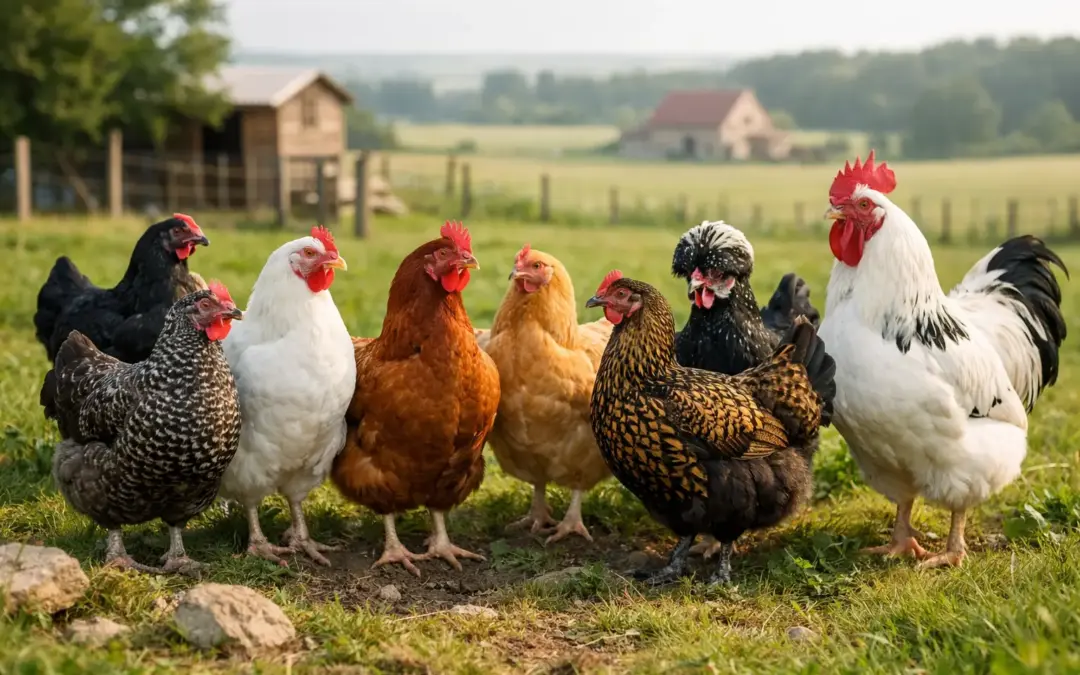
A smallholding flock has to do more than look good crossing the yard. It needs to lay through a British winter, cope with changing ground, live sensibly alongside other livestock and, ideally, produce birds worth breeding or putting in the freezer. The best chicken breeds for smallholders are therefore not always the highest layers or the biggest table birds. They are the breeds that fit the job, the land and the keeper.
There is no single right answer. A family selling a few dozen eggs at the gate needs something different from a keeper building a heritage breeding pen, or a mixed smallholding wanting a traditional dual-purpose bird. Start with purpose, then choose quality stock from a breeder who can tell you how their line performs – not merely what the breed description promises.
What makes a chicken breed work on a smallholding?
Smallholders usually benefit from useful, steady birds rather than extreme specialists. A productive laying hybrid can fill an egg basket, but may not offer the longevity, broody instinct or breeding consistency that matters when you want a self-replacing flock. Conversely, a grand old exhibition line may be beautiful but lay too lightly to carry its keep.
Look at four practical points: egg output, table quality, temperament and hardiness. Also consider how much room you can give them. Birds with a reputation for active foraging can lower feed bills when managed properly, but they still need balanced feed, clean water and secure housing. Free-ranging is not a substitute for good husbandry.
Your soil matters too. Heavy, wet ground can be hard on feather-footed breeds, while an exposed site calls for birds with real weather resistance. If neighbours are close, a quiet breed and sensible cockerel management will save trouble before it starts.
10 best chicken breeds for smallholders
1. Light Sussex
The Light Sussex is a proper smallholding favourite for good reason. It is a capable dual-purpose bird, generally calm around people and productive enough to keep eggs coming without being pushed to commercial-hybrid levels. Hens commonly lay well through much of the year, while surplus cockerels make worthwhile table birds.
They are also handsome, easy to manage and generally good free rangers. For a first traditional flock, they are difficult to dismiss.
2. Rhode Island Red
Rhode Island Reds have earned their place through usefulness. A well-bred bird is tough, productive and suited to a keeper who wants plenty of brown eggs alongside a bird with enough frame for the table. They tend to cope well with variable weather and are industrious when allowed to range.
Temperament varies by line, especially among cockerels, so ask the breeder what their birds are like in a working flock. That conversation matters more than a photograph in a listing.
3. Plymouth Rock
The barred Plymouth Rock is a dependable choice for keepers wanting a placid, traditional dual-purpose breed. It has a broad body, sensible temperament and a useful laying record, often delivering around 200 eggs a year in good conditions.
Their easy-going nature makes them especially suitable where children help with poultry chores. They are not the fastest-maturing meat bird, but that is part of the trade-off: you get a bird built for a longer, more rounded working life.
4. Marans
Marans appeal to smallholders who value distinctive dark eggs as much as a solid utility bird. The French Black Copper Marans is the headline act, although other colour varieties deserve attention. A good Marans hen can produce the rich brown eggs customers notice immediately, and the breed has enough size for the table.
They are not always the most prolific layers, and egg colour can vary widely between lines and across a laying season. Buy from a breeder selecting seriously for shell colour, health and type if the famous egg is part of your reason for keeping them.
5. Welsummer
Welsummers are another excellent brown-egg breed with a practical smallholding character. They are active, alert and often strong foragers, making them well suited to a larger run or managed free-range system. Their large, darkly speckled eggs have genuine appeal for household use or local egg sales.
They can be more independent than Sussex or Plymouth Rocks, so they suit keepers who appreciate a bird that gets on with the day rather than one that follows them about. Their cockerels are striking, and the breed brings real presence to a traditional flock.
6. Australorp
If eggs are the priority but you still want a substantial pure breed, the Australorp deserves a place near the top of the shortlist. Black Australorps are calm, hardy and renowned for laying capacity, with many hens producing generously for several seasons.
Their black plumage can look smart in a well-kept flock, though it will show mud on winter ground. They are generally accommodating birds and can suit a mixed flock well, provided every bird has adequate feeder space and places to get out of the way.
7. Buff Orpington
The Buff Orpington is not the bird to choose if maximum egg numbers are the only measure. Choose it because it is large, gentle, attractive and genuinely useful across several roles. Hens lay a respectable number of tinted eggs, often make good mothers, and carry enough meat to justify their place in a self-sufficient setup.
Their feathering makes them look bigger than they are, and it needs watching in persistent wet. Give them dry litter, well-drained ground and room to move. In return, they are among the most manageable traditional breeds for a relaxed family smallholding.
8. Ixworth
The Ixworth is a British breed built with utility in mind. White-skinned, clean-legged and fast enough to mature well for a traditional dual-purpose bird, it was developed for both egg and meat production. It remains less common than some better-known breeds, which is precisely why committed breeders and smallholders should take notice.
Hens are productive, the birds are active without being flighty, and cockerels can make a worthwhile table bird. For anyone who wants to support rare and heritage poultry while keeping a flock that earns its space, the Ixworth is a serious option.
9. Scots Grey
The Scots Grey is a strong choice for rougher ground, cooler conditions and keepers who want a bird with genuine ranging ability. These birds are alert, economical and characterful, with barred plumage and a distinctive upright carriage. They can be excellent foragers, which suits a holding where poultry have access to pasture, orchard or woodland edge.
They are less suited to a tiny enclosed run and may be more independent than the heavier utility breeds. Give them room and they reward you with resilience and a flock that looks as though it belongs on the land.
10. Pekin bantam
Not every smallholding needs large fowl. Pekin bantams are compact, friendly and famously broody, making them valuable where hatching eggs and raising chicks are part of the plan. Their egg numbers will not rival an Australorp, and their heavily feathered feet demand dry conditions, but their maternal instinct is a real asset.
A small Pekin hen can be ideal for sitting a modest clutch of bantam eggs or helping to rear chicks without an incubator. Keep them for character, breeding and broodiness rather than as the flock’s main egg producers.
Build a flock, not a collection
The temptation is to buy one of everything. It makes a colourful flock, but it can complicate breeding, egg identification and flock management. If you hope to hatch your own replacements or sell hatching eggs, start with one breed or two breeds in clearly separate pens. Breed integrity is easier to protect than to recover.
For a household egg flock, a mix can work well: perhaps dependable Australorps or Rhode Island Reds for production, with a couple of broody Orpingtons or Pekins if you want natural incubation. For meat and eggs, Light Sussex, Plymouth Rocks and Ixworths give a more balanced proposition.
When sourcing birds, ask about age, vaccination history where applicable, parent stock, fertility, leg health and how the flock is kept. A reputable breeder should welcome sensible questions. At Hatch & Hive, the aim is straightforward: connect keepers with specialist stock and people who know what they are breeding.
Choose for your ground and your goals
The best flock is rarely the one with the most fashionable breed names. It is the one whose birds stay healthy on your ground, lay well for your needs and can be managed properly through winter as well as summer. Start with good housing, secure fencing and a realistic plan for surplus males before you buy a single hatching egg.
Then choose a breed with a clear purpose, buy the best stock you can afford and give it time. Good poultry keeping is built in seasons, not weekends.