
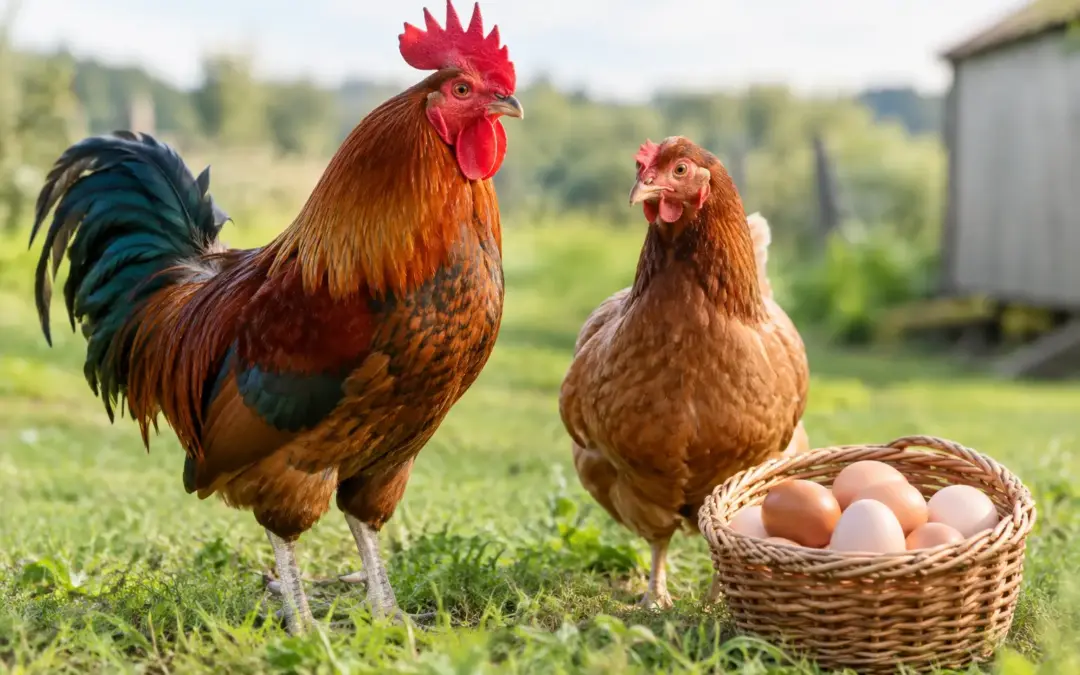
A pen can look busy, healthy and well fed, yet still produce poor fertility or hens with bare backs. More often than not, the issue is not the incubator. It is the breeding cockerel ratio. Get the number of hens per male right and you give the cockerel enough opportunity to cover the flock without allowing him to run the hens ragged.
There is no magic figure that suits every breed, season or set-up. The right ratio depends on the birds in front of you: their age, size, condition, temperament, feathering and the space available. A good breeder reads the pen, not just the textbook.
What does breeding cockerel ratio mean?
The breeding cockerel ratio is simply the number of hens kept with one cockerel for fertile egg production. When people say a ratio of 1:8, they mean one cockerel to eight hens.
Too few hens can leave a keen male repeatedly mating the same birds. Expect worn saddle feathers, stressed hens, broken feathers and, in a badly managed pen, skin damage. Too many hens can mean missed matings and a lower fertility rate, particularly if the cockerel is young, old, overweight or low in condition.
The aim is not to get the greatest possible number of hens under one male. The aim is consistent fertility while keeping every bird in good breeding condition. That matters even more where you are maintaining a rare breed, selecting carefully for type, or offering hatching eggs with your name behind them.
A sensible breeding cockerel ratio to start with
For many large fowl breeds, one cockerel to eight to ten hens is a sound starting point. This is a workable middle ground for a fit, proven male in a properly sized breeding pen.
Heavy, fluffy-feathered or less mobile breeds often do better with one male to five to eight hens. Their mating can be less efficient, and the extra feathering around the vent can make a real difference to fertility. If you are breeding heavily feathered birds, careful trimming around the vent may be more useful than simply adding another cockerel.
Bantams vary greatly. A lively, active bantam male may manage eight or more hens comfortably, while a very small or heavily feathered variety may give better results with five or six. Do not assume a bantam needs fewer hens merely because he is smaller. Watch his behaviour and check fertility from the eggs.
For a young cockerel in his first breeding season, err on the conservative side. He may be enthusiastic but inexperienced, and his fertility may not yet match that of a settled adult male. An older, proven bird can often cover a larger pen, provided he remains sound on his legs, carries good weight and is still actively mating.
Breed type and pen design change the answer
Ratios only make sense alongside housing. One male with ten hens in a cramped, muddy run is not the same as one male with ten hens across a dry, well-managed breeding area. If the hens cannot get away from him, the stated ratio becomes less relevant.
Active Mediterranean and lighter utility types may tolerate a slightly larger number of hens per male. Large, docile breeds, birds with abundant feathering and breeds prone to leg problems usually need more careful management. A cockerel with long spurs, a poor gait or an aggressive nature can cause damage even in a seemingly generous ratio.
Keep an eye on the hens’ backs, wings and combs. A little feather wear during the breeding season is common. Persistent bare patches, scratches, hiding behaviour or hens reluctant to leave the perch are signs that the male is overworking the pen or that the accommodation gives the hens no respite.
Several feeding and drinking points can reduce pressure in a group. So can cover, perches and visual breaks in the run. These are practical welfare measures, not decoration. A hen that can move away from a persistent cockerel is less likely to be bullied or injured.
When one cockerel is not enough
Poor hatch rates do not automatically mean you need another male. First establish whether the issue is genuinely fertility. Candle eggs at around seven to ten days of incubation, and keep simple records by pen. Clear eggs suggest a fertility problem; early losses may point instead to egg handling, storage, incubation settings, nutrition or breeder health.
If fertility is consistently low, inspect the cockerel before changing the ratio. Check that he is mating, that his feet and legs are sound, and that he is not carrying excessive weight. Look at his vent area for heavy feathering or signs of lice and mites. Check the hens too. Overweight birds, poor condition and long-standing health problems all affect breeding performance.
Adding a second male to a small breeding group usually creates more problems than it solves. Rival cockerels may fight, disrupt mating and place extra pressure on the hens. Even males that appear to coexist can become troublesome as the season develops. A dedicated breeding pen with one selected male is generally the cleaner option when pedigree and reliable parentage matter.
Where a larger flock needs two males, provide proper space and separate areas rather than hoping the birds will sort themselves out. If you need known parentage, divide the birds into individual breeding pens. Mixed-male groups are not suitable for stock where you intend to make accurate claims about sire lines.
Checking whether your ratio is working
Your birds will tell you more than a fixed chart. A ratio is working when the cockerel is regularly attentive without constantly chasing hens, the hens remain well feathered and calm, and candling shows a dependable level of fertility across several collections.
Do not judge a breeding pen from a single tray of eggs. Cold weather, a sudden moult, a heat spell, a move to new housing or a change in diet can all cause a temporary dip. Give the birds time to settle, then assess a run of eggs collected over at least a couple of weeks.
Remember that hens can retain sperm for a period after mating. Following a change of male, eggs laid immediately afterwards may not reliably represent the new pairing. For breeders working with specific colour, strain or parentage plans, allow a sensible settling period before saving eggs for hatching or sale.
A basic notebook is enough. Record the male and hens in each pen, dates of any changes, egg numbers, fertility seen at candling and hatch results. Over a season, this will show whether a particular male genuinely performs well with six hens, ten hens or fewer. Good breeding decisions are built on records, not hunches.
Managing the breeding season without exhausting the flock
A cockerel does not need unlimited access to hens all year to prove his worth. Some breeders run dedicated breeding pens only when they are collecting eggs, then give birds a quieter period outside the main breeding programme. This can protect feather condition and make pen management easier.
There are trade-offs. Moving birds can cause stress, and frequent rearranging can upset flock order. If you split and reform pens, do it with purpose, provide enough space, and avoid introducing new birds straight into a valuable breeding group without a proper health and quarantine plan.
Nutrition deserves the same attention as the ratio. Breeding birds need a balanced ration, clean water and access to appropriate minerals, but overfeeding is not a shortcut to better fertility. Fat hens and overweight males are common causes of disappointing results. Maintain condition rather than pushing birds for size.
Choosing the right male for the job
The best cockerel is not always the loudest, biggest or most decorative bird in the yard. For a breeding pen, he should be healthy, mobile, active with hens and true to the qualities you are trying to preserve. Temperament matters. A beautiful male that injures hens or cannot be safely managed is a poor breeding prospect.
When sourcing a new cockerel, ask practical questions: his age, breeding history, health status, parentage, leg condition and the number of hens he has successfully covered. Specialist breeders who keep proper records can give you a far clearer picture than a vague description and a smart photograph. That is the standard serious keepers should expect from each other.
Start with a sensible ratio, then let your fertility records and the condition of your hens guide the next adjustment. A calm pen, sound birds and fertile eggs are the result worth breeding towards.