
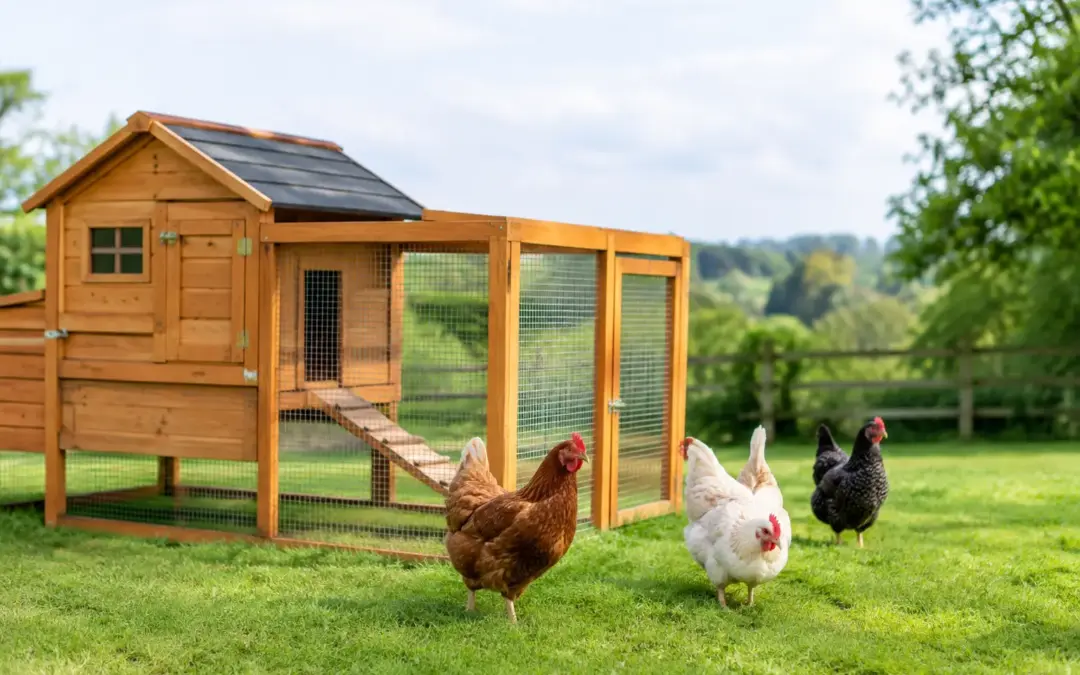
A coop can look tidy in a product photo and still become a wet, awkward mess by the first hard spell of rain. That is why chicken coop reviews are worth reading with a keeper’s eye, not a shopper’s eye. The useful ones tell you whether a house stays dry, shuts securely, cleans without a struggle and gives the birds enough room to settle properly.
For a first flock, it is tempting to buy on appearance or a five-star average. Experienced keepers tend to read beyond both. They look for details about timber thickness, roof design, pop-hole security, access for cleaning and how the coop has stood up after a full British winter. That is where the difference between a fair-weather ornament and dependable housing becomes clear.
What good chicken coop reviews actually reveal
The strongest reviews are specific. A comment saying that a coop is “lovely” may be sincere, but it does not tell you whether the roof leaks at the joins or whether the nesting-box lid blows open. Look for reviews written after several months of use, ideally by people keeping a similar number and type of birds to your own.
A credible reviewer usually mentions their conditions. A sheltered garden in the South East is not the same test as an exposed smallholding in Wales, northern England or Scotland. Mud, driving rain and regular frost reveal weak catches, thin felt roofs and untreated edges quickly.
Pay close attention when several reviewers independently raise the same point. One complaint about a damaged panel may be a courier issue. Repeated comments about warped doors, awkward cleaning access or a roof that needs extra sealing indicate a design issue. Equally, repeated praise for solid catches, dry bedding and straightforward assembly is worth more than polished marketing copy.
Reviews can also expose a common mismatch: a manufacturer’s stated capacity versus a realistic sleeping capacity. If several keepers say four large hens fill a coop sold for six, believe the birds rather than the label.
Start with your flock, not the star rating
There is no universally best coop because housing needs change with breed, flock size, ranging arrangements and the ground available. Bantams may use less floor space than large fowl, but they still need dry perches, safe access and room to avoid being crowded. A flock of calm hybrids is different from a group of active, heavy-breed birds. A breeding pen has different demands again.
Before comparing models, decide what the coop must accommodate. Count the birds you have now, then leave sensible headroom if you may retain growers, add replacement hens or separate a bird temporarily. Overcrowding is not solved by a clever layout. It leads to poor roosting, pecking problems, damp litter and a house that becomes harder to keep hygienic.
Also separate coop space from run space. A generous attached run does not make a cramped sleeping house suitable. Reviews sometimes praise a complete package because it looks substantial, yet the actual enclosed house may be small, poorly ventilated or difficult to reach.
Read reviews for weatherproofing, not just warmth
A good coop needs to keep rain out while allowing stale, moist air to escape. Those two things are often confused. A sealed box may feel warmer to a buyer, but trapped humidity creates condensation and damp bedding. Ventilation should sit high in the house, away from where birds perch, and should not depend on leaving a large door open overnight.
When reading chicken coop reviews, search for practical phrases: “dry after rain”, “no condensation”, “roof needed resealing”, “water came through the nest box”, or “felt lifted in wind”. These are far more useful than comments on paint colour.
Timber construction deserves particular scrutiny. Properly treated wood can make excellent housing, but it needs maintenance and sensible siting. Look for details on panel thickness, roof material, raised floors and whether the coop has feet that keep the base clear of wet ground. Thin timber and lightweight roofing can be adequate in a protected spot, but they may not suit an exposed holding without improvements.
Plastic coops have their own trade-off. They are usually quick to wash, do not rot and can be useful where red mite management is a concern. However, build quality varies, and some designs offer limited ventilation or become less comfortable in direct summer sun. Reviews should tell you whether fittings remain secure and whether the shell stays stable after repeated cleaning.
Security is more than a lock on the door
Fox-proof is a serious claim, not a decorative feature. Reviews that simply say “secure” are less useful than ones explaining how the pop-hole closes, whether door bolts can be worked by a determined fox, and how the run attaches to the house. A coop may be sound while its surrounding run is vulnerable at the skirt, mesh or roofline.
Check whether reviewers mention gaps around the pop-hole, nest-box lid and floor. Small gaps matter for rodents as well as draughts. Raised coops can make inspection easier, but they can also create sheltered space underneath if the run design does not account for it.
Automatic door reviews need an extra layer of care. They should cover battery life or mains reliability, sensor behaviour at dawn and dusk, and whether the door continues to close reliably in dirty conditions. An automatic door is a convenience, not a substitute for a secure structure or a proper evening headcount.
Cleaning access is where ownership gets real
The best-looking coop soon loses its appeal if you have to dismantle half of it to remove soiled bedding. Reviewers who mention droppings trays, removable perches, wide access doors and genuinely reachable corners are giving you useful information.
Think about the jobs you will do every week. Can you scrape and refresh the house without squeezing through a narrow hatch? Can you check the perch ends and roof joins for red mite? Does the nest box allow egg collection without disturbing birds? A removable tray sounds helpful, but not if it is shallow, flimsy or impossible to slide out once bedding builds up.
Assembly reviews matter here too. Flat-pack coops vary sharply in fit and finish. A patient keeper with basic tools may be happy adding screws, sealant or reinforcing a catch. Someone wanting a ready-to-use house should treat repeated reports of misaligned holes, split battens or vague instructions as a warning. There is nothing wrong with improving a budget coop, provided the price reflects the work required and you know what you are taking on.
Know when a low score is not a deal-breaker
Not every negative review should rule out a coop. Sometimes the complaint is about an expectation the product never claimed to meet. A compact ark may receive criticism for being too small from someone trying to house more birds than it was designed for. A lightweight moveable coop may be marked down because it needs anchoring in a windy field, when portability is the very reason it is light.
Read the reviewer’s flock and setup alongside their verdict. The most helpful negative reviews explain what they would choose differently: a bigger roof overhang, more headroom for large fowl, a separate walk-in run, or a design with easier access for an older keeper. That lets you judge whether the limitation affects your own setup.
Questions worth asking before you buy
If a listing or review leaves gaps, ask direct questions before committing. How long has the coop been outside? Has it needed resealing or replacement roofing? What breeds and numbers are sleeping in it? Is it raised from the ground? How is ventilation arranged? Can all internal surfaces be reached for cleaning and mite checks?
When buying second-hand, ask for clear photographs of the floor, roof underside, door frames, perch ends and nesting-box corners. Surface dirt is manageable. Rot, persistent damp, loose mesh and deep crevices are a different proposition. A bargain that needs new panels, a roof and predator-proofing is rarely the bargain it first appears.
Specialist marketplaces such as Hatch & Hive make it easier to speak directly with people who understand the difference between a pretty coop and a workable one. A seller who can explain how a house has been used, maintained and suited to particular birds is offering more than a stock description.
The right coop is the one that fits your flock, your ground and the time you can realistically give to upkeep. Read the detail, question the claims and choose housing you will still be glad to clean on a cold, wet Sunday morning.