
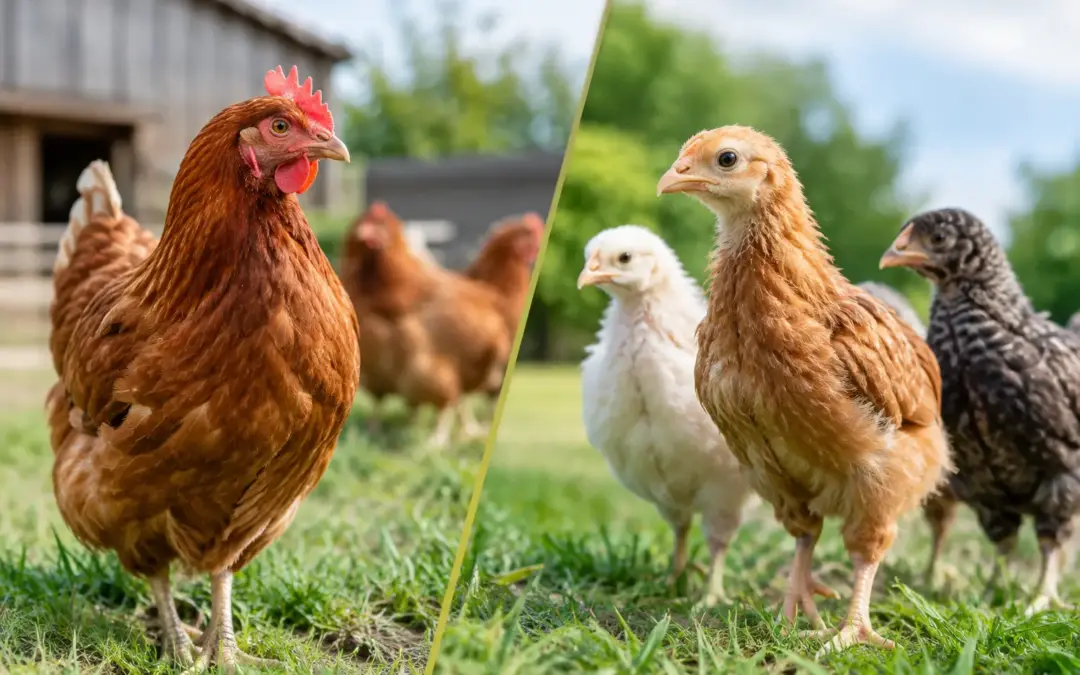
A cheap young bird can look like a bargain until you have fed it for months, waited through winter and still have no eggs in the basket. That is why point of lay versus pullets is not simply a question of age. It is a decision about time, budget, housing, breeding plans and how much uncertainty you are willing to take on.
The terms are often used loosely in poultry adverts, which can make comparing birds harder than it should be. A good seller should be clear about hatch date, breed, health history and whether the birds are genuinely nearing maturity. Ask direct questions. Serious breeders will expect them.
Point of lay versus pullets: the real distinction
Strictly speaking, a pullet is a female chicken under one year old. A point-of-lay bird is therefore also a pullet. In everyday poultry keeping, however, the labels usually describe two different stages of readiness.
A pullet is commonly sold as a younger female, often anywhere from a few weeks old to several months old. She may be fully feathered and off heat, but she is not necessarily close to laying. Point-of-lay birds are older pullets, usually advertised when they are approaching sexual maturity. Depending on breed, management and the time of year, that is often around 16 to 22 weeks, though some heritage breeds take longer.
The key word is “approaching”. Point of lay does not mean guaranteed to produce an egg the following morning. A move to a new home, shorter daylight hours, a change of feed, stress or a bird simply developing at her own pace can all delay the first egg.
What you are paying for
The price gap between younger pullets and point-of-lay birds reflects more than a few extra weeks of age. The breeder has already carried the cost and risk of rearing them through their most vulnerable period: heat, bedding, feed, vaccination where used, space, labour and losses.
With point-of-lay stock, you are paying for time saved. You also have a clearer view of each bird’s conformation, feather quality, temperament and general thriftiness. In breeds where sexing at hatch is difficult, an older bird also removes much of the uncertainty over whether you are buying hens rather than surplus males.
Younger pullets cost less upfront, but their true cost is not just the advertised price. You need suitable grower accommodation, secure predator protection, appropriate feed and the patience to wait. If your existing flock is already laying, you may also need to manage feeding separately until the youngsters are ready for layers’ feed.
Neither route is automatically better value. A well-reared young pullet from a trustworthy breeder can be an excellent buy. Equally, a point-of-lay bird at a fair price can make more sense for a keeper who wants a settled laying flock without the longer rearing period.
Choose point-of-lay birds when time matters
Point-of-lay hens suit first-time keepers who have a coop ready, a secure run prepared and want eggs within a reasonable period. They are also practical for busy households, smallholders replacing older layers, or anyone rebuilding a flock after losses.
They can be easier to assess before purchase. You can see whether a bird is bright-eyed, active and properly feathered, whether her legs and feet are sound, and whether she has grown evenly. If she is a pure breed, the adult plumage and type will be more apparent than in a younger youngster.
There are trade-offs. Mature birds can find a move stressful, particularly if they have been reared in a large group and are suddenly placed with established hens. Quarantine new arrivals away from your current flock before introductions, and introduce them gradually where possible. Buying point-of-lay birds does not remove the need for good flock management.
Be wary of vague claims such as “laying soon” without an age or hatch date. A bird might be healthy and attractive but still weeks, or occasionally months, from maturity. Ask what she has been fed, whether she has been kept under supplementary light, and whether any birds from the same hatch have started laying. These details give a more useful picture than a label alone.
Choose younger pullets when you want more control
Younger pullets are often the stronger option for keepers who enjoy the rearing side of poultry. You can settle them into your own routine early, handle them regularly and watch their character develop. For families and smallholders with suitable facilities, that involvement is part of the reward.
They also make sense when you are planning a flock around a particular breed or line. If you are buying from a breeder who keeps heritage stock, starting earlier gives you more time to assess birds before deciding which hens may eventually be retained for breeding. It is a slower route, but it can be the right one for someone building a flock with purpose rather than merely filling a coop.
The catch is that young birds require more planning. Pullets need protection from older hens, which may bully them badly if introduced too soon. Their nutritional needs differ while they are growing, and poor early management can affect their development. A low purchase price soon loses its appeal if the birds are crowded, poorly protected or fed incorrectly.
Season matters as well. A spring-hatched pullet may mature as daylight is shortening in autumn, so her first eggs could be delayed. A breed selected for steady winter production may behave differently from a traditional breed that is more seasonal. Good breeders can explain what is typical for their birds, rather than promising a laying date nobody can honestly guarantee.
Look beyond age when buying poultry
Whether you choose point-of-lay birds or younger pullets, buy the seller as carefully as you buy the birds. The best advert is specific. It should tell you the breed, hatch date or age, sex, number available and collection area. It should also use current, clear photographs rather than a generic breed image.
Before committing, ask how the birds have been housed and what they are eating. Find out whether they have been exposed to other poultry regularly, whether there have been recent health issues in the flock, and whether the seller can explain the parent stock. For rare breeds and breeding-quality birds, lineage and the breeder’s selection priorities matter. A bird may be pure bred without being a strong example of the breed.
When viewing birds, stand back first. Healthy birds should be alert, mobile and interested in their surroundings. Look for clean vents, sound legs and feet, smooth breathing, clean nostrils and feathers in good condition for their age. A little mud after wet weather is one thing; signs of neglect are another.
Avoid making a decision based only on comb size or redness. These can suggest increasing maturity, but they vary by breed, individual and season. A red comb is not a laying guarantee, just as a smaller comb does not prove a pullet is unhealthy.
Match the bird to the job
For a household wanting dependable eggs, commercially selected hybrids at point of lay are often the straightforward choice. They generally mature earlier and lay well in their first season, provided they receive suitable care. They are not the only sensible option, though.
For a keeper drawn to breed character, preservation or future breeding, a well-bred pure-breed pullet may be worth the wait. Many traditional large fowl and bantams mature later, lay fewer eggs than hybrids and may go broody, but those qualities can be entirely desirable depending on your plans. A broody hen is inconvenient when you want maximum egg numbers and invaluable when you intend to hatch chicks naturally.
Space should influence the decision too. If your run is limited, do not buy a large batch of cheap young pullets simply because they are available. Birds need room to grow without stress, and an overcrowded flock creates avoidable health and behavioural problems. Start with the number you can house properly, then add only after quarantine and careful introductions.
A better way to compare adverts
When comparing two listings, put price to one side initially. Compare age, breed, rearing conditions, seller knowledge and what you need the birds to do. A £10 difference is minor beside months of feed, years of care and the disappointment of receiving birds that do not match the description.
For point-of-lay birds, prioritise an accurate hatch date and an honest expectation of when laying may begin. For younger pullets, prioritise sound growth, good husbandry and confidence that you can rear them properly. In both cases, collection is an opportunity to see the holding, meet the seller and judge whether the flock is managed with care.
A specialist marketplace such as Hatch & Hive makes that conversation easier by putting poultry people in front of poultry people. No noise, just clearer listings, informed questions and stock sourced with purpose.
Buy the age that suits your setup, not the age that sounds most convenient. The right birds are the ones you can house well, feed correctly and keep for the long term – and a breeder who answers plainly before the sale is usually the right place to start.