
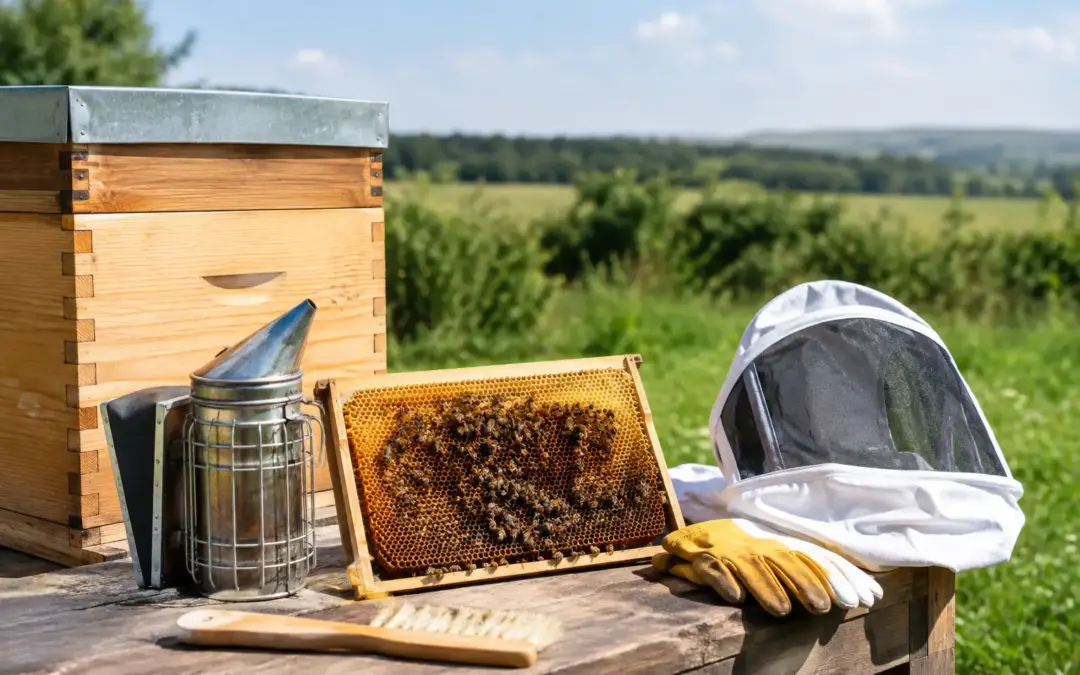
A colony does not need every gadget in the catalogue. It needs sound housing, room to grow, reliable food when forage is short, and a keeper equipped to inspect it properly. When looking for beekeeping supplies UK buyers can depend on, start with the job each item must do – not the temptation of a starter bundle packed with bits you may never use.
For poultry keepers and smallholders adding bees to the holding, this matters even more. A hive is not another coop to fill and leave alone. It is a working colony with seasonal demands, disease risks and a need for regular, calm management. Buy the essentials first, learn the system you have chosen, then add equipment because your bees require it.
Beekeeping supplies UK keepers need first
A workable hive setup begins with a brood box, a floor, a roof and frames. You will also need a stand to lift the hive clear of damp ground, along with a feeder, smoker, hive tool and protective clothing. That is the core kit for establishing and managing a colony.
The hive itself deserves more thought than most beginners give it. In the UK, National hives are common and widely supported, so replacement boxes, frames and other components are straightforward to source. A WBC may suit someone who values its traditional appearance, while a Commercial or Langstroth hive can make sense where a local mentor or nearby bee group already uses that format.
There is no universally superior hive. The practical rule is simpler: choose a system with readily available compatible parts, then stick to it. A mismatched collection of brood boxes, supers and frames creates needless frustration during inspections, feeding and honey extraction.
Frames and foundation are not an afterthought
Frames are where bees raise brood and store their food. Buy enough to fill every box you intend to use, plus a modest reserve. Foundation gives the colony a clean, consistent starting point, but it must match the frame size and the box it belongs in.
Wax foundation is familiar and readily accepted by many colonies, while plastic foundation can be durable and convenient. Either can work if fitted correctly. What matters is avoiding old, damaged or unknown comb, particularly when you are starting out. Used wooden boxes can be excellent value if they are clean and structurally sound; old frames and comb are a different proposition because they can carry disease or residues.
Protective kit should help you inspect properly
Bees respond to poor handling, sudden movement and rough weather far more than they respond to the colour of your suit. Even so, decent protective clothing gives a newer keeper the confidence to complete an inspection without rushing.
A well-fitting veil is non-negotiable. Make sure it keeps clear of your face and seals securely at the neck. Gloves are a personal choice: thick gloves offer reassurance but can make you clumsy, while thinner gloves give better feel once you are confident. Many experienced keepers work bare-handed in settled colonies, but that is not a badge of honour. Wear what allows you to stay calm and work cleanly.
A smoker and hive tool belong in every bee kit. The smoker should produce cool, steady smoke, not sparks or thick hot fumes. Your hive tool will separate propolised boxes, lift frames and scrape unwanted wax. Keep a spare nearby – it is remarkably easy to put one down in long grass.
Feeding equipment earns its place in British weather
The British season does not always follow the neat timetable in a book. A cold spring, a wet summer or a late nectar gap can leave a colony short of stores. Feeders give you a way to support bees when they genuinely need it, without opening the hive more than necessary.
An internal feeder, rapid feeder or contact feeder can all be useful. The best option depends on the hive type, the season and how much feed is required. Ensure the feeder is secure and does not encourage robbing or drowning. Always check that bees have access to it and avoid spilling syrup around the apiary, where it can trigger unwanted attention from other colonies and wasps.
Do not feed simply because a colony looks quiet. Assess its stores, brood, weather and available forage. In late summer and autumn, strong colonies often need substantial help to prepare for winter. In spring, small amounts may be appropriate for a colony at risk of running short. The right decision is based on what is in the hive, not a fixed date on the calendar.
Buy for inspections, not just for honey
New keepers often focus on supers, extractors and jars before their first colony has settled. Honey equipment has its place, but good husbandry comes first. Your most valuable purchases are the ones that make inspections safer, more consistent and easier to record.
Keep a notebook or inspection record, whether on paper or on your mobile phone. Record the queen status, brood pattern, stores, temperament, space available and anything that needs action at the next visit. A marker pen, spare queen cage, frame wire, drawing pins and a small box for carrying tools can be more useful through the season than another novelty accessory.
Varroa monitoring and treatment equipment should also be part of the plan from day one. Varroa is not a problem to deal with once bees look unwell. It is a routine management responsibility. Use approved treatments as directed, monitor mite levels at suitable times and understand when your chosen treatment can be used around honey supers. If you are uncertain, get advice from an experienced local keeper before acting.
Second-hand beekeeping equipment: where value ends
Second-hand beekeeping supplies can make a sensible start, especially solid wooden hive parts, roofs, floors and stands. Check every joint, corner and surface. Wood should be free from serious rot, excessive warping and obvious contamination. A tired exterior can often be repaired or repainted; a box that cannot sit squarely or protect a colony from rain is false economy.
Be more cautious with brood frames, comb and equipment that has had close contact with bees. The health history matters. Ask direct questions: why is it being sold, how long has it been unused, and has the owner had any disease concerns? A seller who cannot answer basic questions is not offering the confidence a serious keeper needs.
This is where a specialist marketplace is useful. You are not just hunting for a bargain among unrelated adverts. You can connect with people who understand livestock, breeding standards and the value of honest detail. Hatch & Hive brings beekeeping-related stock and supplies into the same focused space as the wider smallholding community – no noise, just relevant listings and direct contact with the seller.
Match the purchase to your next season
Buying everything at once can leave you with the wrong equipment and less budget for the things that cannot wait. Buy enough boxes and frames for your expected colony growth, but do not assume every colony will need the same setup. A vigorous colony in a good flow may need extra space quickly; a newly established nucleus may not.
Before buying, think through the next practical job. If you are collecting a nucleus, confirm which frame size it is supplied on and ensure your brood box matches. If you expect to take honey, make sure you have compatible supers, frames and a plan for extraction. If winter is approaching, prioritise sound weatherproofing, feeders and enough stored food over cosmetic upgrades.
Keep an eye on delivery costs for bulky timber and ask whether collection is possible. A local collection lets you inspect equipment in person and can be particularly worthwhile for assembled hives, stands and second-hand items. For smaller supplies, condition and compatibility matter more than postcode.
Build a kit that lets you keep learning
The best beekeeping kit is not the biggest kit. It is the one that lets you open the hive with purpose, understand what you see and act at the right time. Start with compatible hive parts, a dependable veil, basic handling tools, feeding equipment and a clear plan for varroa management.
Then let the colony tell you what comes next. Extra brood space, a super, a better feeder or a honey extractor should solve a real need in your apiary. Good bees, sound equipment and informed sellers make a far better foundation than a shed full of unused kit.