
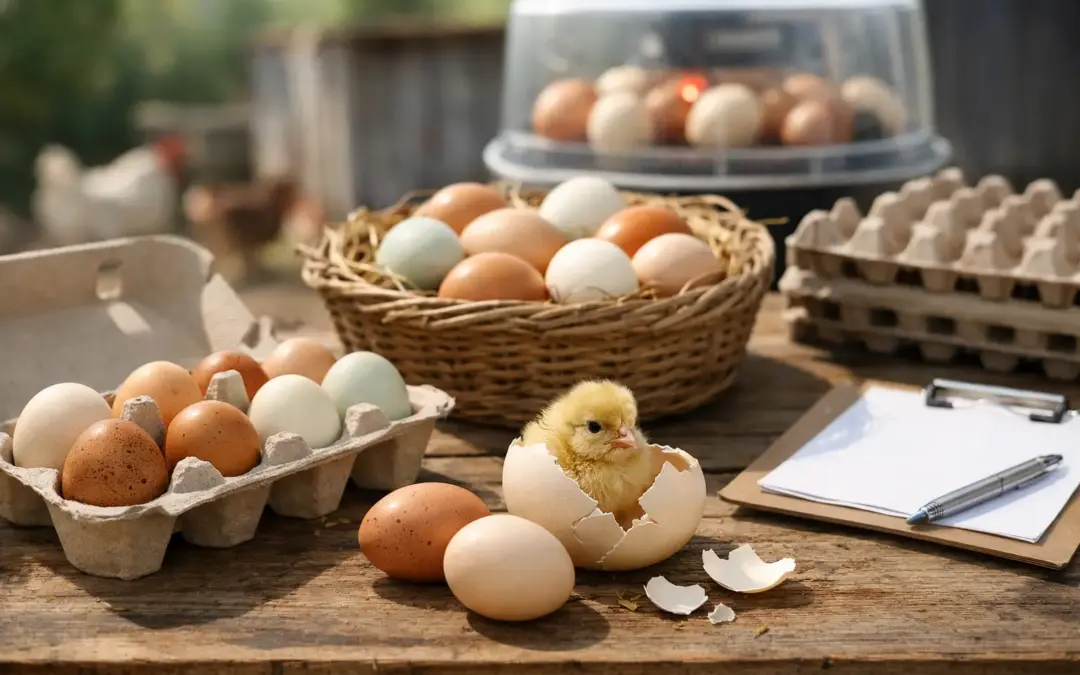
A good box of hatching eggs is not simply surplus from the nest box. It represents your breeding decisions, flock management and reputation. This guide to selling hatching eggs is for breeders who want to sell stock properly: with accurate information, sensible expectations and the care that gives buyers a fair chance of a healthy hatch.
The strongest sellers are rarely the cheapest. They are the people buyers can trust to know their birds, describe their lines honestly and pack eggs as though they expect every one to matter. That standard is what brings serious keepers back.
Start with eggs worth selling
Fertility is the starting point, but it is not the whole job. A fertile egg can still be a poor candidate for sale if it is misshapen, heavily soiled, cracked, old or laid by birds in poor condition. Set a standard for what leaves your holding and stick to it, even when demand is high.
Collect eggs regularly and handle them with clean, dry hands. Store them in a cool, stable environment away from direct sunlight, strong smells and dramatic temperature changes. Most breeders sell eggs as fresh as possible, ideally dispatching soon after collection rather than holding a growing pile for convenience. Turn stored eggs gently if they are being held for more than a day or two, and keep clear records of their collection dates.
Do not wash hatching eggs. Washing can damage the natural protective bloom and may introduce problems rather than solve them. If an egg is dirty enough to make a buyer hesitate, it is usually better kept out of the sale box. Likewise, avoid selling very large, very small, oddly shaped or thin-shelled eggs. Buyers are paying for a proper chance, not a box padded out with rejects.
Your breeding flock matters just as much. Keep breeders well fed, appropriately housed and free from obvious health issues. Avoid presenting every egg as premium stock if birds are unrelated mixed-breeds, if a cockerel has only recently joined a pen, or if the fertility of a young male is still unknown. There is nothing wrong with selling crossbred eggs when they are clearly described. The problem is vague or inflated claims.
Keep breeding records before you write a listing
A buyer should be able to understand what they are buying without interrogating you. That requires records. At minimum, know the breed or cross, the breeding group, the age of the birds, when the current male was introduced and the approximate dates eggs were laid.
For pure breeds, record the source of your breeding stock where possible, relevant colour genetics and any traits that may affect the offspring. If you are working with rare or heritage poultry, be specific about the line without making promises you cannot evidence. A well-kept pedigree or breeding notebook is useful, but plain honesty carries more weight than grand language.
Separate breeding pens are essential if you are advertising a defined pairing or line. If birds have access to more than one male, say so. If a hen has recently been moved between pens, allow time before selling eggs as a particular mating. Sperm can remain viable for a period, so instant certainty is not realistic.
It also helps to candle a sample of your own eggs during the season. This gives you a working indication of fertility, but it is not a hatch guarantee. Fertility can shift with weather, age, moult, flock stress, diet and a male’s behaviour. Keep an eye on it and pause listings if results suggest there is an issue.
How to sell hatching eggs with an honest listing
Your listing should answer the practical questions first: what is the breed, how many eggs are included, when will they be dispatched or collected, and what does the buyer need to know about the breeding pen? Use recent, clear photographs of the actual parent birds. One good image of the male, females and eggs is more useful than a gallery of polished but unrelated pictures.
State whether eggs are being sold for posting, collection, or both. Give a realistic dispatch window. If eggs are collected across several days to make up an order, say that plainly. Buyers can then decide whether the egg age suits their plans.
Describe stock with care. Terms such as exhibition quality, show quality and rare should mean something. If the birds are selected toward a breed standard, explain that. If they are healthy, attractive backyard birds from good layers but not a show line, that can still be a strong and honest sale. Serious buyers appreciate a breeder who knows the difference.
Be clear that posted hatching eggs carry risk beyond your control. Handling in transit, temperature swings, delays and rough sorting can all affect hatchability. A responsible seller does not claim a guaranteed hatch rate for eggs sent through the post. You can explain your own fertility checks and packing process, but avoid promises based on conditions you cannot control once the parcel leaves your hands.
Price for the eggs, the breeding work and the care involved. Very low prices may attract quick sales, but they can also signal that the stock is an afterthought. Compare like with like: rarity, proven parentage, seasonal availability, egg size, flock quality and whether a breed is locally difficult to source all affect value. Include the cost of suitable packaging and postage rather than treating them as an afterthought.
Packing and dispatch are part of the product
The best breeding can be undone by careless packing. Use clean, purpose-made egg packaging where possible, with each egg secured so it cannot touch another. The parcel needs protection from impact without leaving room for eggs to rattle. Mark the outer box appropriately, but do not rely on a label to prevent rough handling.
Many sellers mark the broad end of each egg and include a simple note asking the buyer to rest the eggs, broad end up, after delivery before setting. It is a useful courtesy, especially for newcomers, though incubation methods vary. Include the lay date range and a reminder that hatch results depend on incubation, transport and flock factors as well as egg fertility.
Dispatch early in the week where practical, reducing the chance of a parcel sitting in a depot over a weekend. Check the weather forecast during periods of severe heat or cold, and be prepared to delay if conditions make safe travel unlikely. A short wait is better than sending valuable eggs into avoidable trouble.
Collection has different advantages. It removes the transit risk and gives buyers a chance to see the birds, ask questions and judge the standard for themselves. If visitors collect from your holding, agree a clear time and have sensible biosecurity boundaries. Do not allow every buyer to wander through breeding pens. Disease prevention is part of responsible poultry keeping, not an optional extra.
Manage expectations before problems start
Hatching eggs are a biological product, not a factory-made item. That fact should guide every message you send. Confirm orders promptly, communicate dispatch dates and provide any relevant tracking details. If there is a delay because fertility has dipped or you are waiting for fresher eggs, tell the buyer before you post. Most people would rather wait for the right eggs than receive a stale box with no explanation.
If a buyer reports a poor result, respond with respect. Ask about transit condition, the rest period, incubator temperature, humidity, turning and candling dates before jumping to conclusions. Do not become defensive, but do not accept blame automatically either. A fair policy might address eggs damaged on arrival when supported by photographs, while making clear that incubation outcomes cannot be guaranteed after posting.
This is where careful records pay off. If several buyers report poor development from the same pen, stop and investigate. Check the male, inspect hen condition, review feed and housing, and candle your own test eggs. Protecting your reputation sometimes means taking a line off sale until you know it is performing as it should.
Build a reputation, not just a sales feed
Repeat buyers come from consistency. Use the same naming for breeding groups, update listings when a pen changes and answer questions directly. If a colour outcome is uncertain, explain the likely range rather than choosing the most marketable possibility. If a breed has known traits that need experienced management, say so before the sale.
A specialist marketplace such as Hatch & Hive gives informed buyers a place to find breeders who take those details seriously. Use that audience well. Focus on the quality of the stock, the accuracy of the information and the standard of service, rather than trying to compete with every casual advert on price.
Remain alert to current poultry health restrictions and any movement, gathering or biosecurity requirements that may affect your area. These can change, particularly during periods of heightened avian influenza control. Selling responsibly means knowing when not to dispatch, not simply finding a way around the issue.
A buyer may remember the hatch rate, but they will also remember whether the eggs arrived fresh, the parent birds matched the description and you were straight with them when something changed. Put that level of care into every box, and your birds will do the talking long after the chicks have hatched.