
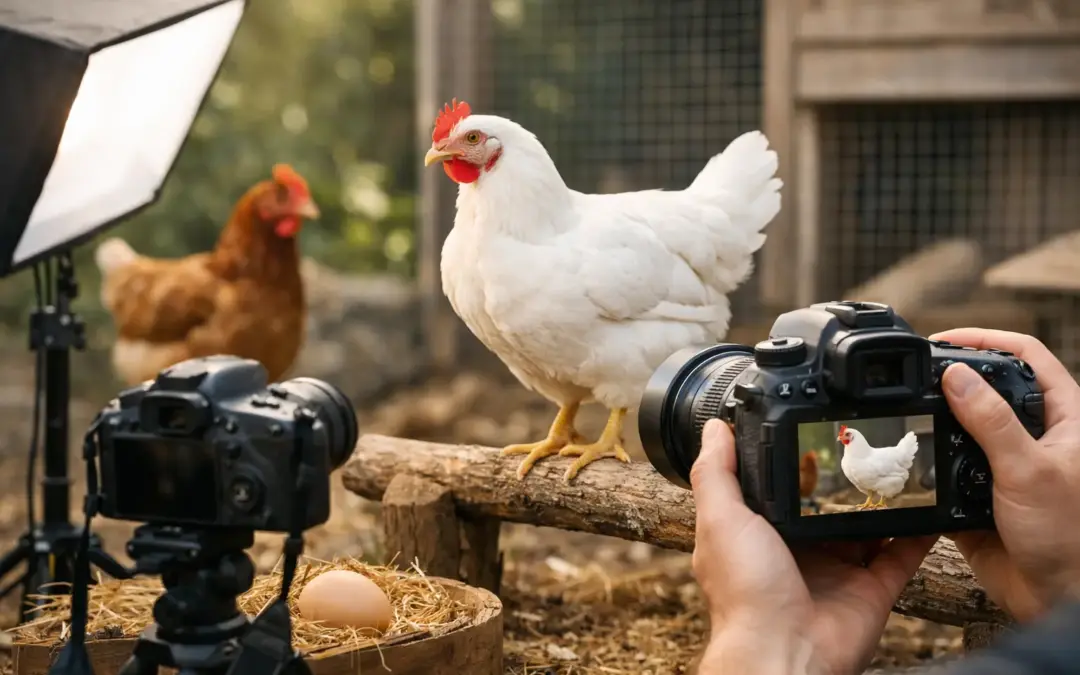
A buyer can forgive a muddy boot in the background. They will not forgive photographs that leave them guessing whether a bird is healthy, correctly marked, or even the breed described. On a specialist marketplace, good pictures do more than make a listing look smart. They show that you know your stock and are prepared to stand behind it.
Learning how to photograph poultry listings is not about turning your hens into show models. It is about giving serious keepers enough clear, truthful information to decide whether they should get in touch. A few well-made images will generally bring better enquiries than a dozen dark, rushed snapshots.
Start with an honest view of the bird
Your main photograph should show the whole bird standing naturally. Buyers need to see its overall carriage, body shape, leg length, feather condition and markings without having to decipher a cluttered pen or a patch of glare from a flash.
Choose a clean, quiet patch of ground or grass with a plain background. A weathered fence, hedge or uncluttered coop wall is usually enough. Avoid photographing birds against wire mesh where possible. It cuts across the outline of the bird and makes plumage harder to judge. It also has a habit of confusing a phone camera’s focus.
Photograph the bird at its own height, rather than pointing down from above. Crouch, kneel or sit on a low stool so the camera is level with the bird’s body. This gives a more accurate impression of type and makes the bird look like the subject, not something lost at the bottom of a run.
Do not try to disguise faults with awkward angles. If a cock has worn tail feathers after a wet winter, show him as he is and mention it in the description. A straightforward listing saves everyone time, protects your reputation, and means buyers arrive with realistic expectations.
How to photograph poultry listings in useful angles
One attractive profile photograph is the starting point, not the full job. Different buyers will be assessing different things. Someone looking for utility layers may focus on health, age and condition. A breeder seeking stock for a particular line will want to see type, colour, comb, legs and any breed-specific features.
For most live poultry listings, aim to include a clear selection of four to six images:
- A full side profile, with the bird standing naturally.
- A front or three-quarter view, showing head, breast and comb.
- A rear or opposite-side view, particularly where tail carriage or plumage markings matter.
- A close photograph of the head and eye.
- A clear view of legs and feet if colour, feathering or cleanliness is relevant.
- A group image if you are selling a trio, breeding pen or batch of youngsters.
You do not need every one of these shots for every listing. A straightforward point-of-lay hybrid does not need the same visual record as a rare bantam breeding cock. The principle is simple: show the features a knowledgeable buyer would reasonably ask about before travelling.
If you are listing hatching eggs, photograph the eggs plainly in natural light, ideally beside something that gives a sensible sense of scale. Include a separate image of the parent stock whenever possible. The buyer is investing in the breeding, not just a box of eggs, so the birds behind them matter.
Use daylight, not flash
Natural daylight is usually your best tool. Bright overcast conditions are ideal because clouds soften the light and preserve feather detail. Direct midday sun can bleach white plumage, deepen harsh shadows and make a bird squint. If the only light is sharp, move into open shade rather than a dark shed.
Avoid flash. It produces flat colour, bright eyes and unnatural shine on combs and feathers. It can also unsettle poultry, especially birds that are already wary of handling. If the light is too poor for a crisp photo without flash, wait for better conditions. A listing can go up tomorrow; a misleading image can cost you a worthwhile sale.
Most modern phones are more than capable when used well. Wipe the lens first, tap the bird on screen to set focus, and take several frames rather than relying on one. Keep your hands steady and use the highest sensible image quality. Heavy filters, portrait effects and aggressive editing have no place in livestock listings. Adjusting a slightly dark image is fine, but colours should remain true to life.
Keep handling calm and welfare-first
The best photographs come from calm birds, not forced poses. Try taking pictures after birds have settled into their routine, rather than chasing them around the run. A small, clean holding pen or a familiar corner of the garden can make the job much easier, especially for flighty bantams.
Have another person quietly guide the bird into position if needed. One person can watch the bird while the other takes the photographs, which is safer and far less stressful than trying to hold a camera, catch a chicken and arrange a background at once.
Never hold a bird by its wings for a photograph, suspend it awkwardly, or keep repositioning it until it is distressed. If a bird will not settle, take a break. Buyers who care about stock will recognise considerate handling, even in a still image.
For chicks and ducklings, warmth comes before content. Photograph them quickly in a clean, secure setting and return them to appropriate heat straight away. A neat group shot that shows size and condition is usually more useful than trying to isolate a tiny youngster for a prolonged photo session.
Make colour and condition easy to assess
Poultry colours can be difficult to capture accurately. Black birds disappear into shadow, white birds can lose every detail in bright light, and blue, lavender and buff shades are easily distorted by indoor bulbs. Photograph outdoors in soft daylight and check the image before posting it. If the shade is unusual or difficult to represent, say so plainly in the listing.
Take close shots that show clean eyes, nostrils, comb and feather condition, but do not present a close-up as the only image. A bright eye alone does not tell a buyer whether the bird has the shape, stance or maturity they need.
There is also a useful distinction between normal wear and a problem. A laying hen may have a worn back from an active cockerel, or a bird may be mid-moult. These are not necessarily reasons not to list it, but they are reasons to photograph and describe it honestly. State the bird’s age, current condition and whether it is in lay, resting or recently moulted. Let the photographs support those details rather than contradict them.
Photograph the group you are actually selling
If the listing is for a trio, show the trio. If it is for six chicks, show the batch. Stock photographs from last summer, images of a prize-winning parent, or pictures containing birds not included in the sale create uncertainty fast.
Parent stock photographs can be valuable for young birds and hatching eggs, but label them clearly. The same applies to older images that demonstrate adult plumage. A buyer should never need to ask which bird in the photograph is available.
For pairs and trios, include at least one picture showing the birds together and individual pictures where practical. This helps buyers assess the ratio, relative size and general cohesion of the group. It also reduces the familiar follow-up questions that slow down a genuine sale.
Finish the listing with pictures that match the facts
A strong listing pairs clear photographs with clear information. State breed or cross, sex where known, age or hatch date, number available, collection area and any relevant health or breeding details. Do not make the image do all the work.
Before publishing, look at the listing as a buyer would. Can you clearly see what is for sale? Is the bird in focus? Do the photographs match the stated colour, age and condition? Have you shown enough for an informed keeper to make a sensible enquiry?
On Hatch & Hive, the aim is not more noise around your birds. It is better conversations with people who understand them. Take ten extra minutes to get the photographs right, and your listing starts with the standard your stock deserves.