
The difference between a good buy and a disappointing one is often clear before a bird ever arrives. If you are working out how to choose poultry breeders, the real job is not just finding someone with birds for sale. It is finding someone whose standards, honesty and breeding aims match your own.
That matters whether you are buying hatching eggs, growers, point-of-lay pullets or breeding trios. A smart purchase saves time, protects your flock and gives you a far better chance of getting the type, vigour and temperament you actually want.
How to choose poultry breeders without wasting time
Start with your own aim, because that shapes every decision after it. Someone breeding hard-feathered exhibition stock may be excellent at what they do, but not the right fit if you want calm utility birds for a mixed back garden flock. Likewise, a breeder focused on egg numbers may not be preserving the finer points of a rare breed.
Be clear on what you are buying for. Are you building a breeding pen, adding layers, introducing a rare variety, or sourcing birds suitable for children and first-time keepers? The better defined your goal, the easier it becomes to judge whether a breeder is genuinely suitable rather than simply convenient.
Price should sit further down the list than many buyers think. Cheap stock can become expensive very quickly if you end up with poor fertility, weak chicks, mis-sexed growers, ongoing health issues or birds that are nowhere near the breed standard you expected. Good breeders are not always the cheapest, but they should be clear about what their price reflects.
What a serious poultry breeder looks like
A proper breeder does not need polished sales talk. What they do need is consistency. Their birds should show a recognisable type, sensible condition and a clear breeding direction. If every listing looks unrelated, ages are vague and the description is light on detail, that tells you something.
A serious breeder usually knows the line behind the birds, the strengths they are trying to hold, and the faults they are selecting away from. They can explain whether a variety runs true, whether a line tends towards broodiness, how fertile the current matings have been and what management system the birds are kept under.
That does not mean every breeder needs to be showing at a high level or breeding on a large scale. Plenty of excellent small breeders keep limited numbers and produce very strong stock. The key point is intent. You want someone breeding with thought, not just hatching whatever happens to be in the pen.
Good communication also matters. If questions about parentage, age, vaccination status or husbandry are brushed aside, take note. Breeders who care about their birds usually care where those birds are going.
Ask about the breeding pen, not just the bird
Many buyers focus too narrowly on the individual bird in front of them. In practice, the breeding pen behind that bird matters just as much. Ask how the birds are paired or grouped, how long they have been running together, and whether the breeder is line breeding, outcrossing or maintaining separate families.
For hatching eggs in particular, pen management is everything. You need to know who is over the hens, whether there is any risk of crossing, and how carefully eggs are selected and stored before dispatch or collection. A beautiful cockerel means very little if the breeding set-up is loose.
Condition tells you more than presentation
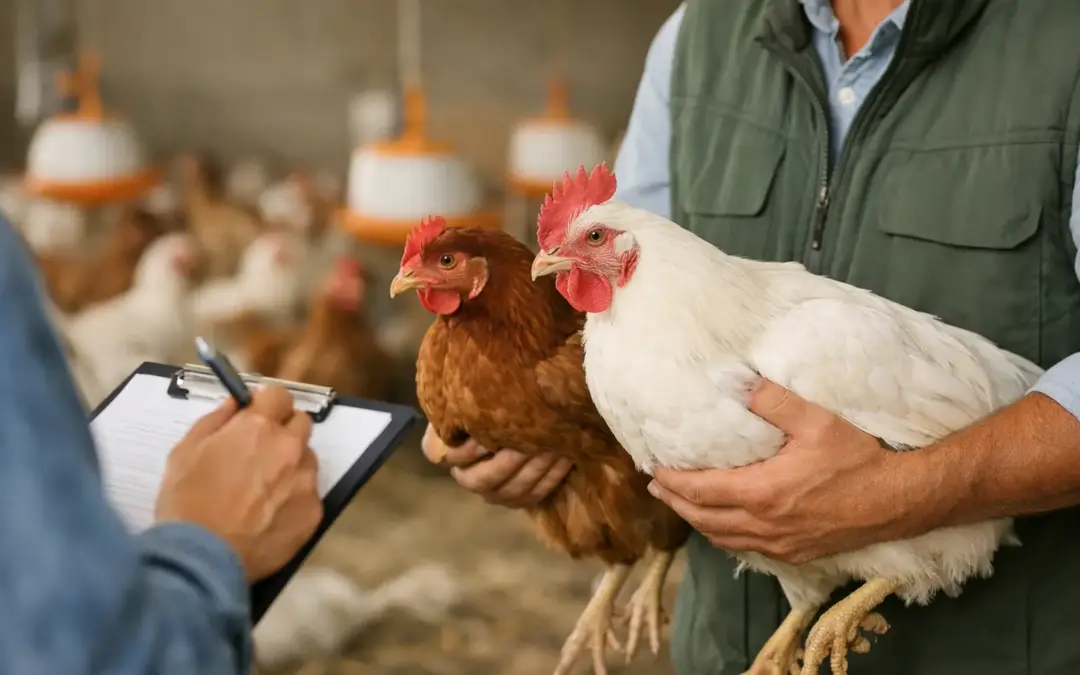
Well-kept birds do not need to look pampered, but they should look right. Eyes should be bright, nostrils clean and feather quality appropriate for age, season and breed. They should be active, alert and carry themselves properly.
Look beyond surface tidiness. Slight mud in wet weather is one thing. Dirty vents, obvious respiratory signs, poor weight, scaly legs left unchecked or signs of crowding are another. The condition of feeders, drinkers and ground also gives you useful context. A breeder may specialise in hardy outdoor birds, but basic standards still show.
How to judge quality stock properly
Quality means different things depending on your purpose. For a breeding project, type, vigour, fertility and soundness come first. For a laying flock, you may place more weight on health, temperament and productivity. If you are buying a rare breed, preserving correct characteristics matters far more than simply acquiring birds with the right label.
This is where many buyers get caught out. They buy on colour alone, or on a general impression of attractiveness, without checking whether the bird is actually typical of the breed. A polished-looking bird with poor shape, weak stance or obvious faults can still be a poor breeding choice.
If breed integrity matters to you, ask what faults the breeder sees in the line. Serious breeders can answer that. In fact, a breeder who can talk openly about weaknesses often inspires more confidence than one claiming perfection. Every line has trade-offs. Some have excellent size but slower feathering. Others have strong type but need work on colour. Honest answers are useful answers.
Hatching eggs need a different standard
Buying hatching eggs is not the same as buying live birds, and the risks are higher. Hatch rates depend on far more than the mating itself. Egg age, storage, handling, weather during transit and your own incubator management all play a part.
That means you should judge the breeder on the quality of the breeding pen and the realism of the information given, not on promises of guaranteed outcomes. Be cautious of inflated hatch claims or anyone unwilling to discuss fertility trends honestly. A dependable breeder will explain what they are seeing at their end without pretending they can control what happens after the eggs leave them.
Questions worth asking before you buy
If you want to know how to choose poultry breeders sensibly, ask questions that reveal standards rather than salesmanship. How old are the birds? What are they fed? Have they been wormed if needed? Are they vaccinated, and if so, for what? Have they been running on clean ground? Are there any known faults in the line? What temperament would the breeder expect from them? Why are these birds being sold?
You are not looking for rehearsed answers. You are looking for informed ones. Someone who knows their stock will usually answer plainly and with enough detail to help you decide.
It is also worth asking what the breeder expects from the buyer. That can tell you a great deal. Breeders who care about breed quality and welfare tend to ask where the birds are going, what accommodation you have and whether you understand quarantine. That is not gatekeeping. It is usually a sign that standards matter.
Red flags buyers should take seriously
Some warning signs are obvious. Birds advertised under the wrong breed name, no clear photographs, contradictory descriptions and reluctance to answer basic questions all suggest caution. So does a seller offering every breed under the sun with little evidence of proper separation or focus.
Other red flags are subtler. One is pressure. If the seller is pushing for a quick decision, dismissing sensible questions or making you feel awkward for asking about health and breeding, walk away. Another is vagueness around age or sex. Mistakes can happen with young stock, but uncertainty should be stated openly, not hidden.
Be wary too of breeders who promise only positives. Poultry breeding is full of variables. Fertility fluctuates. Young birds develop at different rates. Some lines are stronger on utility traits, others on exhibition quality. Anyone speaking as though there are no compromises is probably selling the idea harder than the stock.
Matching breeder to buyer
The best breeder for one keeper may be the wrong breeder for another. A beginner with a suburban garden often needs support, straightforward birds and realistic advice. A long-time exhibitor may want stronger detail on type, line and likely faults. A smallholder building a productive flock may care more about hardiness and laying consistency than show points.
This is where specialist marketplaces come into their own. It is far easier to choose well when you can browse stock in a place built for breeders and keepers rather than picking through noise, guesswork and poor listings. A focused platform like Hatch & Hive gives buyers a clearer route to informed sellers, better questions and stock that is being presented to people who actually understand what they are looking at.
Trust your standards
The strongest buyers are not the ones who move fastest. They are the ones who stay clear on what matters, ask sensible questions and are prepared to leave the wrong stock behind. Good breeders respect that.
Choose the breeder as carefully as you choose the bird, and you will usually feel the difference for years afterwards.