
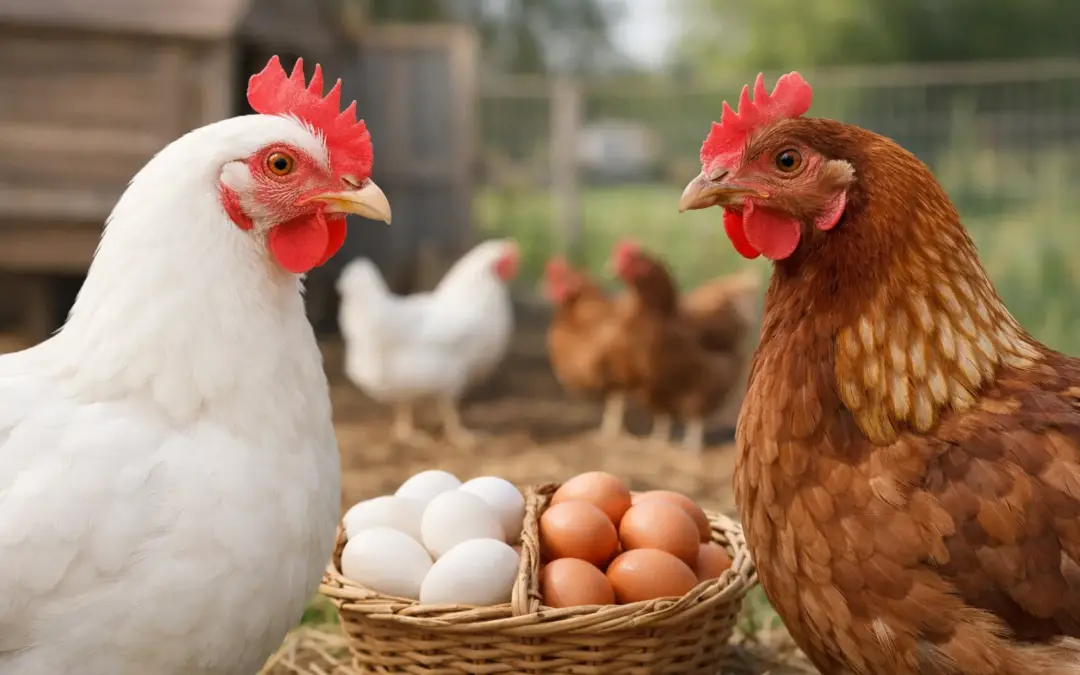
You can usually tell what matters most to a keeper by the birds they buy. If someone asks first about egg numbers, feed conversion and consistency, they are often weighing up pure breeds vs hybrid layers in practical terms. If they ask about type, lineage, fertility and whether the offspring will breed true, they are usually looking at a very different job for the flock.
Neither approach is right for everyone. That is the point. The best choice depends on whether you want a steady egg basket, a sustainable breeding group, a family-friendly back garden flock, or a mix that does a bit of each without excelling at all of them.
Pure breeds vs hybrid layers: the real difference
A pure breed is exactly what it sounds like – birds bred within a recognised breed standard, generation after generation, to maintain consistent characteristics. Think Light Sussex, Buff Orpingtons, Welsummers, Marans or Leghorns. Their shape, plumage, size, temperament and laying tendencies should all sit within a known range if the line has been bred properly.
A hybrid layer is created by crossing selected parent lines to produce a bird with strong laying performance. Commercial and small-scale hybrids are bred to lay well, start early and convert feed efficiently. The familiar brown and black laying hens seen in many garden flocks are often hybrids, even when they are sold under trade names that sound like breeds.
That distinction matters because pure breeds are about continuity, while hybrids are about outcome. With pure breeds, you are preserving and reproducing a breed. With hybrids, you are buying the result of a breeding programme rather than something you can reliably recreate at home.
If eggs are the priority, hybrids usually win
For most keepers who simply want plenty of eggs, hybrid layers make a strong case. They tend to come into lay earlier than many pure breeds and often produce more eggs over their first couple of seasons. If your measure of success is a full egg tray with minimal fuss, a good hybrid often delivers exactly that.
They are also popular because they are generally predictable in the short term. Buy point-of-lay hybrids from a reputable source and you usually have a fair idea of what you are getting: decent productivity, manageable temperament and birds selected for practical back garden or smallholding use.
That said, high output is not the whole story. Some hybrids are effectively built for performance first. They can be superb layers, but they are not always the birds people imagine when they picture a long-lived, self-replacing flock. Once laying starts to tail off, the economics and the keeper experience can shift quickly.
Why pure breeds still hold their ground
Pure breeds appeal to people who care about more than this season’s egg count. They often have a steadier, less extreme pattern of production and many are valued for their appearance, breed character and long-term usefulness. You are not just keeping hens. You are keeping a breed with a history, a type and a future.
For breeders, the key advantage is simple: pure breeds breed true. If you keep a proper breeding trio or pen, you can hatch from your own birds and have a reasonable expectation of producing offspring that resemble the parents in form, colour and traits. That is not just satisfying – it is the basis of maintaining quality stock.
There is also the question of resilience and longevity. This varies by line and by management, but many experienced keepers find pure breeds easier to keep as part of a slower, more sustainable flock. They may lay fewer eggs overall, yet remain useful for longer and fit more naturally into a setup where breeding replacements is part of the plan.
The trade-off most buyers miss
The biggest mistake in the pure breeds vs hybrid layers debate is assuming it is only about egg numbers. It is really about what happens next.
With hybrids, you are usually buying in performance. If you want to maintain that same level, you will often need to buy in again. Hatch from hybrid hens and the offspring will not be uniform. You may get some decent birds, but you will not reproduce the same hybrid in any reliable way from the next generation. Traits split out. Egg colour, body type, temperament and laying rate can all vary.
With pure breeds, you give up some production efficiency for continuity. You can select your best birds, improve your line over time and keep control of what your flock becomes. For anyone interested in hatching eggs, showing, conservation or simply breeding with purpose, that matters far more than a headline laying figure.
Temperament, broodiness and flock fit
Not all decisions belong on a spreadsheet. Temperament matters, especially in mixed-age garden flocks and family setups.
Many hybrids are bred to be active, productive and easy enough to manage, but temperaments vary by cross and by source. Some are calm and friendly. Some are sharper and more businesslike. Pure breeds are no different in principle, but breed traits are often easier to research and anticipate. If you want placid table birds, broody mothers, flighty foragers or compact bantams, breed choice gives you a clearer starting point.
Broodiness is another dividing line. Keepers who want hens to sit and rear chicks often get frustrated with hybrids selected to keep laying rather than stop and brood. By contrast, some pure breeds are far more likely to go broody, which can be either a blessing or a nuisance depending on your setup. If you want a self-sustaining smallholding flock, broodiness can be useful. If you just want eggs every morning, less so.
Cost, feed and long-term value
At first glance, hybrids can look like the obvious value option because they put eggs in the basket quickly. In many cases, that is true. But value depends on how you keep poultry.
If you replace stock regularly and measure success in eggs per hen housed, hybrids often make financial sense. If you want to hatch your own replacements, maintain a recognisable line and avoid depending on outside sources every time your flock ages, pure breeds can make better long-term sense even with lower lay rates.
Feed efficiency also needs context. A highly productive hybrid may convert feed very well during peak lay, but that does not automatically make it the best bird for every keeper. Housing, ranging ability, weather hardiness, predator pressure and your tolerance for seasonal variation all affect what counts as a good return.
Choosing birds for breeding, not just buying
If you are sourcing birds or hatching eggs, this is where the difference becomes practical. With pure breeds, quality depends heavily on the breeder. A proper strain bred for type, vigour and useful production is a very different thing from birds loosely labelled as a breed but carrying poor type or inconsistent traits.
With hybrids, the question is slightly different. You are less concerned with breed purity and more concerned with whether the birds are healthy, well reared and honestly described. A good seller should be clear about what the birds are, what they are bred to do and what you should realistically expect from them.
This is why specialist marketplaces matter. Serious keepers want to ask where the line came from, how the birds are kept, whether parent stock is on site, what fertility has been like, and whether the description matches reality. No noise, just quality stock and straightforward answers.
Which should you choose?
If your main aim is reliable egg production with minimal waiting, hybrid layers are often the sensible choice. They suit backyard keepers who want a productive flock without taking on the work of breeding and selection.
If you care about breed integrity, hatching your own replacements, showing, conserving traditional poultry or building a flock with a clear identity, pure breeds are the stronger fit. They ask for more patience, but they give you something hybrids cannot – continuity.
Some keepers do both. A breeding pen of pure breeds for the birds that matter to them, and a few hybrids for the household egg supply. That can work very well, provided you are clear about which birds are doing which job.
The best flocks are not built around fashion or sales patter. They are built around purpose. Decide what you want your birds to do next spring, not just this week, and the right choice usually becomes obvious.