
A healthy-looking hen can still bring trouble into a settled pen. Respiratory disease, parasites and infections do not always show at collection, particularly after the stress of catching, travelling and arriving somewhere new. Knowing how to quarantine new chickens is therefore part of buying good stock responsibly, not a sign that you distrust the breeder.
For established flocks, a proper quarantine period is one of the most useful bits of management you can put in place. It gives new birds time to settle, gives you time to observe them properly, and protects the birds you have spent years breeding, raising or selecting.
How to quarantine new chickens properly
Quarantine means complete separation from your existing flock for a set period. A spare coop at the far end of the garden is better than a crate beside the main run, but distance alone is not the whole job. Disease can move on boots, hands, feed scoops, carriers and clothing. Some respiratory issues can also spread through close air contact.
Aim for at least 30 days of separation. This is long enough for many common problems to become apparent after the move. If a bird arrives stressed, has an uncertain health background, or you see any concerning signs, extend the period and speak to a poultry-savvy vet before considering an introduction.
The quarantine accommodation should be separate, dry, secure and easy to clean. Ideally, it should not share a run, drinker, feeder, dust-bathing area or equipment with your resident birds. Keep it far enough away to prevent beak-to-beak contact through mesh and, where possible, avoid placing it directly downwind of the main coop.
A small, well-ventilated coop and covered run can work well for a modest group. Do not compromise on space simply because the arrangement is temporary. Crowding adds stress, makes droppings harder to monitor and can turn a straightforward settling period into a pecking or health problem.
Set up your quarantine area before collection
New birds should go straight into their isolation pen, not into the main flock for a quick look around. Have the accommodation bedded, weatherproof and ready before you leave to collect them. Fresh water, the correct feed, a clean feeder and a secure perch should all be in place.
Use equipment that belongs only to the quarantine pen. A dedicated pair of boots or washable overshoes, gloves, feed scoop, bucket and cleaning brush are sensible safeguards. Mark them if you need to. The point is to remove the easy route for something unwelcome to hitch a ride back to your established flock.
Your daily order matters too. Tend to your resident birds first, then the quarantined group last. Wash your hands thoroughly between areas and change footwear before returning to other poultry jobs. It may feel fussy for a few hens, but biosecurity usually fails through small habits rather than dramatic mistakes.
If you keep several species, apply the same discipline around ducks, turkeys and any other birds on the holding. Shared equipment and muddy footwear can connect pens that appear separate on paper.
What to check every day
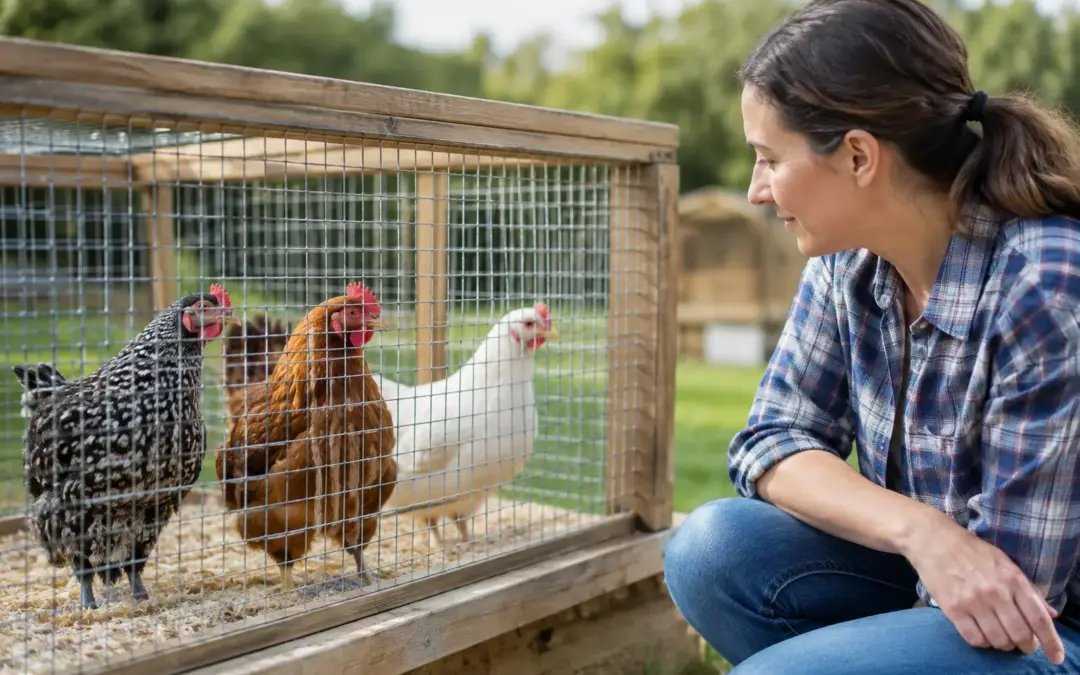
Quarantine is active observation, not simply leaving birds alone for a month. Spend a few quiet minutes watching them at least twice a day. You are learning what is normal for each bird as well as looking for warning signs.
Check appetite, drinking, posture, breathing and droppings. A bird that rushes to feed, moves freely, has bright eyes and produces reasonably consistent droppings is generally settling well. Temporary loose droppings after travel or a change of feed can happen, but persistent diarrhoea, blood, a foul smell or a clear change in output deserves attention.
Look closely for coughing, sneezing, wheezing, bubbling around the eyes, nasal discharge, swollen sinuses, head shaking or open-mouth breathing. Also watch for lethargy, standing apart, a drooping wing, a tucked-up stance, weight loss, pale combs or sudden changes in laying.
Inspect feathers and skin under good light. Lice, mites and scaly leg mite can arrive with otherwise fit-looking poultry. Check around the vent, beneath the wings and along the feather shafts. At night, inspect perch ends and coop crevices for red mite, which may be hiding rather than sitting on the birds during daylight.
Keep simple notes. Record arrival date, breed, source, age if known, treatments already given and anything you observe. Weighing birds once a week can be useful for valuable breeding stock or any hen you are unsure about. A written record helps you spot a slow decline that is easy to miss when you see birds every day.
Ask the right questions before birds arrive
A decent quarantine starts before the sale. Ask the breeder what the birds have been fed, whether they have been vaccinated, when they were last treated for parasites, and whether they have had any recent illness or unexplained losses in the flock. Ask whether they have been housed with other species or brought in from elsewhere recently.
There is no single answer that suits every flock. Not all responsible breeders follow the same vaccination or worming programme, and routine medication without a clear need is not automatically good management. What matters is honest history, sound husbandry and enough detail for you to make an informed decision.
When buying rare breeds, exhibition birds or birds intended for a breeding programme, this conversation is especially valuable. You are not only assessing the individual bird. You are considering what it may introduce to the health and breeding future of your own flock. Specialist marketplaces such as Hatch & Hive make it easier to connect directly with keepers who understand those questions.
Do not treat every new bird by default
It is tempting to dose new poultry with every available wormer, lice powder and supplement on day one. That approach can be counterproductive. Stress, travel and a sudden feed change are already a lot for a bird to manage, while unnecessary treatments can mask symptoms or be used incorrectly.
Treat visible parasite problems promptly and follow the product directions precisely. For suspected worms, respiratory disease, coccidiosis or bacterial infection, seek veterinary advice rather than guessing. Some conditions need testing, and some treatments have egg withdrawal periods that must be followed. Never use prescription medicines intended for another animal without professional direction.
If one quarantined bird becomes ill, keep the whole group isolated. Do not move the apparently well birds into the main flock early. They may have been exposed even if they are not showing signs yet.
Introducing birds after quarantine
A clean bill of health after 30 days does not guarantee an easy social introduction. Biosecurity and flock politics are separate jobs. Once quarantine is complete, let the groups see each other through secure mesh for several days if your setup allows. This gives them time to become familiar without being able to chase, corner or injure one another.
When you do mix them, choose a time when you can watch closely. Add more than one bird where practical, as a single newcomer is more likely to take the full force of the pecking order. Provide more than one feeder and drinker, enough perch room, and places where a lower-ranking bird can move away without being trapped.
Some pecking, posturing and short chases are normal. Persistent bullying, blood, blocked access to food or a bird hiding all day are not. Separate the problem bird if needed and reassess the space, group size and introduction method.
When quarantine becomes urgent
Contact a vet promptly if birds show significant breathing difficulty, sudden weakness, neurological signs, marked swelling, repeated deaths or a rapid fall in feed and water intake. Isolate affected birds as far as safely possible and stop moving poultry, eggs, equipment or visitors between areas until you have advice.
Keep up with any current poultry movement, housing or disease-control requirements that apply in your area. If you suspect a notifiable disease, follow official reporting guidance immediately. Fast action protects your birds, neighbouring keepers and the wider poultry community.
A month of separation can feel inconvenient when you are keen to see new birds in the run. It is still far easier than managing illness through an entire flock. Give new chickens a quiet, well-run start, observe them properly, and let them earn their place in the pen.