
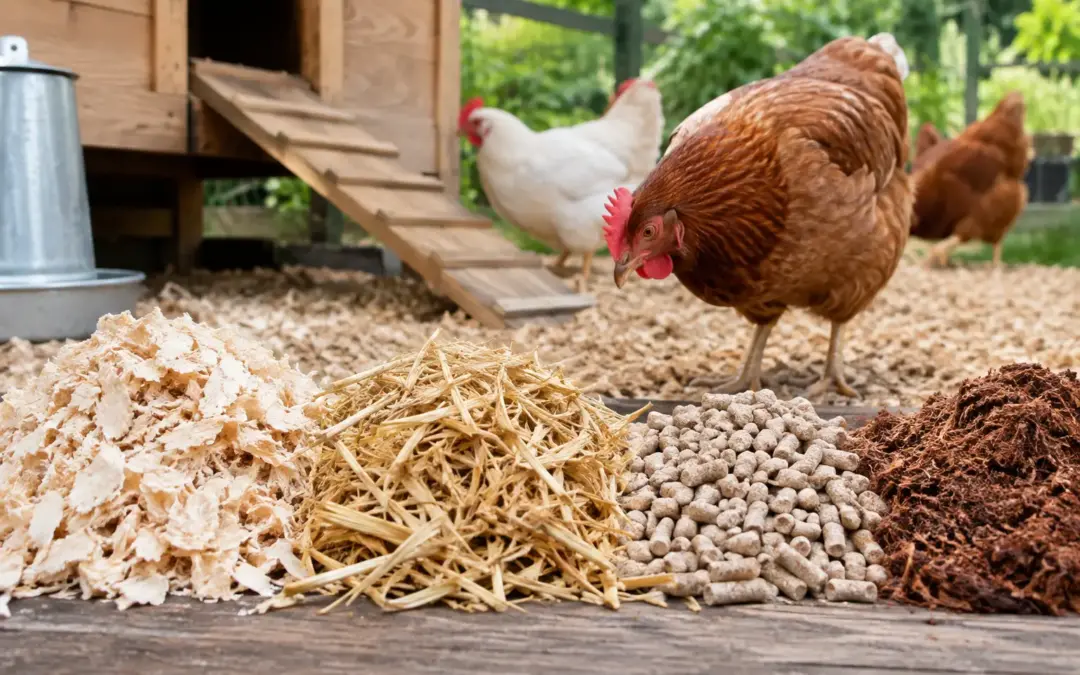
A coop can look clean at morning checks and still be working against your birds. Damp patches beneath the perch, a sharp ammonia smell and dusty air are not minor housekeeping issues. They affect feet, feathers, respiratory health and the amount of time you spend scraping out housing. Choosing the best chicken bedding materials is therefore less about finding one fashionable product and more about matching absorbency, dust level and mucking-out routine to your flock.
For most UK keepers, dust-extracted wood shavings or hemp bedding are the dependable starting points. Both are widely available, absorbent and practical in wooden coops, walk-in houses and breeding pens. But a material that works beautifully in a dry, airy shed may be a poor fit for a low-roofed coop with a leaky pop-hole or heavy-footed large fowl.
What good coop bedding needs to do
Bedding has a straightforward job: it must absorb moisture, cushion birds where needed, reduce contact with droppings and be manageable when it is time to clean out. It should also be low in dust, free from harmful treatments and dry when it goes into the coop.
Ventilation does much of the heavy lifting. No bedding will solve a house that traps humid air overnight. If condensation is forming on windows, roofing or walls, deal with airflow and leaks before simply adding a deeper layer of litter. The same applies to overcrowding. More birds produce more moisture and manure than bedding can reasonably hide.
For breeding pens, cleanliness matters beyond appearances. Muddy feet and soiled feathers can lead to dirty nest boxes and poorer egg hygiene. A bedding choice should support the standard of husbandry you expect from your stock.
The best chicken bedding materials, compared
Dust-extracted wood shavings
Good-quality, dust-extracted softwood shavings remain a favourite for a reason. They are light, easy to spread, reasonably absorbent and simple to spot-clean. A clean bale can make a coop feel fresh quickly, and the material is usually easy to compost once soiled.
Shavings suit keepers who clean regularly and want a neat, familiar bedding material. Use a proper poultry or animal-grade product rather than loose sawdust. Fine particles can become airborne, particularly in enclosed housing, and are harder on birds’ respiratory systems. Avoid strongly scented or treated timber products as well.
The drawback is that shavings can shift around under active birds, and they may need more frequent topping up in wet weather. They are also not always the best choice in open-fronted shelters where wind carries lighter material out.
Hemp bedding
Hemp bedding is an excellent option for serious keepers who want high absorbency with less frequent full changes. Its chopped, fibrous texture holds moisture well and tends to stay put better than very light shavings. Many keepers find it particularly useful beneath perches, where the overnight droppings load is heaviest.
It usually costs more upfront, but the calculation is not just the price of a bale. If it keeps the house drier and reduces how often you strip the floor completely, hemp can make sense over a season. It composts well too, which is valuable for smallholders managing manure as part of a wider growing system.
As with any bedding, buy it dry and store it under cover. Hemp that has absorbed damp in a shed is money wasted before it reaches the coop.
Chopped straw
Chopped straw offers warmth, texture and a more traditional feel, particularly in larger houses, covered scratching areas and nest boxes. It can be cost-effective where local supply is good, and chickens enjoy working through it. The key word is chopped. Long straw mats down, holds damp patches and becomes awkward to fork out.
Used in the right place, chopped straw is useful. It is often better in nest boxes than as the main floor litter in a small, enclosed coop. In wet conditions or where ventilation is limited, it can deteriorate quickly and create a damp base. Check it often rather than assuming a thick layer is still dry underneath.
Do not confuse straw with hay. Hay is generally a poor choice for poultry housing because it can retain moisture, become mouldy and carry more dust or seeds. It is bedding for a different purpose, not a shortcut for the chicken house.
Miscanthus or chopped rape straw
Miscanthus and chopped rape straw products can be good alternatives where available. They are generally more absorbent and less likely to compact than ordinary long straw, while providing a softer, warmer floor than some wood-based products. Their performance varies between suppliers, so assess particle size, dust and absorbency rather than buying solely on the label.
These materials can work well for keepers who prefer a plant-based bedding and have enough space to store bales properly. They are worth trying in one pen first, especially if you keep different breeds with different housing needs.
Match the bedding to the part of the coop
One material does not have to do every job. Using the same bedding in the floor area, nest boxes and droppings board can be convenient, but it is not always efficient.
For the main coop floor, choose an absorbent bedding that is easy to rake and spot-clean, such as hemp or dust-extracted shavings. A layer around 5 to 8 cm deep is enough for many coops, provided you remove wet areas promptly. Deep litter systems need more thought than simply piling bedding higher. They depend on dry conditions, excellent ventilation, enough floor space and regular turning. Without those conditions, deep litter becomes deep damp.
Under perches, a droppings board or tray can save a great deal of bedding and time. Scrape it daily or every few days, depending on flock size, and keep a thinner layer of bedding beneath it as a backup rather than allowing manure to build into the floor material.
Nest boxes need softness and dryness, not a huge depth of litter. Chopped straw, hemp or clean shavings can all work. Replace any material that becomes soiled immediately. Hens will lay where they feel secure, but clean nesting material makes collecting clean eggs far easier.
Cost, cleaning and the reality of your routine
The cheapest bale is not automatically the cheapest bedding. A low-cost material that becomes wet, dusty or compacted within days creates more work and may use more product over the month. Look at how long it stays friable, how easily you can remove droppings and whether your compost heap can handle the volume.
A small backyard flock in a dry Eglu-style coop may do perfectly well with a modest amount of shavings and frequent cleaning. A larger mixed flock in a timber walk-in house may justify hemp on the floor and a dedicated droppings board. Heavy breeds, feather-footed birds and youngsters are less forgiving of damp bedding, so inspect their feet and underside as part of routine checks.
Whatever material you choose, remove wet clumps as soon as you find them. Pay particular attention to waterers, pop-holes and the area beneath roosts. A dry house with regularly refreshed bedding is safer and more comfortable than a thick, neglected layer marketed as low maintenance.
Materials best left out of the chicken house
Avoid cedar shavings and other highly aromatic woods, as the strong oils and scent can irritate respiratory systems. Fine sawdust is too dusty for most poultry housing. Shredded paper and newspaper may seem economical but quickly become wet and compacted, especially under drinkers. Cat litter is not suitable either, regardless of how absorbent it appears.
Woodchips belong in an outdoor run or covered scratching area, not usually inside the coop. They are too coarse to provide comfortable, absorbent indoor litter and can make thorough cleaning harder. Keep indoor bedding dry, fine enough to manage, and clearly separate from whatever you use to improve muddy ground outside.
Choose for dry birds, not a perfect-looking coop
The best bedding is the one that remains dry under your management, suits the way your house is built and can be changed before it becomes a problem. Start with dust-extracted shavings if you want a simple, proven option, or hemp if absorbency and longer-lasting litter justify the extra spend. Then watch your birds and the underside of the bedding for a fortnight. The coop will tell you quickly whether you have chosen well.