
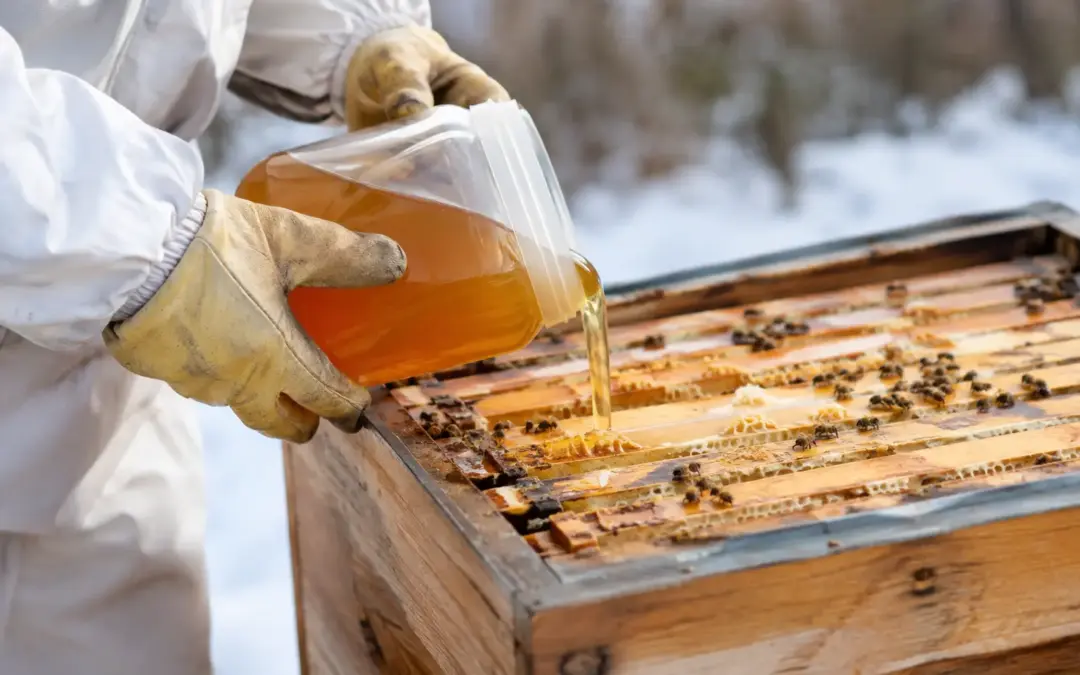
A colony can look busy at the entrance in September and still be short of the stores it needs by January. Feeding bees for winter is not a matter of putting out syrup and hoping for the best. It is about judging the colony in front of you, understanding what is already in the comb, and getting enough usable food around the bees before cold weather closes in.
For UK beekeepers, the strongest wintering colonies are usually the ones assessed early, fed decisively if they are light, then left to settle. There is no prize for taking every last drop of honey if it leaves a colony reliant on emergency feeding when the weather is against you.
Start with the colony, not the calendar
Late summer is the key assessment point. Once the main nectar flow has finished and any honey you intend to harvest is off, look properly at each colony. A quick glance at a few frames is not enough. You need to know whether the brood box holds a meaningful amount of sealed stores, whether the colony has enough bees to cover its brood, and whether there are signs of disease, heavy varroa pressure or a failing queen.
Food cannot cure a colony that is collapsing for another reason. A small, dwindling unit may take syrup, but that does not make it a sound prospect for winter. Where it makes sense, combining two weak colonies can be kinder and more successful than trying to carry both through on feed alone.
The most useful field test is hefting. Lift the back of the hive gently and consistently, then compare it with colonies whose weight you know. It takes practice, but a beekeeper who hefts regularly soon spots a box that feels worryingly light. Keep notes by hive type and location. A National brood box, a 14 x 12, a commercial box and a poly hive will not feel the same when they hold adequate stores.
Exact target weights vary with equipment, colony size, winter length and forage in your area. As a broad guide, many standard brood-box colonies need around 18-20 kg of honey or sugar stores available for the winter period. Treat that as a starting point, not a licence to ignore the heft. A large colony in an exposed northern apiary may require more than a smaller colony in a sheltered southern garden.
Autumn syrup: build stores while bees can process it
When colonies are short in late summer or early autumn, heavy sugar syrup is normally the practical answer. A 2:1 mix by weight – two parts white granulated sugar to one part water – is concentrated enough for bees to ripen and store efficiently. Feed it in a suitable feeder inside the hive, ideally over the crownboard, and reduce the entrance if robbing is a risk.
Use plain white granulated sugar. Brown sugar, raw sugar, molasses and supermarket syrups contain minerals or additives that are not suitable for bees. Honey from an unknown source should never be fed back to colonies because it can introduce serious disease, including American foulbrood.
Feed early enough for the colony to deal with it. Bees need warmth and a decent workforce to take down syrup, reduce its water content and cap it. Once nights become cold and the cluster contracts, a feeder full of liquid may do little good. It can also add unwanted moisture to the hive at precisely the time the colony needs a dry environment.
Avoid the temptation to feed every colony just because other beekeepers are doing so. A brood box already packed with good, sealed stores does not need to be stuffed with syrup. Overfeeding can restrict the queen’s late-season laying space and leave a colony with poor brood nest organisation. The aim is a well-provisioned colony, not a hive full of sugar at the expense of sensible management.
Feeding bees for winter when the cold has arrived
Winter feeding is different from autumn feeding. Once temperatures drop, fondant is generally safer and more useful than liquid syrup. It does not need processing, is less likely to create damp, and can be placed directly above the cluster where the bees can reach it.
Check hives by hefting rather than opening them repeatedly. If a colony feels light, choose a dry, calm day and work quickly. Put a block or bag of bee fondant over the feed hole in the crownboard, or directly over the top bars beneath an eke if your arrangement allows it. Make sure the bees have a route to the food and that the fondant is not separated from the cluster by unnecessary gaps.
The danger in late winter is often not absolute starvation but isolation starvation. There may be food on the outer frames, yet the cluster cannot move across cold comb to reach it. Fondant over the bees is cheap insurance for a light colony, particularly from January onwards when brood rearing begins again and food demand rises sharply.
Do not mistake a quiet hive for a dead one. Bees cluster tightly in cold conditions and may not fly for days. Heft the hive, watch for activity when the weather allows, and avoid pulling frames apart in the middle of a cold spell. Every inspection breaks the warm envelope the colony has worked hard to maintain.
Watch the details that make feed usable
A full feeder is not the same as accessible food. Bees must be able to reach stores without chilling brood or breaking cluster. That is why the position of winter feed matters as much as the quantity. Fondant belongs above the bees, not on a frame at the far edge of a large box.
Moisture also matters. A colony can tolerate cold far better than cold, damp conditions. Keep the hive sound, ensure rain cannot drive into the roof, and provide sensible ventilation according to your hive setup. Do not create a draught through the brood nest in the name of ventilation. The objective is to let moisture escape while allowing the cluster to regulate its own temperature.
Mouse guards are worth fitting before the colder months if they are part of your normal setup. Mice are not usually after the bees, but a nest in the warmth of a hive can wreck comb, contaminate stores and cause a colony serious stress. Make sure any entrance protection does not trap dead bees or restrict cleansing flights when a mild day arrives.
Do colonies need pollen or protein feed?
Usually, a colony going into winter needs carbohydrate stores far more than a pollen substitute. Sugar provides energy. It does not replace pollen, which is needed for brood rearing and producing young bees. If colonies have gone into autumn with poor pollen reserves, the answer is often better forage planning and stronger late-season management next year rather than indiscriminate winter patties.
Protein feed can have a place in specific circumstances, particularly for spring build-up where natural pollen is genuinely scarce. But feeding it too early can encourage brood rearing before the weather and food supply can support it. More brood means more consumption, more varroa reproduction if treatment has been inadequate, and potentially more risk for a colony already on the edge.
A practical winter checking routine
From autumn onwards, keep your checks purposeful. Confirm that each colony is queenright and healthy before winter, assess stores, complete varroa treatment at the appropriate time, and make sure the roof, floor and entrance are fit for the season. After that, heft periodically rather than disturbing the brood nest.
When a mild spell arrives, look for normal flight activity and cleansing flights. In late winter, check lighter colonies more often and add fondant before they become critically short. A colony that receives feed while it still has some reserve is far easier to save than one found collapsed with its heads buried in empty cells.
Keep a record of what each colony needed. It will tell you which sites run short, which strains winter economically, and whether your honey crop has been taken too hard. That kind of local knowledge is worth more than a one-size-fits-all feeding chart.
Good winter feeding is quiet, timely husbandry. Give a sound colony enough stores, put emergency food where it can use it, and let it get on with the job of reaching spring.