
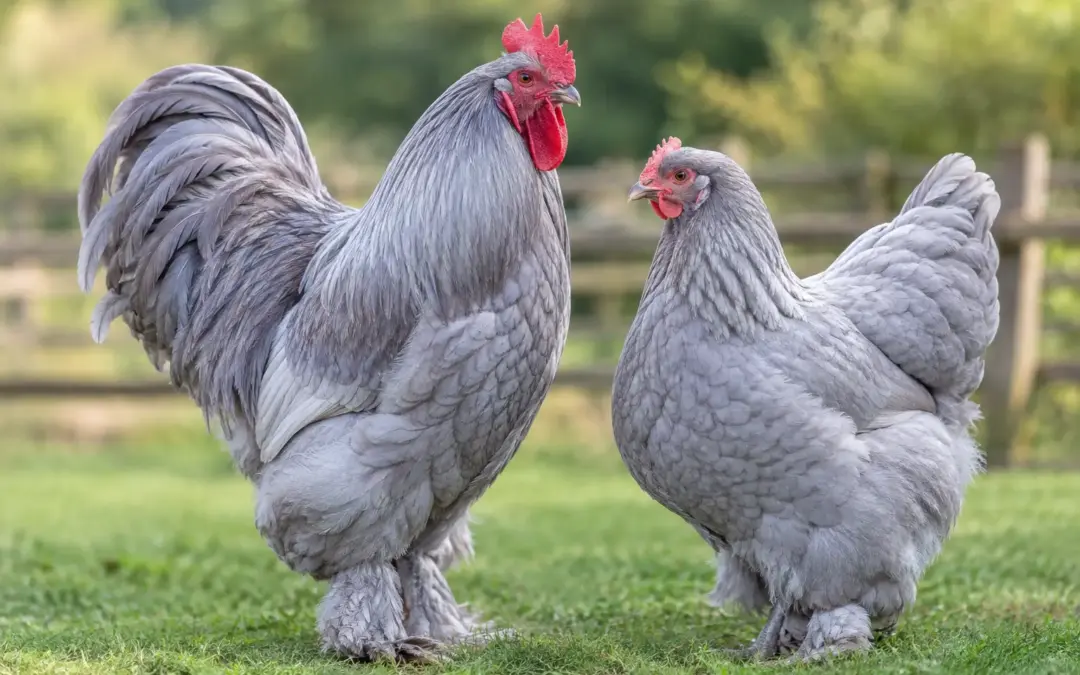
A blue / lavender Brahma is often advertised as though it were one colour, but it is not. Blue and lavender are different genetic effects, and confusing them is one of the quickest ways to buy hatching eggs or breeding stock that will not produce the chicks you expected. For anyone building a serious Brahma pen, the wording on a listing matters just as much as the photographs.
Brahmas already demand patience. They are large, slow-maturing birds with plenty of feather, a calm presence and a look that earns them a place in many smallholder flocks. Add colour breeding into the mix and the sensible approach is simple: ask exactly what is behind the birds, what colours the parents are, and what the breeder has actually hatched from the pairing.
Blue and lavender are not interchangeable
In poultry genetics, blue is usually associated with the Andalusian blue gene. It is an incomplete-dominant dilution gene, meaning the result depends on what each parent carries. A properly bred blue bird is generally expected to show a slate-blue effect where black would otherwise appear, often with darker edging to the feathers. The exact finish can vary with the base pattern and the quality of the line.
Lavender is a separate, recessive dilution. When a bird inherits the lavender gene from both parents, black pigment is diluted to a softer, pale grey or silvery tone. It can look cleaner and more even than many blue birds, although good colour still relies on strong breeding choices, sound feather quality and the underlying pattern.
That distinction is not academic. A breeder using the word “blue” to describe a lavender bird may simply be using colour terms loosely. Equally, a bird described as lavender may carry other colour or pattern genes that change the result. If you are buying for a breeding programme rather than a pretty garden flock, loose labels are a warning to ask more questions.
What blue Brahma pairings can produce
Blue breeding is well known for producing a range of colour outcomes. When two blue birds are paired, the usual expectation is a mix of blue, black and splash chicks. In broad terms, the classic outcome is around half blue, with the remaining chicks divided between black and splash. Nature does not read percentage charts, so a small hatch may not reflect that ratio neatly, but the principle remains useful.
A splash Brahma carries two copies of the blue gene. These birds are usually very pale, with irregular blue or grey markings. Pairing blue to splash normally gives blue and splash offspring, while black to blue generally gives black and blue. A black-to-splash pairing should produce blue chicks.
This is why a seller should be able to state the mating, not merely the colour of the eggs being offered. “Blue Brahma eggs” tells a buyer very little on its own. Blue from blue x blue is a different proposition from blue from black x splash, even though both pairings can hatch blue chicks.
The practical question is not whether one pairing is better in every case. It depends on the breeder’s aim. Blue x blue offers all three recognised outcomes from one pen, which suits some breeders and buyers. Black x splash is useful where the aim is a full hatch of blue offspring, but it requires separate, correctly identified breeding stock.
Lavender Brahma breeding needs its own plan
Lavender behaves differently because it is recessive. A lavender Brahma bred to another lavender should produce lavender chicks, assuming both birds are genuinely lavender and no other colour factors are changing the visible result. That predictability is appealing, particularly for breeders who want consistency from a dedicated pen.
A lavender bird bred to a non-lavender bird will usually produce chicks that carry lavender but do not visibly show it. Those first-generation chicks may look like the non-lavender parent in colour, while carrying one copy of the lavender gene. Pairing two of those carriers can then produce a mixture of visible lavenders, carriers and chicks without the gene.
This is where records earn their keep. A bird can be carrying lavender without looking lavender, so visual selection alone is not enough. Mark down each mating, hatch date and known parentage. If you are buying stock said to be split for lavender, ask what evidence supports that claim. A trusted breeder should be comfortable explaining the line rather than relying on guesswork.
Start with Brahma type, not just a fashionable shade
Colour catches the eye, but it should not be allowed to carry the whole breeding decision. A poor example of the breed does not become quality stock because it has an unusual shade of feather. Brahmas should have the scale, stance, broad body, full feathering and calm character that make them Brahmas in the first place.
Look closely at leg and foot feathering, body depth, carriage, head shape and overall balance. Check that the birds are active, bright-eyed and moving freely. In heavily feathered breeds, feet and hocks deserve particular attention. Mud, broken feathers and crowded conditions can hide issues that become obvious only after you bring birds home.
Feather quality matters in colour work too. Weak lacing, patchy dilution or muddy colour may be inherited, but it can also be affected by moult, age, sunlight and condition. Do not judge an entire line from one heavily weathered hen or a cock photographed in poor light. Ask for clear, current photographs of the actual breeding birds and, where possible, examples of their offspring.
Questions worth asking before you buy
When sourcing blue or lavender Brahma hatching eggs, chicks or adult birds, direct questions separate informed sellers from vague listings. You want to know whether the birds are large fowl or bantams, the precise parent pairing, the age of the breeding group and whether unrelated stock has been introduced recently.
For blue birds, ask what colours have been used in the mating and what hatch results the breeder normally sees. For lavender lines, ask whether both parents are visual lavender or whether the breeding involves birds split for lavender. It is also sensible to ask whether the advertised colour is established in the line or still a work in progress.
Health and husbandry belong in the conversation as well. Find out how stock is housed, what the birds are fed, whether the flock has had recent health concerns and how eggs are collected and stored before dispatch. Hatching eggs are delicate by nature, and even excellent fertility cannot protect them from rough handling, postal delays or poor incubation.
For adult birds, collection is usually the better option where practical. It allows you to inspect the stock, see the set-up and assess whether the seller knows their birds. A well-run breeding pen does not need a sales pitch. The birds, records and answers should speak for themselves.
Set realistic expectations from hatching eggs
Buying eggs is buying potential, not a finished bird. Hatch rate is influenced by parent flock fertility, egg age, transport, incubation accuracy and plain bad luck. Once chicks hatch, there is still the wait for sexing, feather development and adult type. Brahmas are not a breed for anyone expecting a quick result.
The colour can change considerably as a youngster feathers up. A chick that appears very pale may develop a stronger blue tone, while a promising early shade may later reveal uneven markings. Keep your best young birds until they have had time to mature before making hard decisions about the direction of a line.
If your main goal is a reliable laying flock with the pleasure of keeping Brahmas, choose healthy, well-reared stock from a straightforward seller and enjoy the variation. If your goal is exhibition quality or a long-term colour project, pay for traceable birds, maintain separate pens where needed and be ruthless about record keeping. Those are different goals, and they call for different buying decisions.
Build your breeding pen with clarity
The strongest blue and lavender Brahma programmes are usually built slowly. Keep the colour project clear, avoid mixing birds simply because they look attractive together, and label breeding groups properly. A splash bird, a blue bird and a lavender bird may all read as greyish in a quick photograph, but their genetics and likely offspring are not the same.
For buyers and breeders across the UK, a specialist marketplace such as Hatch & Hive gives those details a proper place in the conversation. A good listing should make it easier to understand the stock, not leave you decoding it after you have paid.
Choose birds with the breed quality you would be proud to keep even if the colour trend changed next season. Get the pairing details in writing, give Brahmas the time they deserve, and let each hatch teach you something useful about the line you are building.