
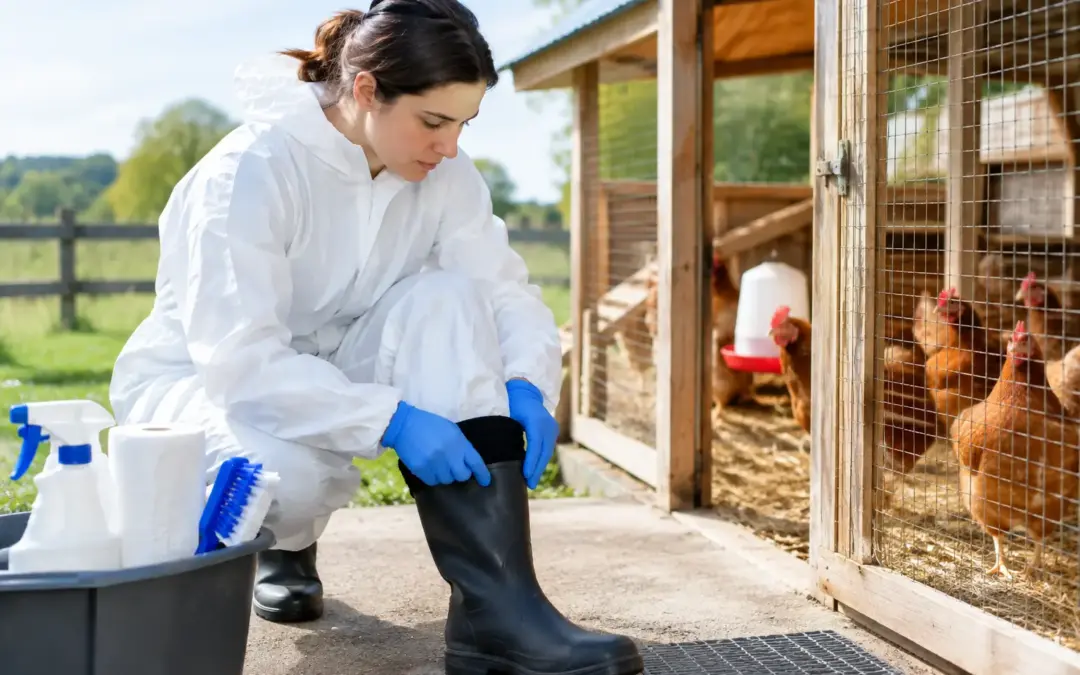
A new bird can look the picture of health at collection and still carry something your established flock has never met. That is why a proper guide to poultry biosecurity starts before the bird reaches your gate. Good biosecurity is not about turning a back garden into a laboratory. It is about controlling the everyday routes by which disease, parasites and contamination travel between birds, people, equipment and places.
For breeders, smallholders and serious keepers, it also protects years of careful work. A closed, well-managed flock has value beyond the birds themselves: breeding lines, hatch rates, reputation and the confidence of anyone buying stock from you all depend on it.
What poultry biosecurity looks like in practice
Biosecurity means reducing the chance of disease entering your holding, spreading within it, or leaving with birds, eggs, footwear, crates or visitors. The principle is simple: keep outside risks out, spot problems early, and stop anything suspicious moving further.
The highest-risk moments are usually the ordinary ones. Collecting a trio from another keeper, lending a poultry crate, letting a friend admire the pens after visiting their own hens, or topping up feed with the same boots worn around muddy runs can all create a route for infection. Wild birds and rodents add another layer, particularly where feed and water are left exposed.
You do not need a perfect set-up to improve matters. You need routines that suit your holding and are followed every time. A modest garden flock may use a dedicated pair of boots, a covered feed bin and a temporary isolation pen. A breeder running multiple pens may need clear movement rules, separate tools for each section and written records. The scale changes; the discipline does not.
Start at the gate, not the coop
The cleanest flock can be compromised by poor buying decisions. Source birds and hatching eggs from keepers who can speak plainly about their flock, breeding conditions, vaccination where relevant, recent illness, losses and any treatment history. Serious sellers should welcome sensible questions. Vague answers, dirty transport boxes and birds offered from visibly overcrowded conditions are reasons to walk away.
When collecting stock, take your own clean crates where possible. They should be dry, secure, easy to disinfect and free from old bedding or droppings. Once home, do not carry the crate straight through your main poultry area. Unload new birds into isolation first, then clean and disinfect the crate before it goes back into regular use.
Hatching eggs carry a lower disease risk than live birds, but they are not risk-free. Keep purchased eggs separate from eggs laid by your own flock until you have inspected and stored them properly. Do not wash visibly soiled eggs for incubation, as this can damage the protective bloom and drive contamination through the shell. Instead, be selective about what you set, and clean incubators thoroughly between hatches.
For anyone selling through a specialist marketplace such as Hatch & Hive, biosecurity is part of good breeder practice. Clear listings, honest health information and sensible collection arrangements help buyers make better decisions and protect the wider keeping community.
Quarantine new birds properly
Quarantine is where many otherwise careful keepers cut corners. A bird that seems fine after two days has not completed a meaningful isolation period. Aim for at least 30 days away from your resident flock, longer if you have the space and the birds came from an uncertain background or have shown any concern.
“Separate” needs to mean more than a fence panel between runs. Ideally, use a different building or a position where birds cannot touch through mesh, share drinkers, or be exposed to the same splashes and dust. Attend to your established flock first, then the isolation birds. Change footwear or use dedicated boots, wash hands, and keep bowls, feeders, bedding tools and egg trays separate.
Watch newcomers closely. Check appetite, droppings, posture, breathing, eyes, comb colour and feather condition each day. Listen for sneezing or rattling, and look for lice, mites and scaly leg signs. Quarantine is also the right time to settle birds onto your feed routine, assess body condition and deal with any issues before they become the whole flock’s problem.
If a bird becomes unwell, extend the isolation period and seek veterinary advice rather than introducing it because the planned date has arrived. Time alone does not prove health.
Make cleaning a routine, not a rescue job
Cleaning works best in two stages. First remove organic matter such as droppings, bedding, feathers and mud. Then use a suitable poultry-safe disinfectant at the correct dilution and contact time. Disinfectant applied over dirt is largely theatre, not biosecurity.
The areas that deserve regular attention are drinkers, feeders, perches, nest boxes, coop floors, transport crates and any tools that move between pens. Fresh water matters more than many keepers realise. Drinkers quickly develop slime and contamination, especially in warm weather, so emptying and cleaning them daily is a sound baseline.
Deep cleans should be planned around your housing and stocking level. A small, dry coop may need a full strip-out less often than a heavily used breeding shed, but damp bedding, strong ammonia smell or a growing fly problem are immediate signs that the interval is too long. Good ventilation helps keep litter dry, yet draughts at bird level are not the answer. Aim for air movement above the birds without a cold blast through the roost.
Do not forget the human side. Keep one set of poultry-only boots, or use washable boot covers for visitors. Have handwashing facilities close by. If you keep several groups, work from your youngest or healthiest birds towards any isolation or problem pens. That single order of work reduces the chance of carrying trouble backwards through the holding.
Keep wild birds, rodents and muddy water out
Feed attracts more than your flock. Store it in sealed, rodent-proof containers and clear up spills rather than allowing grain to sit beneath feeders. Raise feeders where practical and avoid scattering feed across open ground. Rodents can contaminate feed and housing, damage structures and are difficult to control once they have a reliable food source.
Wild bird contact is another risk that changes with the season and local disease situation. Cover runs or feeding areas where feasible, especially if official housing or biosecurity measures are in force. Prevent wild birds from reaching feed and water, and remove standing water around housing. A puddled gateway shared by boots, wheelbarrows and poultry crates is not harmless mud.
The trade-off is that covered runs and tighter boundaries cost money and can reduce a flock’s access to open ground. For many back garden keepers, targeted improvements give the best return: protect the feed and water first, improve drainage around entrances, and reserve the cleanest ground for birds most valuable to the breeding programme.
Plan for visitors, shows and shared equipment
Poultry shows, swaps and visits are part of the enjoyment of keeping birds, but they require a return-home routine. Birds that have been off-site should not go straight back into their usual pen. Treat them as you would any incoming stock, with isolation and observation where your space allows.
Visitors do not need to be banned, but boundaries should be clear. Ask them not to enter poultry areas if they have birds at home or have visited another flock that day. Where access is necessary, provide clean footwear or disposable covers and make handwashing non-negotiable. This is not fussiness. It is respect for the birds and for the work behind them.
Avoid borrowing crates, catching hooks, drinkers or incubator parts unless you can clean and disinfect them properly. Shared equipment is cheap until it carries a problem onto your holding. If you lend kit, return it clean and be upfront about any disease concern at your premises.
Know what to do when something is wrong
A drop in feed intake, sudden fall in egg production, respiratory signs, diarrhoea, swollen heads, unusual deaths or birds that are simply quiet and hunched all deserve attention. Isolate affected birds if safe to do so, restrict movement on and off the holding, and avoid selling, giving away or transporting birds while you investigate.
Keep basic records: where birds came from, dates of arrivals and departures, illness, treatment, mortality and visitors connected to poultry. Records are not glamorous, but they make patterns visible and give a vet something useful to work with. They also support traceability when you sell breeding stock or hatching eggs.
If you suspect a notifiable disease or see sudden unexplained illness and deaths, follow current official guidance and contact the appropriate animal health authority promptly. Do not rely on social media diagnosis or wait for a convenient moment. Early action protects your own birds and neighbouring keepers.
Build habits that protect the flock
The best poultry biosecurity plan is the one that still happens on a wet February morning. Put a lidded bin beside the feed room, keep disinfectant and a brush where crates are unloaded, and make isolation space available before you buy. Small, repeated decisions are what keep a flock safer.
Your birds do not need a complicated system. They need clean water, dry housing, careful introductions and a keeper who is prepared to pause when something does not look right. That is how good breeding lines stay healthy, trusted and worth passing on.