
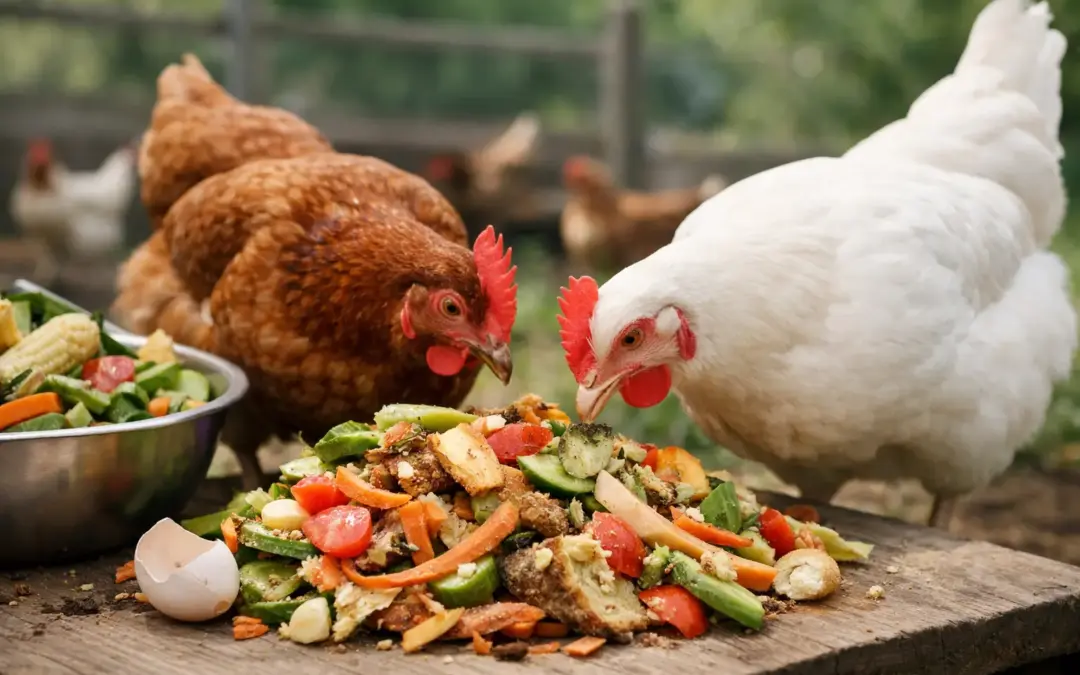
A bowl of peelings beside the back door can look like free chicken feed. For a UK keeper, though, the first question is not whether the birds will eat it. They usually will. The real question behind can chickens eat kitchen scraps is whether those scraps are suitable, nutritionally useful and permitted to feed.
The short answer is that a balanced poultry ration should remain the foundation of every flock. More importantly, UK rules around catering waste mean household kitchen leftovers are not a straightforward feed source for poultry. Good keeping is not about giving birds every edible leftover. It is about protecting flock health, egg production and biosecurity.
Can chickens eat kitchen scraps in the UK?
In general, do not feed chickens scraps that have come from a household kitchen, plate or food-preparation area. Poultry are classed as farmed animals, even when they are a small backyard flock kept for eggs and company. Catering waste controls exist to reduce the risk of disease entering the food chain, particularly through food that may have contacted meat, dairy products, eggs or their packaging.
This catches more than obvious leftovers such as Sunday roast bones or bits of sandwich. A carrot peeling from a kitchen worktop is still kitchen waste, even if the household does not eat meat. That distinction often surprises new keepers because much of the advice online comes from countries with different rules.
The sensible approach is to keep kitchen scraps out of the run and use them in the food-waste collection or compost system instead. If you want to offer your hens fresh treats, set aside suitable produce before it enters the kitchen or buy it specifically for the flock. Check the latest guidance from the relevant animal health authority in your part of the UK, especially if you keep birds for breeding, sell eggs or move stock on.
That may feel strict for three hens in a garden, but disease control does not become less relevant because the flock is small. Serious keepers protect their own birds, neighbouring flocks and the wider poultry community.
Feed a complete ration first
Layers’ pellets or mash are designed to provide the protein, energy, vitamins, minerals and calcium an actively laying hen needs. A good ration is not glamorous, but it is what supports shell quality, feather condition, fertility and steady laying.
Treats should stay genuinely small. As a practical rule, offer no more than roughly 10% of the flock’s daily intake as extras. If birds fill up on low-protein fruit, bread or grain, they may leave their pellets behind. The result can be thin shells, reduced laying, weight gain and a flock that suddenly seems fussy about proper feed.
This matters even more for growers, breeding pens and birds coming through the moult. Chicks need an age-appropriate starter or grower feed, not extras. Breeding hens and cockerels also need consistency. A fluctuating diet makes it harder to judge condition and can work against the careful management that good breeding demands.
Fresh water and suitable insoluble grit should always be available. Hens do not have teeth. Grit helps them process fibrous greens and other firm foods in the gizzard. Layers also need access to an appropriate calcium source, but do not assume treats can replace it.
Suitable fresh treats, set aside before the kitchen
When the food has not become kitchen or plate waste, a small amount of clean fresh produce can add interest to a flock’s day. Think of it as enrichment, not a way to dispose of food.
Suitable options include leafy greens, cabbage, broccoli, peas, sweetcorn, cucumber, courgette, berries, melon, pumpkin and apple flesh. Hang a whole cabbage in the run or scatter chopped greens across clean ground and the birds can spend time pecking and scratching naturally. Remove anything uneaten before it turns wet, trampled or mouldy.
Fruit is best treated as an occasional extra because it is sugary. Soft fruit, windfall apples and overripe melon can be popular, but a large quantity can loosen droppings and attract rats, wasps and flies. Offer small portions, particularly in warm weather.
Plain cooked vegetables may be safe in nutritional terms, but the legal source still matters. If they were cooked in, served from or left over from a kitchen, do not put them in the poultry feeder. The same common-sense line applies to food from plates, lunchboxes and garden barbecues.
Foods that should never be fed
Even where food has been set aside appropriately, some items have no place in a chicken diet. Others are not always immediately poisonous in tiny quantities, but offer little value and bring unnecessary risk.
Avoid the following:
- Chocolate, caffeine, alcohol and heavily processed foods.
- Avocado, especially the skin and stone.
- Raw or dried beans, which require proper cooking for people and should not be offered to poultry.
- Green potatoes, potato shoots and peelings from green or sprouting potatoes.
- Onion and garlic in significant amounts.
- Salty, sugary, fried or highly seasoned foods.
- Anything mouldy, fermented, spoiled or contaminated with droppings.
- Meat, fish, bones, dairy foods and any food that may have contacted them.
Bread deserves a special mention. Chickens enjoy it, which is not the same as needing it. It is filling, low in the nutrients a laying hen requires and can turn into a sticky mess around drinkers. Regular bread feeding trains a flock to queue for treats rather than eat its pellets. Save yourself the trouble and leave it out.
Keep treats clean and pest-free
The way food is offered is as important as the food itself. Put a modest amount into a clean, raised feeder, a treat holder or a dry area of the run. Do not tip food directly onto muddy ground where it mixes with droppings and bedding. Clear leftovers promptly, ideally within an hour or two.
This protects birds from mould and bacterial growth, while also making the holding less attractive to rodents. A rat problem is not merely an annoyance around the feed bin. Rodents consume feed, foul housing and can carry disease. Overfeeding is usually where the problem begins.
Watch the flock when introducing anything new. A dominant hen can monopolise a prized treat, while timid birds hang back. Spreading a small amount over several spots helps reduce squabbles, but do not use treats to mask overcrowding or poor flock dynamics. Space, perches, shelter and enough feeders do far more for welfare.
A better use for genuine kitchen waste
If your aim is to cut household waste, composting is the cleaner answer. Used carefully, compost can turn suitable garden and household material into valuable soil for the vegetable patch, flower borders or fruit trees. Keep the compost area secure from poultry if it contains items you would not want them eating, and manage it properly rather than creating a damp, rat-friendly heap.
For the birds, plan treats before food preparation begins. A slightly bruised apple from the fruit bowl or spare kale from the garden can be allocated directly to the hens while it is still clean, fresh and clearly separate from kitchen waste. That gives you the pleasure of seeing them enjoy a varied diet without blurring a biosecurity line.
A well-fed flock does not need the household leftovers to thrive. Give them a quality ration, clean water, grit, room to range or scratch, and carefully chosen extras when appropriate. That is the sort of everyday standard that keeps good birds in good condition – and makes them worth keeping.