
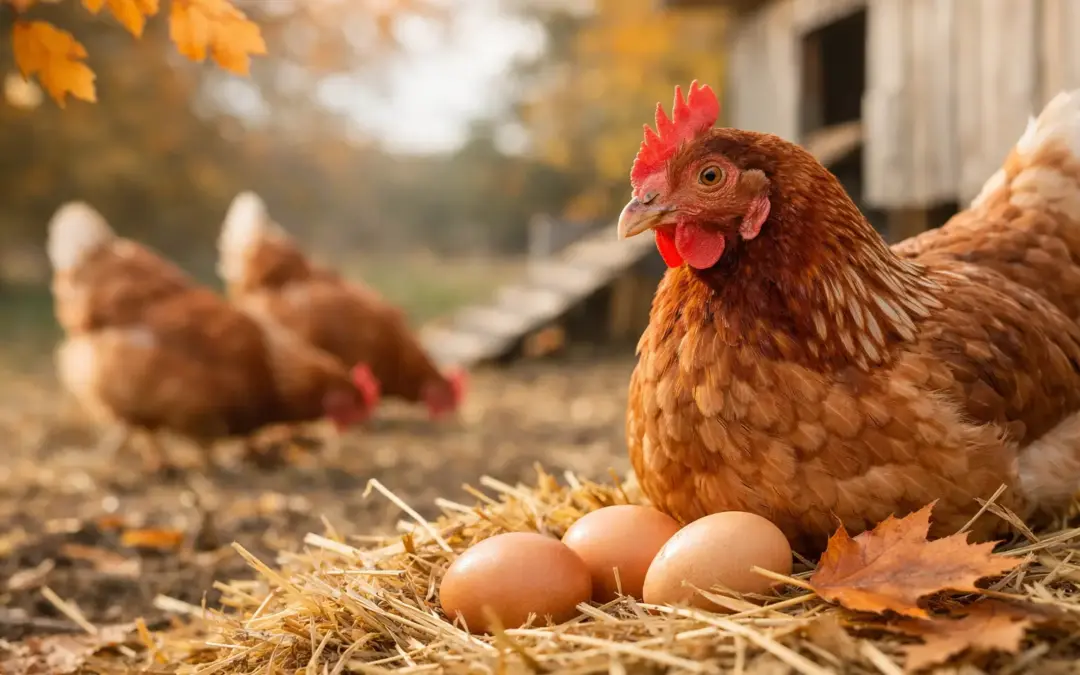
A basket that was reliably full in August can look very different by October. For many keepers, autumn laying brings the same question: are the hens simply taking a seasonal break, or is something wrong? Usually, the answer is seasonal. But a sudden drop still deserves a proper look, particularly where breeding stock, older birds or valuable heritage lines are concerned.
Egg production is not a fixed output. It is the result of daylight, nutrition, health, stress, age and genetics all lining up at once. Autumn changes several of those conditions quickly. Knowing what is normal helps you avoid chasing a problem that is not there, while spotting the occasions when your flock needs attention.
Why autumn laying slows down
The biggest driver is day length. Hens respond to light through their hormonal system, and as the days shorten their bodies receive a clear signal that the productive season is winding down. A laying hen generally performs best with around 14 to 16 hours of light. In a natural UK autumn, daylight falls well below that level and continues to decline towards winter.
At the same time, many birds begin their annual moult. Growing a fresh set of feathers takes a surprising amount of protein and energy. A hen cannot easily put resources into a heavy moult and maintain top egg production, so laying often slows markedly or stops for a period. Some hens look untidy and obvious during moult; others lose feathers gradually enough that the change is easy to miss.
This is not poor management. It is normal poultry biology. In fact, a proper rest can be useful for birds that have worked hard through spring and summer. Trying to force every hen to lay continuously is rarely the right measure of a well-run flock.
Breed also matters. Mediterranean breeds and selected production hybrids may hold their laying better into shorter days, while many traditional breeds are more openly seasonal. Bantams can be particularly variable. A breeder who keeps Buff Orpingtons, Wyandottes or true utility-bred heritage birds should not judge them against the output of a young commercial hybrid.
What normal autumn laying looks like
A gradual fall in eggs over several weeks, a brief pause during moult, smaller eggs at the start or end of a laying cycle, and a change in the order birds lay are all common. One hen may carry on while another stops completely. A mixed flock rarely moves in perfect step.
The condition of the bird matters more than the number on the egg tally. A hen in good body condition, bright-eyed, active around feed and water, and passing normal droppings is likely responding to the season as expected. Her comb may become paler and smaller when she is out of lay, especially in breeds with prominent combs. That is usually part of the picture, not a reason for alarm by itself.
Expect variation between individuals. Pullets coming into lay late in the year may produce sporadically, while mature hens can stop earlier. Birds that have raised chicks may take longer to return to regular production. If you sell hatching eggs, it pays to be frank about this seasonality. Fertility and hatchability can be less predictable when a flock is only just restarting, even if eggs are available.
Support the flock without trying to force it
The practical job in autumn is to help birds come through the change in strong condition. Start with a complete, good-quality ration appropriate to laying hens, offered consistently and stored dry. Scraps and treats have their place, but they should not displace the feed that supplies balanced protein, vitamins and minerals.
During moult, protein demand rises. Rather than reaching for random supplements, make sure the base feed is doing its job and that every bird can get to it. In a larger group, timid hens are often the first to lose condition because they are pushed off feeders. Adding feeding space can make more difference than adding fashionable extras.
Fresh water is just as important in cooler weather. Containers can become fouled with leaves, bedding and mud more quickly than expected, and some birds drink less when temperatures fall. Clean water, dry bedding and sound ventilation are basic standards, not optional refinements.
Avoid sealing up the coop in an attempt to make it warm. Chickens cope with cool air far better than damp, stale conditions. A dry house with ventilation above perch height and no direct draught across the birds is the aim. Condensation, ammonia smell and wet litter put pressure on respiratory health and feather condition just when the flock is moulting.
Supplementary lighting is a choice, not a requirement. Some keepers use a controlled morning light to maintain production through winter, especially where a consistent egg supply is needed. It can work, but it is worth weighing against the value of a natural rest period and the practical commitment to a reliable routine. If lighting is used, avoid abrupt changes and do not extend the day excessively. For many small flocks, accepting reduced winter eggs is the simpler and more welfare-minded approach.
When a drop in eggs is not just seasonal
Do not automatically blame autumn if the change is sharp, the whole flock stops overnight, or birds look unwell. Parasites, stress, illness, predator disturbance and feed issues can all reduce laying. The season may be the backdrop, but it should not become an excuse to overlook poor condition.
Check the basics methodically. Look for red mite in coop joints and perch ends, especially after dark when they are active. Inspect birds for lice, dirty vents, feather loss outside a normal moult pattern and signs of weight loss. Review whether feed has changed, whether rodents can access it, and whether water has been unavailable during the day. Also consider disturbance: a new dog, building work, a persistent fox, overcrowding or bullying can be enough to unsettle a flock.
Egg eating and hidden nests can create the impression that laying has stopped. If birds free-range, a quiet search around sheds, hedges and outbuildings is worthwhile before assuming a complete pause. Make collecting eggs a routine, particularly if you have young birds learning the habit of laying in a nest box.
Seek veterinary advice promptly if a hen is hunched, isolated, struggling to breathe, has diarrhoea, a swollen abdomen, unusual discharge, or is losing weight. A reduction in laying accompanied by illness is not a seasonal inconvenience. It needs proper assessment.
Autumn laying and breeding decisions
For breeders, autumn is a useful sorting season. The birds that come through moult in excellent condition, retain sound feather quality and return to laying well can tell you something about the strength of a line. That does not mean selecting solely for egg numbers. Temperament, type, vigour, fertility, mothering ability and breed standard all matter. But seasonal performance belongs in the wider record.
Keep notes on moult timing, egg size, shell quality and return to lay. Over several years, those observations become far more useful than a vague memory of which hen “seemed good”. They also help when speaking to prospective buyers who want honest information about the stock behind their hatching eggs or birds.
Be cautious about setting eggs from a flock in the middle of a disruption. A sudden feed change, active parasite burden, recent move or hard moult is not the moment to make promises about fertility. Wait for birds to settle, confirm that cockerels are in good condition and allow a run of normal eggs before offering breeding eggs. Quality stock deserves that patience.
A calmer approach to the autumn coop
Autumn is a good time to reset the practical side of keeping. Clean out thoroughly, check roof felt and pop-hole security, repair loose mesh, assess perch space and make sure nest boxes are dry. It is also the season to review your flock before winter: which birds are thriving, which need closer observation, and whether your housing will cope when wet weather keeps everyone nearer home.
For anyone sourcing additions, ask direct questions about age, vaccination history where relevant, recent health concerns, breeding aims and how the birds have been kept. A specialist marketplace such as Hatch & Hive makes those conversations easier because sellers and buyers are there for the same reason: quality stock, properly represented.
A quieter egg basket is not a failure of your flock. Give hens clean housing, sound feed, dry ground and time to rest, then watch the birds rather than chasing a number. When spring light returns, well-kept hens are in the best position to answer it.