
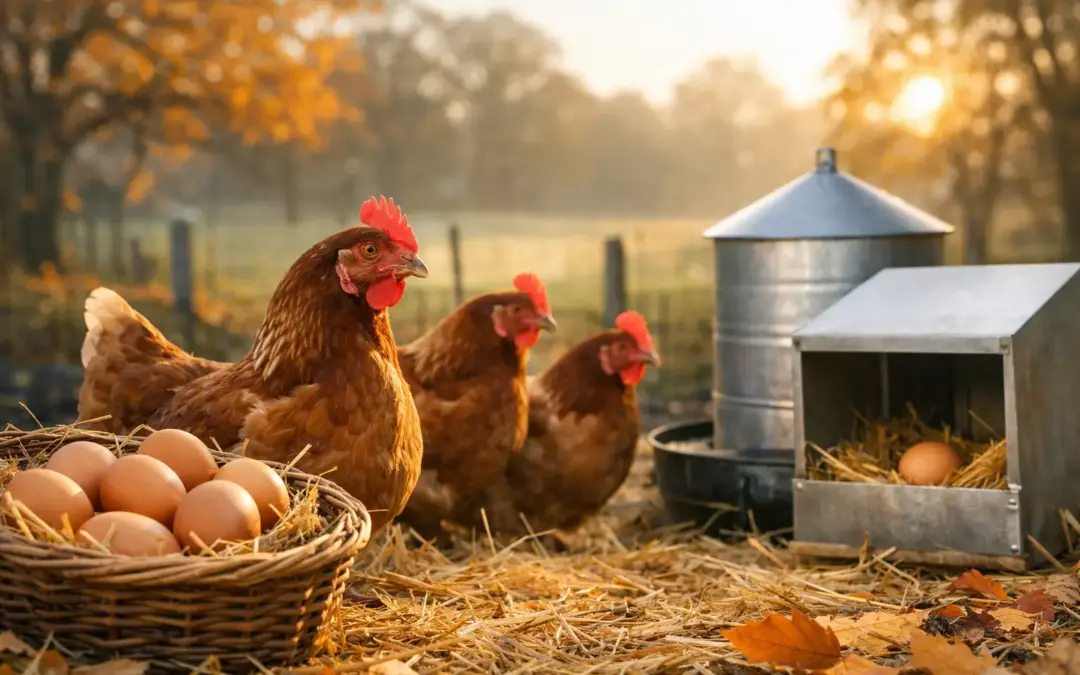
The first run of wet, shortening days is often when the egg basket tells the truth. A flock that seemed dependable through summer can suddenly produce fewer eggs, softer shells or none at all. Autumn laying production is not simply a matter of putting another scoop of feed in the hopper. It is the point where day length, moult, housing, health, breed and flock age all begin pulling in different directions.
For the serious keeper, this is a useful season rather than a frustrating one. A reduction in eggs can be entirely natural. A sharp drop, especially alongside weight loss, dirty vents, pale combs or poor shell quality, is a reason to look properly at the birds and their set-up.
Why autumn laying production changes
Egg production is governed heavily by light. As natural daylight falls away, many hens receive the biological signal to slow down or stop laying and direct their resources into feather replacement and winter maintenance. This is particularly obvious in traditional and heritage breeds, which are often less relentlessly productive than modern hybrid layers but bring other strengths: character, longevity, hardiness and breeding value.
Moult is usually the main event. Replacing feathers requires a substantial amount of protein and energy. A hen in a proper moult cannot be expected to maintain peak laying at the same time, and trying to force the issue is poor flock management. Some birds will only drop a few feathers and continue to lay intermittently; others will look decidedly scruffy and take several weeks away from the nest box.
Age matters too. Pullets hatched earlier in the year may be approaching point of lay just as older hens are winding down. Second- and third-season birds can still be useful layers, but their annual pause is often more pronounced. Breeds vary widely, as do individual birds. A well-kept Light Sussex may carry on steadily where another hen in the same pen stops altogether.
The practical lesson is simple: judge the flock against its own history, not against a summer peak or someone else’s hybrids.
Start with the flock, not the supplement tub
When autumn laying production dips, it is tempting to buy a tonic, add a bright light and expect immediate results. First, inspect the basics. Pick birds up regularly. They should feel well-fleshed around the breastbone, with clean feathers, bright eyes and no obvious swelling, discharge or laboured breathing.
Check the droppings beneath the perch and in the run. Loose droppings can occur with dietary changes or increased greens, but persistent diarrhoea, blood, worms or a noticeable loss of condition need addressing. Red mite is another common autumn problem, particularly after a warm summer. Look in perch ends, felt roofing, cracks and joints after dark. Birds may be reluctant to enter the coop, become restless at night or show anaemia through pale combs and wattles.
Also check whether eggs are being laid somewhere other than the nest box. Free-ranging hens can be remarkably determined about a hidden clutch, and an apparently unproductive flock may simply have found a better place to lay. Keep birds in their run until late morning for several days if you suspect this is happening.
A record book earns its place here. Note egg numbers, shell quality, feed use, moult, treatments and any birds removed from the breeding group. It makes a gradual seasonal change easy to distinguish from a genuine health or management issue.
Feed for feathers, shells and steady condition
A complete layers’ ration should remain the foundation of the diet for birds that are laying. It is formulated to provide the energy, protein, vitamins and minerals required for production, including calcium for shells. Keep it dry, fresh and available consistently. Damp feed, stale pellets and feeders fouled by wild birds are avoidable problems.
Treats are where otherwise sound autumn management can go wrong. Mixed corn is useful in modest amounts as a late-afternoon scratch feed, particularly in cold weather, but it is not a replacement for layers’ pellets or mash. Too much corn, bread, kitchen scraps or fruit fills birds up without delivering the balanced ration they need. The result can be poorer shells, excess weight and a flock that seems to eat well but lays badly.
During a significant moult, a good-quality feed with adequate protein is more useful than indiscriminate supplements. Some keepers move temporarily to a growers’ or flock-raiser ration while most of the flock is off lay, then provide oyster shell separately. This can suit mixed-age flocks, but it depends on whether any hens are still laying. Birds actively producing eggs need reliable calcium, so do not make a blanket change without considering the individual flock.
Clean water is non-negotiable. In autumn it is easily contaminated by mud, leaves and run debris. Wash drinkers often and place them on a raised, stable surface where possible. A bird drinking less than normal will not lay well, whatever feed is in front of her.
Light can extend laying, but it is a management choice
Supplementary lighting can support autumn laying production, especially for keepers who rely on a steady household supply of eggs or breeders managing a planned programme. It should not be treated as a cure for poor nutrition, parasites, overcrowding or a bird that needs to moult.
If you use light, consistency matters more than intensity. A timer that adds light in the early morning is generally kinder to the birds’ routine than suddenly switching on light late in the day, when they may struggle to find a perch before darkness. Increase daylight gradually rather than making an abrupt change, and ensure the coop remains safely lit, dry and ventilated.
There is a trade-off. Extending the laying season may be worthwhile for a fit, mature flock, but it can reduce the natural rest period that many keepers value, particularly with heritage birds. For a small breeding set-up, allowing mature hens a winter break can be the better long-term decision. Good breeding is not measured by squeezing every possible egg from a bird.
Dry housing is not the same as shut housing
Autumn brings mud, wind-driven rain and a higher risk of stale air inside the coop. The goal is a dry house with fresh ventilation above roost height, not a sealed box. Condensation on the roof, a strong ammonia smell or damp bedding indicates that the balance is wrong.
Keep nest boxes clean, dark enough to feel secure and generously bedded. Cracked, muddy or soiled eggs are often a housing and routine issue before they are a laying issue. Collect eggs regularly, particularly in wet weather, and replace bedding before it becomes compacted.
Outside, give the flock a firm area around feeders, drinkers and the coop entrance. Woodchip, gravel, slabs or a covered section can make a major difference through a British autumn. Hens standing in mud all day are harder to keep clean, more likely to track moisture indoors and less inclined to range comfortably.
Overcrowding deserves an honest look too. A flock that coped in summer can become tense when wet weather confines everyone to the run. Feather pecking, bullying at the feeder and birds sleeping in nest boxes are all signals to improve space, perches, enrichment or flock grouping.
Plan breeding stock with the season in mind
Autumn is a sensible time to assess which birds have earned a place in next season’s breeding pen. Do not select on egg numbers alone. Look at body condition, temperament, shell quality, breed type, vigour and the quality of offspring where you have that information. A hen that pauses to moult properly may still be a far better breeding prospect than one that lays hard but lacks sound type or condition.
It is also a good time to be realistic about cockerels, surplus males and ageing stock before winter accommodation becomes tight. Separate breeding groups where needed, reduce pressure on the run and make decisions while you can observe every bird clearly. When sourcing fresh blood or looking for a suitable breeding pair, ask direct questions about age, parentage, health history and how the birds have performed. Specialist communities such as Hatch & Hive make those conversations easier because the seller understands why the details matter.
For hatching-egg breeders, autumn is usually more about preparing than posting. Fertility and hatchability can be less predictable when birds are moulting, changing diet or coming off a stressful summer. Build condition now, check housing and give the breeding group time to settle. The strongest spring season is often won quietly in the autumn.
Know when fewer eggs are perfectly normal
A hen that is moulting, maintaining weight, eating well and behaving normally does not need to be pushed into production. Equally, a sudden flock-wide stop in laying during a mild autumn may point to a practical cause: a feed change, predator disturbance, water issue, red mite infestation or a shortened routine after clocks change.
Work through one variable at a time. Improve the run surface, clean and inspect the coop, tighten feeding discipline and observe the flock at different times of day. Avoid throwing five new products at the problem, because you will not know what worked or what made matters worse.
A well-managed autumn flock may not fill the basket as it did in June. It should, however, go into winter dry, well-fed, parasite-checked and in good feather. That is the foundation for healthy birds and worthwhile eggs when the days begin to turn again.