
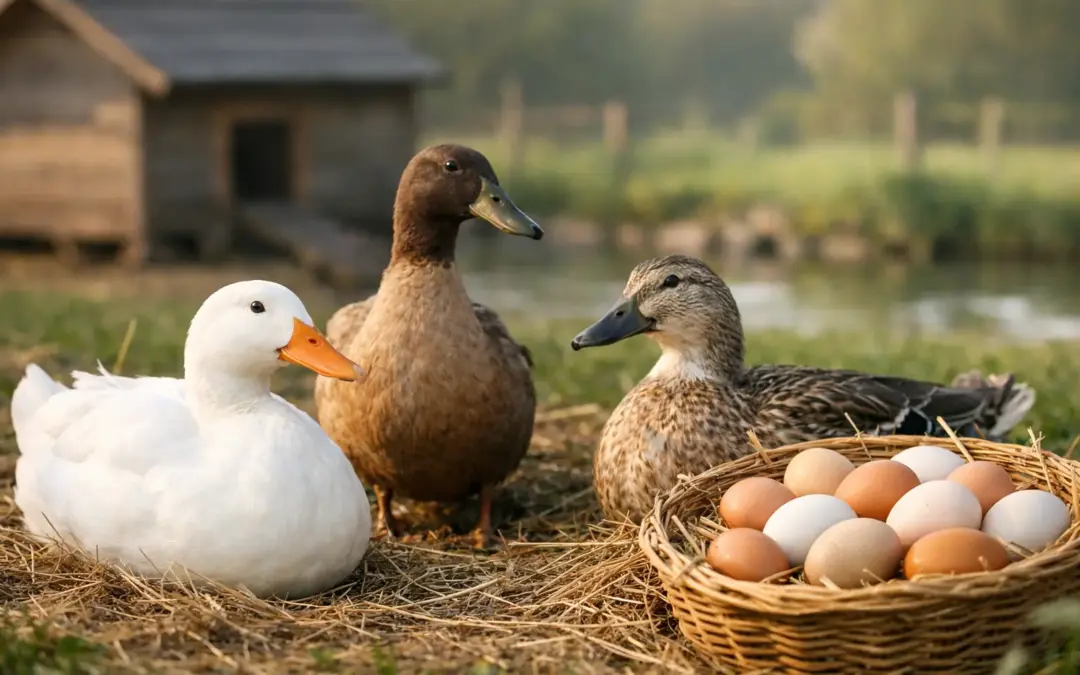
A good laying duck earns its keep quietly: a steady run of rich eggs, a sensible temperament around the garden, and enough hardiness to cope with a British winter without becoming a constant management project. When people ask about the best laying ducks UK keepers can buy, the answer is not simply the breed with the highest number printed on a hatchery chart. It is the breed that suits the space, flock, purpose and keeper behind it.
Ducks are often more forgiving layers than hens through the colder, darker months, and their eggs have a loyal following in the kitchen. They are also wet, sociable birds with a talent for turning a small patch of ground into mud. Choose well, and they are a productive addition to a back garden or smallholding. Choose on egg figures alone, and you may end up with flighty birds, too much noise, or a flock that does not fit your setup.
What makes a duck a good layer?
A productive duck should begin laying reliably at the right age, maintain a useful annual output and remain in sound condition. But laying ability is only one part of the job. For most keepers, a good layer also needs to be manageable, reasonably calm, hardy in the local climate and easy to house securely at night.
Published egg totals are best treated as potential, not a promise. Feed quality, daylight, age, stress, genetics, health and the presence of a drake all influence results. A well-bred duck from proven laying lines, kept on appropriate waterfowl feed and given dry, secure sleeping quarters, will generally tell you far more than an ambitious breed description.
If eggs are your priority, buy pullets or ducklings from a breeder who can explain their birds’ parentage, laying history and management. A serious seller should be happy to discuss flock age, whether the birds are bred for utility or exhibition, and what they are currently being fed.
The best laying duck breeds for UK flocks
Khaki Campbell
For pure egg production, the Khaki Campbell is usually the first name on the list. A well-managed Campbell can produce roughly 250 to 300 eggs a year, sometimes more from exceptional utility lines. They are efficient, active birds and their eggs are typically a good usable size for the household kitchen.
The trade-off is energy. Khaki Campbells are busy ducks, often more alert and less laid-back than heavier traditional breeds. They appreciate room to forage and can be capable fliers, particularly lighter birds, so thoughtful fencing or wing clipping may be needed. They suit keepers who want a proper working flock rather than ornamental lawn ducks.
Welsh Harlequin
The Welsh Harlequin is a strong choice for people who want excellent laying alongside a more relaxed, attractive bird. Developed from Khaki Campbell stock, it can lay around 200 to 300 eggs annually in good utility lines, while generally being known for a calmer disposition.
Their colour pattern is a genuine draw, but do not treat them as a decorative breed first and a layer second. Well-selected Welsh Harlequins are capable table and egg birds, making them a practical dual-purpose option for a smallholding. As with any breed with both exhibition and utility enthusiasts, ask what the breeder selects for. Good looks and genuine productivity are not always found in equal measure.
Indian Runner
Indian Runners have the unmistakable upright stance that makes them instantly recognisable. They are also serious laying ducks, with many strains producing around 180 to 250 eggs per year. Their active nature makes them excellent foragers, and a small group moving through an orchard or paddock can be both useful and entertaining.
They are not the best choice for every garden. Runners are naturally alert, need company and can be vocal, especially when excited or expecting feed. Their upright build also means they are not a meaty table bird in the way a heavier duck is. For the keeper who values personality, foraging ability and a reliable egg basket, however, they have a well-earned following.
Silver Appleyard
If you want eggs but do not want a lightweight specialist layer, consider the Silver Appleyard. This is a larger British breed with a useful reputation as a dual-purpose duck. Expect lower egg numbers than a top Campbell, often in the region of 180 to 220 a year, but you gain a substantial, hardy bird with real presence.
Silver Appleyards are a sensible fit where the flock has more than one purpose. They are generally steadier on their feet and less inclined to fly than lighter laying breeds, although they still need proper fencing and predator-proof accommodation. Their size means they eat more, so the economics differ from keeping a flock of Campbells solely for eggs.
Aylesbury
The traditional Aylesbury is best known as a table duck, but it can still give a respectable supply of eggs. It is not the breed to choose if your only measure is maximum annual output. It is, however, worth considering for keepers who value a large, calm, traditional British duck and want eggs as part of a broader smallholding flock.
Aylesburys need enough room, secure housing with a dry bed, and sensible weight management. Heavy ducks can suffer when kept on wet, dirty ground or allowed to become overfat. Choose birds from responsible stock, particularly if sound legs and breeding quality matter to you.
Best laying ducks in the UK: match the breed to your ground
The best laying ducks in the UK are often the ones that fit the keeper’s conditions, not the ones with the biggest claimed total. A suburban garden with close neighbours calls for a different decision from a wet Welsh smallholding or a larger holding in the Scottish Borders.
For a modest garden, Welsh Harlequins can be a balanced choice if you have enough dry space and can manage the inevitable splashing. Khaki Campbells and Runners are better where they can range safely and burn off their considerable energy. For a mixed smallholding flock, Silver Appleyards provide more versatility, while Aylesburys suit those who genuinely want a heavier traditional bird.
Do not underestimate noise. Female ducks are usually the loudest members of the flock, and a group greeting breakfast can carry farther than many first-time keepers expect. Drakes are quieter but are not required for egg production. If you only want eating eggs, an all-female group is straightforward and avoids the risk of overmating. If you want fertile eggs, keep drake-to-duck ratios sensible, especially with heavier breeds.
Housing and feeding for dependable eggs
Ducks do not need a pond to lay well, but they do need water deep enough to submerge their heads and keep their eyes and nostrils clean. A sturdy tub, regularly cleaned, is often more practical than a permanent pond for smaller setups. Put it where drainage is good, not directly outside the sleeping house.
At night, provide dry, fox-proof accommodation with deep, clean bedding and enough floor space for every bird to settle without crowding. Ducks are messy compared with chickens, so freshness matters. Damp litter quickly becomes a health and hygiene problem, particularly through winter.
Use a quality layers’ ration suitable for waterfowl once birds are in lay, alongside controlled access to greens and forage. Avoid relying on scraps. Ducks that look well-fed are not necessarily receiving a balanced diet, and excessive treats can reduce intake of the feed that supports steady laying. Keep grit and clean drinking water available at all times.
Buy for breeding quality, not a label
Breed names alone do not guarantee productive stock. Two flocks described as Khaki Campbell can be very different if one has been selected for exhibition traits and the other for egg production over generations. That does not make one type inferior, but it does make breeder conversations essential.
Before committing, ask when the parent flock started laying, how they perform through winter, whether birds are raised on open ground or confined runs, and whether there have been any recurring health or leg issues. If buying ducklings, be clear about sexing accuracy and the breeder’s policy if a bird proves to be wrongly sexed. If buying hatching eggs, remember that hatch rate and eventual laying quality depend on far more than the posted breed name.
Specialist marketplaces such as Hatch & Hive make it easier to connect directly with breeders who understand the stock they keep. The right questions, clear photographs and a proper conversation are worth more than chasing the cheapest listing.
A small, well-chosen flock of three or four ducks is often plenty for a household that enjoys duck eggs. Give them dry footing, clean water, good feed and a breeder whose standards match your own. The eggs will follow, and so will the satisfaction of keeping birds that belong on your ground.