
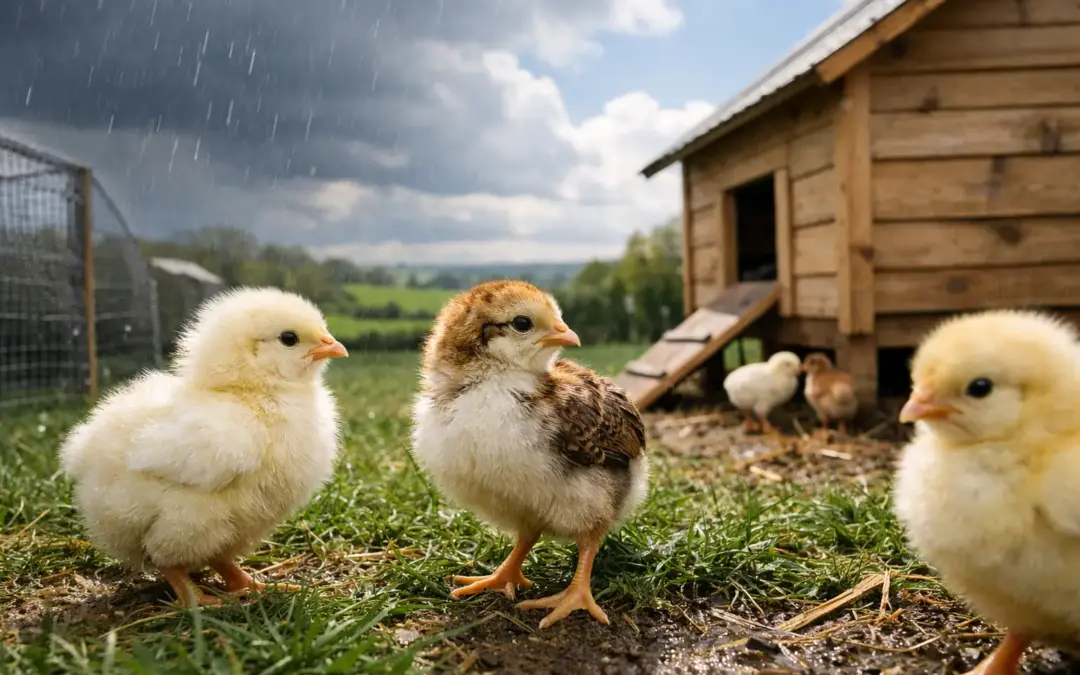
A brooder full of lively chicks can outgrow its space sooner than expected. But when to move chicks outside is not a date on the calendar or a decision based on one warm afternoon. It comes down to feathering, overnight temperatures, the quality of their housing and whether they are ready to cope without artificial heat.
For most keepers, the right moment is when the chicks are fully feathered, their outdoor accommodation is properly dry and secure, and the forecast is settled enough that cold nights will not catch them out. Get those basics right and the transition is straightforward. Rush it and you can end up with chilled, stressed birds before they have had a fair start.
When to move chicks outside: the practical answer
Most chicks can move to an unheated coop at around six to eight weeks old, once they are fully feathered. That is a useful rule of thumb, not a guarantee. Fast-feathering hybrids may be ready earlier, while bantams, slower-growing breeds and chicks raised in a very warm brooder may need longer.
Look at the bird in front of you rather than relying solely on age. A chick ready for outdoor life should have proper body feathering across its back, breast and underside, not patches of soft down showing through. It should be active, eating well and able to perch confidently. If the youngsters still huddle under heat at night, they are telling you they need more time.
In a typical British spring, the overnight low matters more than the daytime high. A bright 17°C day can be followed by a raw, damp night close to freezing. Fully feathered, healthy chicks in a dry, draught-free coop can cope with cool conditions far better than partly feathered chicks can cope with a sudden cold snap. If the forecast turns sharply colder, delaying the move is usually the sensible call.
Feathering matters more than the calendar
Chicks lose their baby fluff gradually. Wing feathers arrive first, then tail and body feathers, but a bird can look surprisingly grown-up while still carrying down underneath. Check them properly rather than judging from a quick glance through the brooder lid.
A fully feathered chick has a protective layer over the whole body, including the chest and around the vent. There may still be a little down at the head or neck, which is normal, but there should not be bare-looking areas on the body. This insulation is what allows the bird to regulate its own temperature.
Breed plays a part. Large fowl with a good, dense feather coat may be ready towards the earlier end of the usual range. Silkie chicks and other heavily feathered or unusual breeds deserve more caution, especially in wet weather. Their plumage can hold moisture, and a damp chick becomes cold very quickly. Never assume a fluffy-looking bird is automatically weatherproof.
Judge the coop before you judge the chicks
A sound coop is not simply one that keeps rain off. Young birds need a dry floor, clean bedding, enough ventilation to prevent stale, humid air, and no direct draught at perch level. Those requirements can sound contradictory, but they are not. Ventilation should be above the birds, allowing moist air to leave without a cold current blowing through them.
Before moving chicks in, inspect the house after rain if possible. Check the roof, corners, pop-hole and floor for damp. Make sure litter remains dry and deep enough to insulate them from a cold base. A raised coop can help, but only if the floor itself is solid and weatherproof.
Security is equally important. A small chick can fit through gaps that would not concern an adult hen. Check weldmesh, catches, floor edges and the run roof where needed. Foxes are the obvious concern, but rats can injure young birds and may be drawn to spilled feed. Outdoor accommodation must be secure before the chicks arrive, not after the first night proves a point.
Acclimatise them rather than making a hard switch
If the brooder has been kept at a steady indoor temperature, give the chicks a little time to adjust. Lower the brooder heat gradually over several days as they feather up. This encourages them to use their own insulation rather than moving from tropical conditions straight into a chilly coop.
When conditions allow, supervised daytime time in a secure outdoor run is useful before the permanent move. Choose a dry, calm day and provide shade, water and a sheltered corner. Start with a short session, then extend it as the chicks settle. This is not essential for every setup, but it lets you see how they behave in natural temperatures and gives them a chance to explore without the pressure of a full overnight move.
Do not confuse a warm spell with stable weather. In much of the UK, early spring can deliver sunshine, wind and frost within the same 24 hours. A covered run and a coop with a sheltered entrance are worth more than a hopeful weather app check.
The first few nights outside
Move the chicks into their prepared coop in the late afternoon or early evening. They will have time to investigate, find the water and settle as daylight fades. For the first few nights, check discreetly after dark to make sure they are sleeping comfortably rather than piling into a distressed heap.
A small amount of close roosting is normal. Persistent huddling, loud peeping or birds pressed into corners suggests they are cold or unsettled. If that happens, assess the coop for draughts and damp before assuming the chicks simply need to toughen up. Young stock should be challenged gradually, not tested unnecessarily.
Keep feed and water easy to find. Chicks moving from a brooder may not immediately understand a different drinker or feeder arrangement. Use familiar equipment at first if you can, and make certain water cannot be fouled easily or tipped overnight. In cold spells, check it early each morning.
Moving chicks outside with adult hens
The question changes if you mean moving chicks into an established flock. Being old enough for the weather does not make them old enough to share space safely with adult birds. Mature hens can be hard on newcomers, particularly small youngsters that cannot reach feeders, escape a pecking order dispute or get onto a perch.
As a general guide, wait until the young birds are well grown and physically capable of standing their ground – often around 12 to 16 weeks, depending on breed, size and flock temperament. They should be close enough in stature that an accidental peck is not a serious risk.
Start with separation through mesh. A neighbouring pen or divided run lets both groups see and hear one another without contact. After several days, offer supervised time together in a spacious area with more than one feed and water point. Space is your best ally here. A cramped run magnifies every squabble.
Avoid introducing a single chick to a settled flock. Keep youngsters in a small group where possible, so no bird is isolated. Watch for normal posturing and brief pecks, but intervene if one bird is being relentlessly chased, cornered or prevented from eating and drinking.
Signs you should wait a little longer
There is no prize for the earliest move outdoors. Hold off if the chicks are still visibly downy, if nights are forecast to be exceptionally cold, or if the coop is damp or poorly ventilated. Delay also makes sense if any chick is underweight, lethargic, recovering from illness or being bullied in the brooder.
Keep an eye on their droppings and general condition before a move. A clean, active group with bright eyes and good appetites is far better placed to handle a change of environment. If something looks off, solve that first. A new coop is not a cure for a health issue.
Quality young stock deserves a proper start, whether you have hatched your own birds or sourced them from a breeder whose lines you want to carry forward. At Hatch & Hive, serious keepers know that good husbandry is built from these unglamorous decisions: dry bedding, secure housing, patience and close observation.
Move them when their feathers, housing and the forecast all agree. A few extra days in the brooder is a minor inconvenience; giving a strong, settled group their first safe nights outside is the better foundation for the flock to come.