
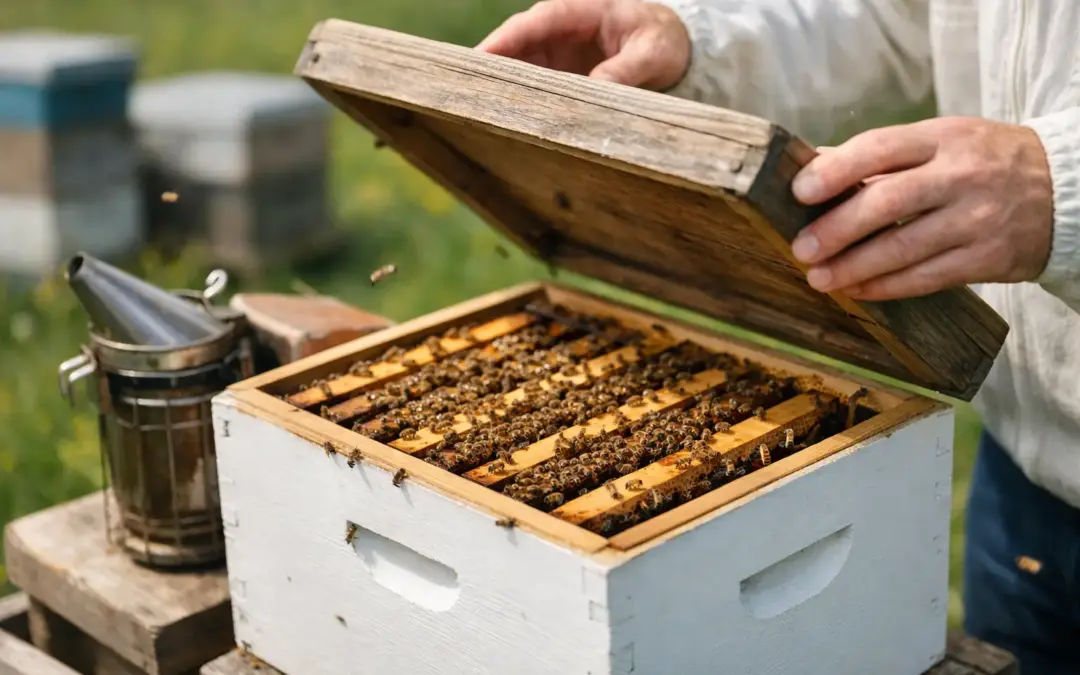
A bee nucleus colony for sale is not simply a box of bees to collect on a sunny afternoon. It is the starting point for your next colony, and the quality of that start will shape everything from early brood development to your wintering prospects. A good nuc gives a new or returning beekeeper a functioning colony with a laying queen, developing brood, food stores and enough workers to build properly once it is transferred into a full hive.
The strongest buying decision is rarely based on the lowest price or the closest collection point. It comes down to sound stock, honest information and a seller who knows exactly what they have bred and managed. No noise, just quality bees.
What a Proper Bee Nucleus Colony Should Include
In UK beekeeping, a nucleus colony, usually shortened to a nuc, is commonly supplied on five or six standard frames. Those frames should hold a balanced colony rather than a random selection of bees and comb. Exact frame counts and formats vary, so confirm whether the nuc is on National, 14 x 12, Commercial, Langstroth or another system before agreeing to buy. A good colony on the wrong frame size creates needless work on collection day.
You should expect to see a laying queen, eggs or very young larvae, brood at more than one stage, enough bees to cover the frames well, and stores of nectar or syrup and pollen. The best nucs show a compact, even brood pattern with few unexplained gaps. That does not mean every frame must look picture-perfect. Weather, a recent increase in laying, and the age of the queen can all affect what you see. But scattered brood, multiple eggs in cells or a lack of young brood deserve a clear explanation.
A reputable breeder should be able to tell you when the nuc was made up, whether the queen is mated and marked, how old she is, and whether she is a home-reared queen or bought in. They should also be open about temperament, swarm tendency and how the colony has performed so far. This is particularly valuable if you want calm bees for a garden apiary, or hardy stock suited to a more exposed smallholding site.
Questions to Ask Before You Buy a Bee Nucleus Colony for Sale
Buying directly from an informed keeper is one of the real advantages of a specialist marketplace. Ask practical questions before travelling, not once the bees are strapped into the car.
Start with the frame format and the number of frames supplied. Then ask about the queen: her age, origin, laying status and whether she has been seen recently. If she is unmarked, that is not automatically a problem, but it is worth knowing in advance, especially for a newer beekeeper who may struggle to spot her during the transfer.
Ask what treatment history applies to the colony and the seller’s wider apiary. A responsible answer should cover varroa monitoring and treatment approach, rather than vague reassurance that the bees are “fine”. You also need to know whether the colony has been moved from another site recently and whether there have been any disease concerns. Healthy-looking adult bees alone do not tell the whole story.
It is sensible to ask for recent photographs of the nuc with frames visible, or to arrange an inspection where practical. Photographs cannot replace seeing brood for yourself, but they can show whether the seller is transparent and whether the colony appears well established. Be wary of listings that promise an exceptionally large colony at an implausibly early point in the season, yet offer no detail about queen, brood or frame type.
Timing Matters More Than Many Buyers Expect
Most nucs are offered from spring into early summer, when colonies can be split and young queens have had time to mate. Early-season nucs can be attractive because they have more time to grow, draw comb and store forage before autumn. The trade-off is that spring weather is unpredictable, and a young colony may need feeding during cold or wet spells.
A later nuc may cost less or be more readily available, but it has less time to establish. That does not make it a poor purchase. A strong, well-managed June or July nuc with a proven queen can still do very well. It simply requires a more realistic plan for feeding, space and varroa management. A weak late-season nuc is a different proposition altogether and should be priced and managed accordingly.
Avoid buying just because a colony is available. Buy when you have your hive ready, your apiary set up, and enough time to inspect and support the bees. A nuc sitting in a temporary box while you assemble equipment is an avoidable way to put a good colony under pressure.
Prepare the Apiary Before Collection
Have the receiving hive in place before the collection date. It should be clean, weatherproof, level and fitted with the correct brood box for the frames you are collecting. If the nuc comes on National frames, a Langstroth brood box is not a close-enough substitute.
Choose a sheltered position with a sensible flight path, morning sun where possible, and protection from persistent wind. Make sure the stand is stable, livestock and pets cannot knock it, and you can work around it safely. Water nearby is useful, although bees will often find it themselves. If you provide water, make it easy for them to land by adding floating material or a textured surface.
Keep a feeder, suitable syrup, spare frames, a smoker and protective clothing ready. A newly moved nuc may need feed if forage is poor, but do not feed blindly. Check stores and conditions. Heavy feeding during a strong nectar flow can lead to syrup being stored where you would prefer brood space.
Collection and Transport Without Unnecessary Stress
Collection should normally happen after flying has finished for the day, with the entrance closed only when the bees are home. The seller may secure the frames and ventilate the box for transport. Ask how they want the nuc carried and whether the box needs returning.
Keep the nuc level, secure it so it cannot slide, and make sure there is ventilation. Bees overheat far more easily than many first-time buyers expect, particularly in a warm car or a stationary vehicle. Do not leave them in direct sun while you stop for supplies, and travel straight home.
Once at the apiary, place the nuc where the hive will stand and open the entrance if you are not transferring immediately. Some keepers leave the bees overnight to settle and transfer the following morning; others move the frames straight into the prepared brood box. Either approach can work if it is calm, organised and the frame order is maintained. Follow the seller’s advice where it reflects the particular nuc and weather conditions.
The First Few Weeks Tell You What You Bought
After transfer, resist the urge to inspect every day. Give the colony time to orientate and settle. A check after roughly a week, weather permitting, should confirm that the queen is laying and that the bees have enough space and stores. Look for eggs, young larvae and a growing brood area rather than searching endlessly for the queen.
New nucs can expand quickly when forage is good. Add space before the brood box becomes crowded, but do not over-super a small colony. A box full of empty space is harder for a modest population to manage and may encourage comb drawing in the wrong place if equipment is poorly arranged.
Keep records from the first inspection. Note queen colour or marking, brood pattern, temperament, feed given, varroa checks and any concerns. Good notes are not paperwork for its own sake. They help you decide whether a slow patch is normal weather-related variation or a colony that needs intervention.
Price, Provenance and the Value of a Good Seller
A cheap nuc is not always good value. Price reflects local demand, frame type, the time of year, queen provenance, colony strength and whether the seller has invested in careful selection and disease monitoring. Paying more for a strong, correctly described nuc from a breeder who answers questions properly can save a great deal of frustration later.
That said, price alone does not prove quality. Look for a clear listing, accurate photographs, direct answers and a seller who does not overpromise. Genuine breeders will often explain limitations as readily as strengths: perhaps the queen is young and unmarked, perhaps the colony is building after poor weather, or perhaps it needs a particular hive format. That honesty is worth more than sales language.
For buyers seeking a bee nucleus colony for sale, Hatch & Hive gives serious keepers a focused place to compare stock and speak directly with sellers who understand what a proper nuc should be. Take the time to ask the right questions, prepare properly and buy bees that suit your aims. A well-chosen nuc is not just a purchase. It is the beginning of a colony you can manage with confidence.