
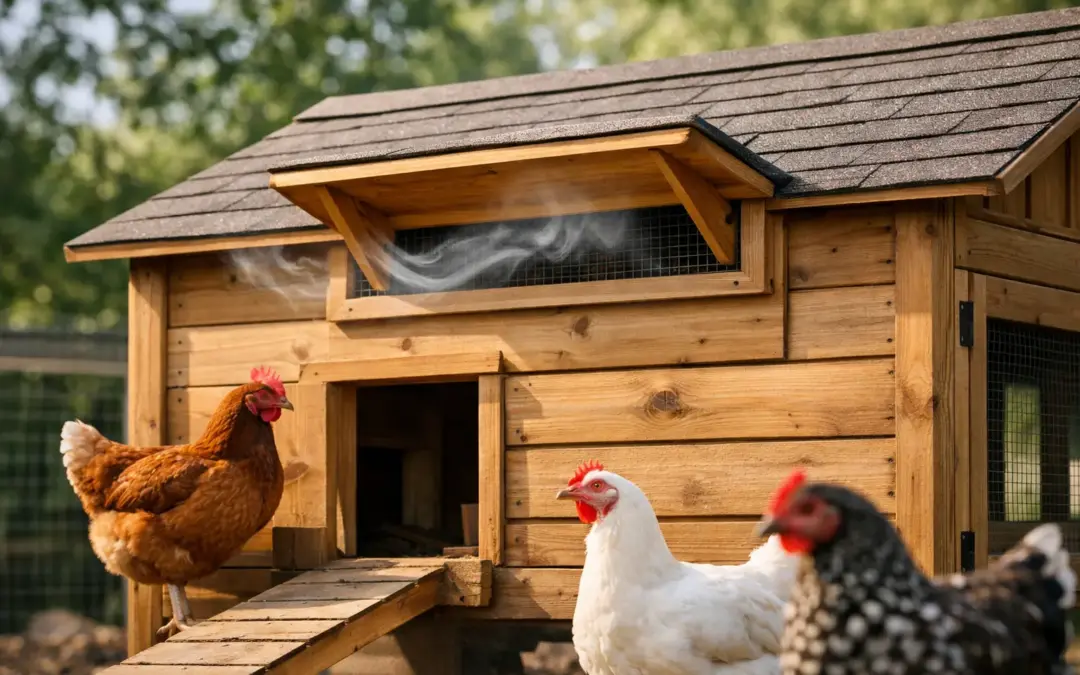
If your birds smell the coop before you do, the ventilation is not doing its job. Improving ventilation on coops is less about making them warmer or cooler and more about clearing damp air, ammonia and stale air before they start causing trouble.
Why poor airflow causes bigger problems
Chickens produce a surprising amount of moisture overnight through breathing and droppings. In a closed-up coop, that moisture settles on bedding, walls and perches. Add ammonia from manure and you have the sort of air that leads to irritated eyes, respiratory stress and a house that never really dries out.
In winter, many keepers shut everything tight to keep birds cosy. That is usually where problems start. Chickens cope with cold far better than they cope with wet, stagnant air.
Improving ventilation on coops without causing draughts
Good ventilation sits high. You want stale, warm, damp air to leave from above the birds’ heads, not whip straight across the roost bars. That means vents near the roofline, under the eaves, or at the top of gable ends work far better than low openings at perch height.
If your coop has windows, mesh-covered top openings can help in warmer months, but they should not be the only answer. A cracked window at bird level often creates a draught rather than steady airflow. The aim is air exchange, not a wind tunnel.
What to check in your current setup
Start early in the morning, before the door has been open for long. If the coop smells sharp, feels clammy, or has condensation on the inside roof, ventilation is lacking. Bedding that stays damp around the edges is another giveaway.
For many keepers, the fix is straightforward: add more high-level vent space on opposite sides so air can move through naturally. Cover openings with weld mesh to keep out rats and predators, and make sure rain cannot blow straight in. In timber coops, even a narrow continuous gap under the eaves can make a real difference.
When more ventilation is not the only fix
Sometimes airflow is only part of the issue. Overcrowding, wet bedding, poor drainage beneath the coop and missed cleaning intervals all make ventilation work harder. If the house is too small for the number of birds, no vent arrangement will fully compensate.
A well-set-up coop should smell dry and neutral, even with birds inside. That is the benchmark worth aiming for. Better air means healthier stock, cleaner housing and fewer nagging problems that keep coming back.