
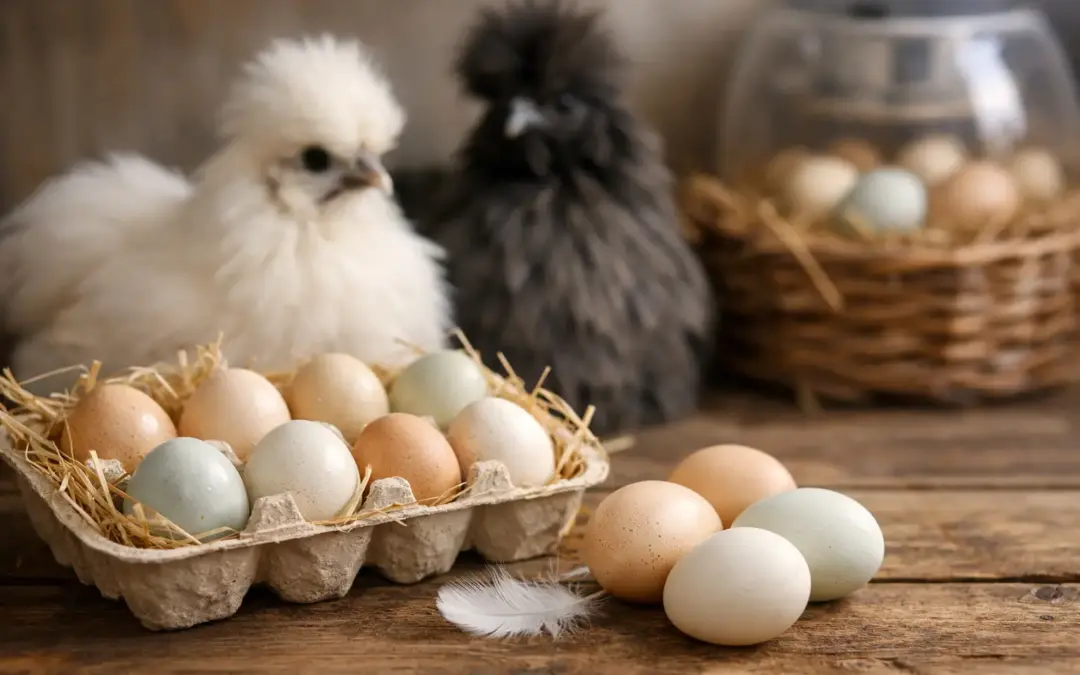
Silkie bantam hatching eggs can look like an easy buy until you have a poor hatch, weak chicks or birds that never quite match the breed you thought you were getting. With Silkies, the details matter. Fertility, handling, parent stock and breeder standards all show up later in the incubator and then again in the growing pen.
That is why experienced keepers do not just buy on price or on a pretty photo of fluffy adults. If you want a worthwhile hatch, you need to know what sits behind the egg. Good stock starts long before packing day.
What to look for in silkie bantam hatching eggs
A good Silkie egg listing should tell you more than colour and quantity. You want to know the breeding group, how old the eggs are, how they are stored before dispatch or collection, and whether the birds are bred for type, colour, utility or simply as garden pets. None of this is filler. It helps you judge whether the seller understands breeding rather than just producing eggs.
Silkies are popular for a reason. They are small, distinctive and full of character, and many keepers want them for both breeding and family flocks. That popularity has a downside. There are plenty of poorly bred birds in circulation, and that often starts with hatching eggs from mixed, unselected or badly managed groups.
If breed quality matters to you, ask direct questions. Are the birds bred from known lines? Are colours penned separately? Are the cockerels and hens selected for proper type, feather quality and temperament? A serious breeder will usually welcome those questions because they show you are paying attention.
Why breeder quality matters more than price
Cheap eggs are not always poor, and expensive eggs are not always better. But low pricing can sometimes reflect rushed packing, mixed breeding pens, old eggs or sellers who are moving volume rather than protecting quality. That is where buyers get caught out.
A proper breeder tends to think beyond the sale. They know that hatch rates vary with season, travel, weather and incubation practice, but they still aim to send clean, fresh, well-shaped eggs from healthy stock. They are usually clear about what they can and cannot guarantee. That sort of honesty matters more than sales talk.
Silkies also bring a few breed-specific considerations. Their fertility can be less consistent than some harder-feathered breeds, especially if feathering around the vent has not been managed in heavily feathered birds. If a breeder is getting strong fertility from Silkies, that usually says something positive about flock management.
Choosing silkie bantam hatching eggs by colour and type
Many buyers start with colour, and that is understandable. Buff, white, black, blue, partridge and splash all have their appeal. But colour breeding is rarely as simple as picking your favourite shade and expecting every chick to hatch true.
If you are buying for future breeding, it is worth asking how the colour pen is set up. Blue breeding, for example, often produces a mix rather than one uniform result. Splash matings bring their own expectations. A breeder who explains that clearly is usually worth your time.
Type matters just as much. Silkies should have the right silhouette, feather texture, walnut comb, leg feathering and the calm, rounded look the breed is known for. Poor type does not fix itself in the next generation. If your aim is to breed on, buy from birds selected properly rather than from any flock that happens to include Silkies.
Posted eggs or collection – what makes sense?
This depends on distance, timing and your own tolerance for risk. Collected eggs are generally the safer option because they avoid the knocks, vibration and temperature swings that come with travel. If you can collect from a reputable breeder within reach, that is often the better route.
Posted eggs can still hatch well, but they are always a gamble to some degree. Some breeders pack exceptionally well and send very fresh eggs, which gives you a fighting chance. Others may post eggs that are already several days old, loosely packed or sent during poor weather. By the time they reach your incubator, the odds are already lower.
If you do buy posted silkie bantam hatching eggs, ask when they were laid, when they will be sent and how they will be packed. Once they arrive, let them rest pointed end down before setting. Some keepers rest for several hours, others for a full day. It depends partly on how rough the journey has been, but resting is usually sensible after transit.
Questions worth asking before you buy
The best buyers are not awkward. They are informed. A few straightforward questions can save you wasting time on poor stock.
Ask how many males run with the breeding group and whether fertility has been checked recently. Ask whether the eggs are from one colour pen or mixed pens. Ask how old the parent birds are. First-season birds can do well, but very young or ageing stock may affect consistency.
It is also worth asking about health and husbandry. You are not looking for a polished sales script. You want to know whether the birds are kept cleanly, fed properly and managed by someone who notices what is happening in the pen. Serious keepers usually answer in a practical way because that is how they work.
Incubating silkie bantam hatching eggs successfully
Even the best eggs can be spoiled by poor incubation. That is not a comfortable truth, but it is the truth. Buyers sometimes blame the breeder for every weak hatch when the real problem is temperature drift, poor humidity control or opening the incubator too often.
Silkie eggs are usually incubated on the same timetable as other chicken eggs, but small variations in incubator accuracy can make a noticeable difference. Calibrate your thermometer, trust measured conditions rather than the dial alone, and make sure the incubator is stable before the eggs go in. A rushed set-up often leads to disappointment.
Turning matters. So does cleanliness. So does not fiddling with the eggs every few hours. If you candle, do it with a purpose rather than out of impatience. Infertile eggs and early quitters happen, especially with posted eggs, but constant disturbance never improves the outcome.
At hatch time, resist the urge to interfere too early. Silkie chicks can look slow and still do perfectly well if humidity and conditions are right. Helping too soon often causes more harm than leaving them to finish the job properly.
Managing expectations after hatch
A hatch of Silkie chicks is not the same as buying finished birds. That should be obvious, but it still catches people out. You are buying potential, not certainty.
Not every chick will be show quality. Not every pullet will develop exactly as hoped. Some may have faults that only become clear as they feather and mature. If you are hatching for breeding, you need enough honesty to assess what you have produced and enough patience to grow the right birds on.
That is another reason breeder choice matters. Better lines usually give you a stronger starting point, even though no breeder can promise perfection from every egg. The more care put into parent selection, the better your odds of hatching birds worth keeping.
Where buyers go wrong most often
The biggest mistake is treating hatching eggs like a standard parcel item. They are not. They are fragile, time-sensitive and highly dependent on how the breeder manages the flock and how the buyer handles incubation.
The second mistake is buying blind from sellers who offer very little information. A vague description and a few charming bird photos do not tell you enough. If a listing does not give you confidence, move on.
The third is focusing on hatch rate alone. Hatch rate matters, of course, but so does what hatches. A strong hatch of poor-quality birds is not a bargain. For many keepers, especially those hoping to breed on, quality per chick matters more than raw numbers.
That is exactly why specialist marketplaces have value. In a proper poultry-focused space such as Hatch & Hive, buyers can look past generic classified noise and deal with sellers who understand breed standards, flock management and what serious keepers are actually asking for.
Buying for pets, breeding or both
Your purpose should shape your purchase. If you want gentle, attractive birds for the back garden, you may not need the tightest breeding lines available. Healthy, well-bred stock still matters, but you might be less concerned about exhibition-level type.
If you want to breed, be stricter. Ask better questions, study the parent birds where possible and think beyond the first hatch. The right eggs can save you years of trying to improve mediocre stock. The wrong ones can leave you with a pen full of birds that are pleasant enough but not worth building a line from.
Silkies are easy to love and not always easy to source well. That is the real balance. Buy with clear eyes, deal with breeders who take their birds seriously, and give the eggs the care they deserve once they are in your hands. Good hatches start with good decisions.